For Three Days, Nobody Needed an Answer from Her

The first time her phone rang, she answered it.

She had been at the cabin less than an hour.

Her bag was still on the bed. A grocery sack sat on the floor beside the small counter. She had opened the curtains but had not yet sat down long enough to look through the window.

The call was from her mother.

Nothing was wrong.

Her mother wanted to know whether the pharmacy would have the prescription ready before closing.

She probably could have called the pharmacy herself.

But she called her daughter instead.

Her daughter knew the name of the medication, which pharmacy they used, what time it closed, and which road was under construction between her mother’s house and town.

She always knew.

She checked the pharmacy app, confirmed the prescription, and reminded her mother to take her insurance card.

The call lasted four minutes.

Afterward, she placed the phone on the counter.

Then it buzzed with a message from work.

Someone wanted to know where she had saved a document.

She answered that too.

The file was in the same shared folder where it had always been, but she sent the link and added a sentence explaining which version to use.

Then her sister texted.

Then her son.

Then the neighborhood group.

Nobody was demanding anything unreasonable.

That was what made the weight difficult to explain.

The person who usually knows

She had become the person who knew.

She knew when the appointment was.

She knew which bill had already been paid.

She knew what her mother needed from the store.

She knew where the spare key was kept.

She knew which relative was no longer speaking to which other relative and what subjects should be avoided at Sunday lunch.

At work, she remembered deadlines no one had placed on the calendar.

At home, she noticed what was running low before anyone else did.

She could listen to a problem, ask the right questions, and usually suggest what should happen next.

People described her as dependable.

She was proud of that.

Most days.

But being dependable had slowly become something else.

It had become constant availability.

Her phone did not merely connect her to other people.

It carried their unfinished thoughts, minor emergencies, forgotten details, decisions, requests, and uncertainties into every part of her day.

She answered while buying groceries.

While eating.

While sitting in the car.

While brushing her teeth.

Sometimes she woke during the night and remembered something that belonged to someone else.

She did not think of herself as exhausted.

She thought of herself as behind.

The reason she came

She had reserved three nights at Oak Hollow after an unusually ordinary Tuesday.

Nothing terrible happened that day.

Her mother had called twice.

A coworker had failed to complete a task.

Her son needed help comparing two insurance estimates.

A friend wanted advice about whether to accept a new job.

The washing machine began making a noise.

There was no milk.

Dinner had to be decided.

By seven o’clock, she was standing in the kitchen holding the refrigerator door open, unable to choose between eggs and a sandwich.

Her husband asked what was wrong.

She said, “I don’t want to answer another question.”

He looked concerned.

She laughed because she did not want him to think she was angry with him.

But later, alone in the bedroom, she searched for a quiet cabin.

Not a vacation destination.

Not a place with an itinerary.

Not somewhere she would be expected to sightsee, shop, or make the most of every hour.

She searched for somewhere close enough to reach without turning the trip into another project.

That was how she found Oak Hollow.

Her first evening

After the early calls, she considered placing the phone on airplane mode.

Instead, she carried it outside.

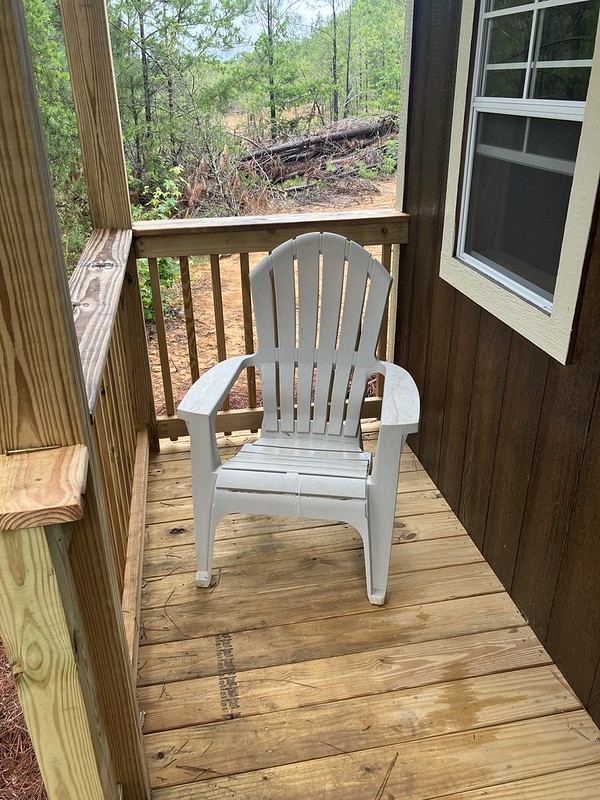
She sat on the porch and positioned it face down on the chair beside her.

For several minutes, she listened for it.

The woods were not silent.

There were birds, insects, and the occasional movement of leaves. Somewhere farther away, a dog barked once and stopped.

But none of those sounds required a response.

She noticed that difference.

The phone vibrated against the wooden seat.

She turned it over.

A message from her sister:

Do you remember the name of that place where Mama got her glasses?

She typed the name.

Then she added:

I’m putting my phone away for the evening. Everything is fine. I’ll check it tomorrow morning.

She stared at the message before sending it.

It felt unnecessarily dramatic.

She almost deleted the last two sentences.

Instead, she pressed send.

Then she took the phone inside, placed it in her bag, and zipped the bag closed.

What remained after the phone stopped

She expected immediate relief.

What came first was uneasiness.

She wondered whether her mother might need something.

Whether the work document was correct.

Whether her son would choose the wrong estimate.

Whether someone would interpret her silence as irritation.

She walked from the cabin toward the Hub and back again.

She heated soup.

She washed the bowl.

She opened a book but read the same paragraph three times.

At home, she often said that she wished people would stop needing her.

Now that they had stopped—at least temporarily—she did not know what to do with herself.

Her usefulness had become so closely tied to her identity that its absence felt almost like disappearance.

Who was she when nobody was asking?

The question followed her onto the porch as evening settled through the trees.

She did not answer it.

For once, no answer was required.

The second morning

She woke before daylight and reached toward the bedside table.

The phone was not there.

For a moment, she could not remember where she had put it.

Then she remembered the zipped bag.

She remained in bed.

The cabin was cool and dim. A faint gray light outlined the window.

She listened.

No television.

No incoming messages.

No voices from another room.

No question about breakfast.

She closed her eyes again and slept for another hour.

Later, she made coffee and carried it outside.

The porch boards were damp from the night air.

She sat without a book or notebook.

At first, she felt she should retrieve one.

She had brought both.

A reset should contain reflection, she thought.

Perhaps she ought to write something meaningful.

Instead, she watched a small bird move from one branch to another.

It disappeared, then returned.

She finished the coffee.

Nothing had been accomplished.

Still, the morning felt complete.

Nobody needed her for a while

She checked her phone at ten.

There were messages.

Her mother had found the optical shop’s number in an old receipt.

Her coworker had located the file without further help.

Her son had called the insurance company and made his own decision.

Her friend had texted:

No need to answer while you’re away. I think I know what I’m going to do.

The world had continued.

Not perfectly.

Not exactly as she would have arranged it.

But it had continued.

She read the messages twice.

Her first feeling was relief.

Her second was harder to name.

For years, she had believed that constant availability was an expression of love, competence, and responsibility.

Sometimes it was.

But perhaps it was also preventing other people from remembering what they could do for themselves.

Perhaps every unanswered question was not an emergency.

Perhaps her attention did not have to remain open like a store that never closed.

She placed the phone back in the bag.

This time she did not zip it shut.

She no longer needed the barrier.

A day without managing it

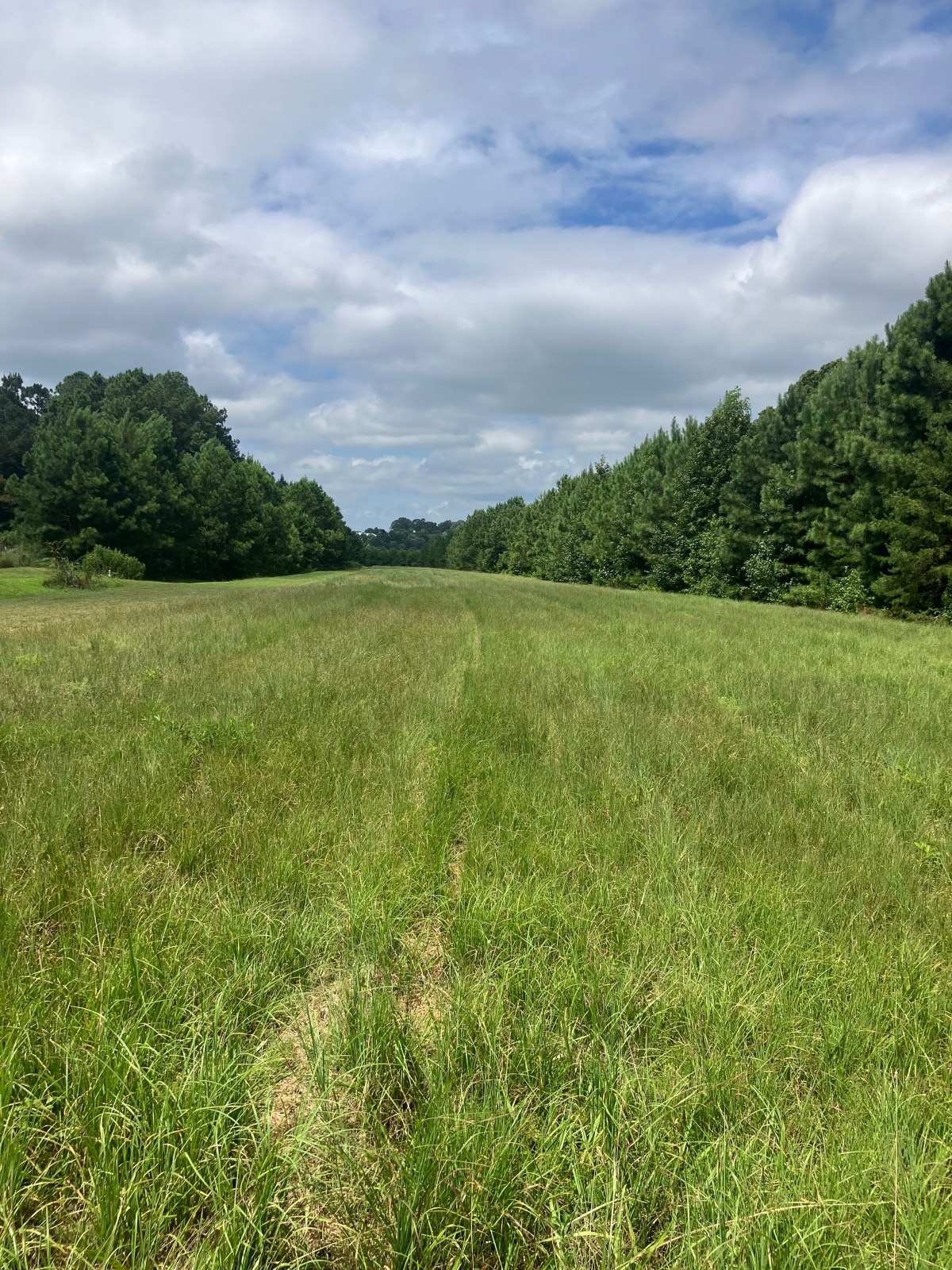
She walked through the Meadow.

She noticed where sunlight reached the grass and where the tree line held the shade.

She returned to the cabin when she felt like returning.

She ate cheese, crackers, and an apple because they required almost no preparation.

She read part of a novel.

She slept in the afternoon.

Later, she carried a towel and clean clothes to the Hub for a shower.

No one asked where she had been.

No one asked what she planned to do next.

No one asked what time dinner would be.

The day did not need to be coordinated.

It simply unfolded.

She began to understand that this was the thing she had needed.

Not distance from the people she loved.

Not permission to stop caring.

A temporary end to being the central switchboard through which everyone else’s life seemed to pass.

For three days, nobody needed an immediate answer from her.

Or perhaps they did, but discovered they could wait.

That difference mattered.

The question beneath the exhaustion

On her final morning, she opened the notebook.

She had imagined filling several pages.

She wrote only one sentence:

What would happen if I stopped answering every question before anyone else had the chance?

She did not make a plan.

She did not establish new rules for her family.

She did not promise herself that she would become unavailable, detached, or unconcerned.

She simply sat with the question.

There were good reasons people called her.

She was capable.

She paid attention.

She loved them.

But love did not always require an immediate answer.

Dependability did not require permanent access.

Being helpful did not require becoming responsible for every unfinished detail in another person’s life.

She closed the notebook.

Going home

Before leaving, she checked the cabin twice.

She folded the blanket.

Carried out the grocery sack.

Placed the used towel where instructed.

She put the phone in the cup holder and drove slowly along the gravel road.

At the first stop sign, it rang.

Her mother.

She smiled.

Then she let it ring once more before answering.

Not to punish her.

Not to prove a point.

Just to remind herself that a ringing phone was a request, not a command.

“Hey, Mama,” she said.

Her mother asked whether she had enjoyed the cabin.

“I did.”

“Did you figure everything out?”

She looked through the windshield at the road ahead.

“No,” she said. “But I remembered something.”

“What?”

She paused.

“That everybody doesn’t need an answer from me right this minute.”

Her mother was quiet for a moment.

Then she laughed.

“Well,” she said, “I could have told you that.”

Maybe she could have.

But sometimes we cannot hear even familiar truths until the noise around them becomes quiet.


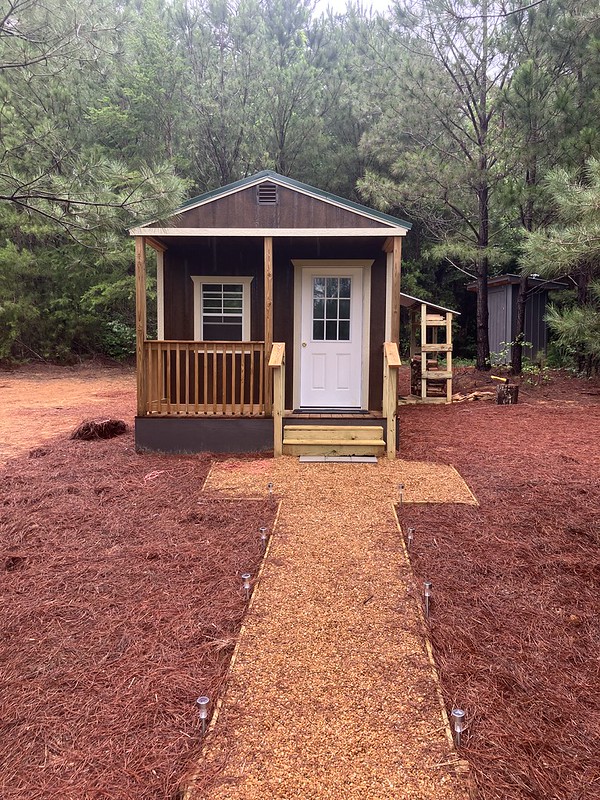
Oak Hollow Cabins offers private one-person reset stays near Boaz, Alabama.

West Hollow and East Hollow are simple cabins for guests who need temporary distance from ordinary demands and room to rest, read, write, walk, think, or simply become unavailable for a little while.

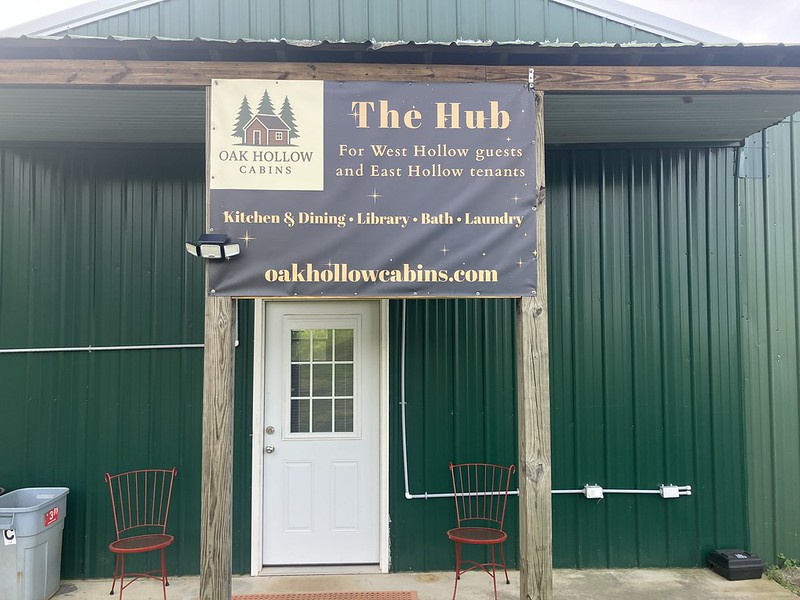
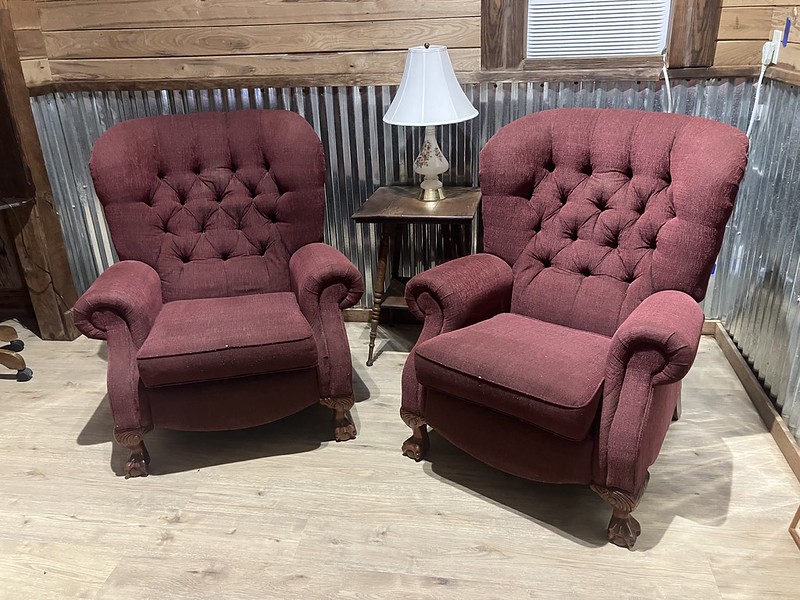
Guests also have access to the shared Hub for practical support, including a bathroom, shower, water, kitchen use, charging, laundry, and quiet indoor space.

Reset stays are available for a long weekend, seven days, or thirty days.

You do not have to be in crisis to need a pause.

Sometimes you have simply been available to everyone for too long.
Learn more about Oak Hollow reset stays.

What Makes West Hollow a Reset Cabin

Not every cabin stay is trying to do the same thing.

Some cabins are built for entertainment.

Some are built for families.

Some are built for comfort, convenience, and a long list of amenities.

Some are built to make a trip feel full.

West Hollow was built for something quieter.

It is Oak Hollow’s clearest reset cabin.

That does not mean it is better than every other kind of cabin. It does not mean it is right for everyone. It simply means West Hollow has a particular purpose.

It is a simple one-person cabin for someone who needs less noise, fewer distractions, and a short time away from ordinary life.

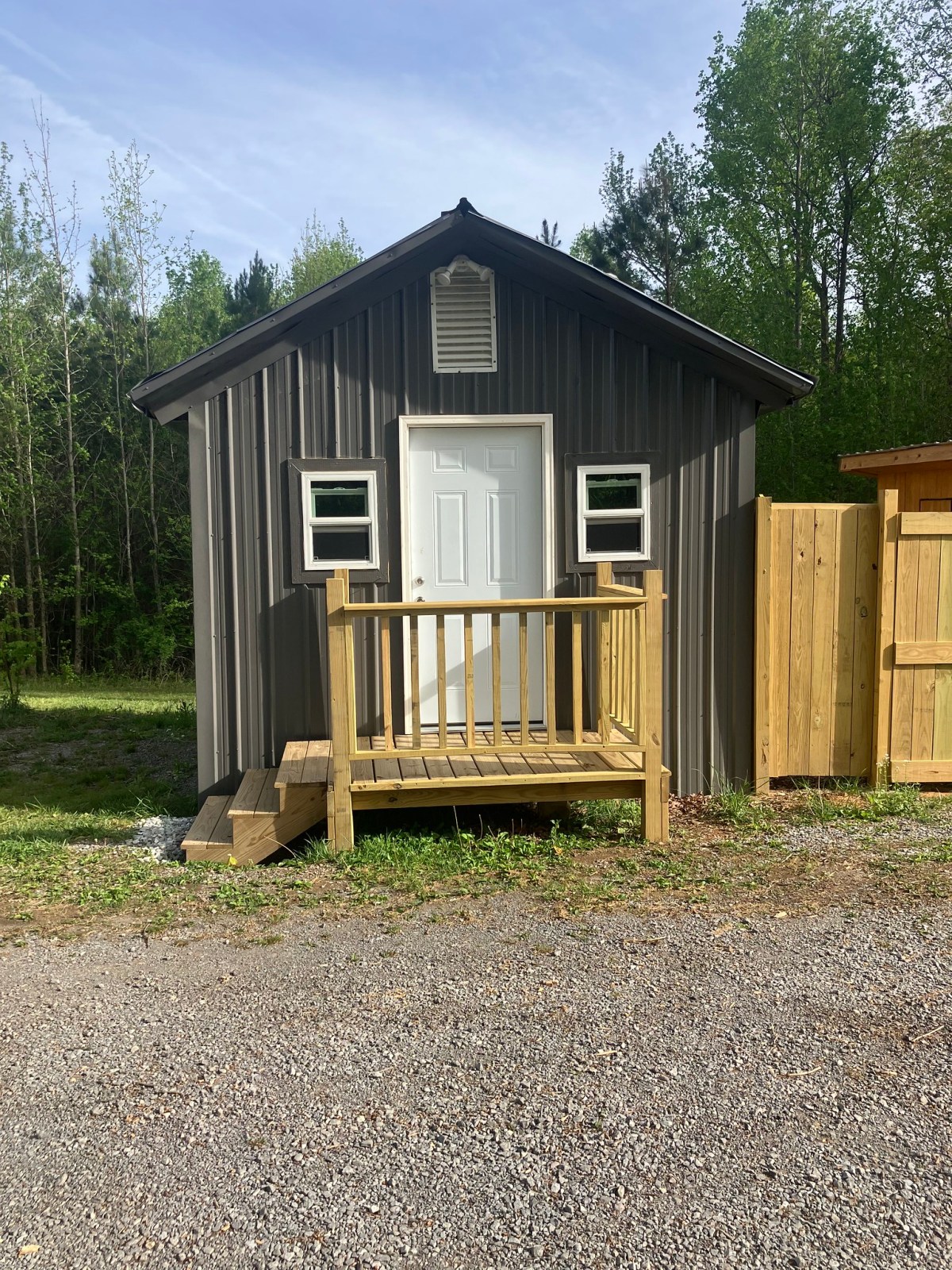
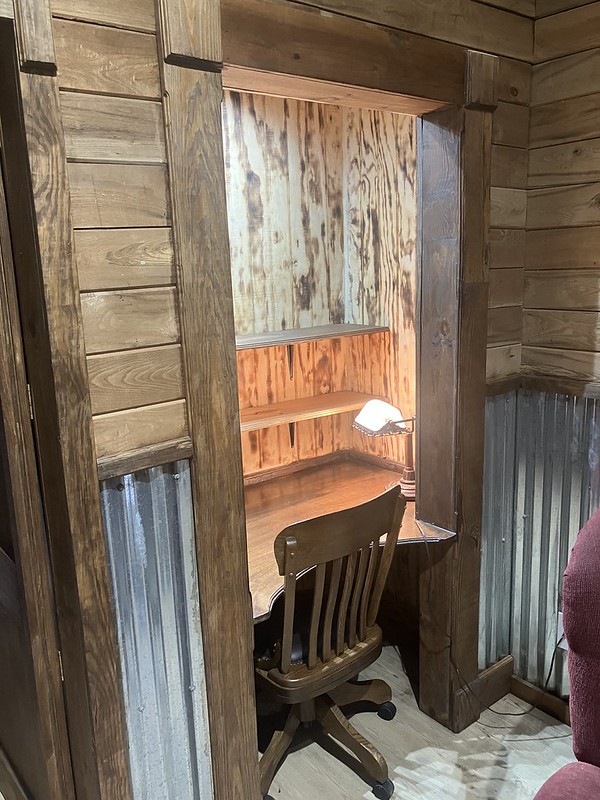
West Hollow is not designed around screens, entertainment, or constant convenience. There is no Wi-Fi in the cabin. There is no television. There is no built-in electricity, no pressurized running water, and no indoor bathroom.

For some people, that will sound like too little.

For the right guest, it may be the reason to come.

A reset cabin is not meant to keep a person busy.

It is not meant to fill the day with activities.

It is not meant to replace one form of noise with another.

The purpose is almost the opposite.

West Hollow gives one person a place to read, write, rest, think, walk, sit on the porch, sit by the fire, sleep, journal, and spend a few days unavailable on purpose.

That kind of quiet can feel strange at first.

Most of us are used to being reachable. We are used to background sound. We are used to screens nearby, messages waiting, tasks unfinished, and some next thing asking for attention.

A reset cabin removes some of that.

Not everything.

But enough.

Enough to notice the silence.

Enough to notice the woods.

Enough to notice the fire.

Enough to notice how tired you are.

Enough to notice what has been crowded out.

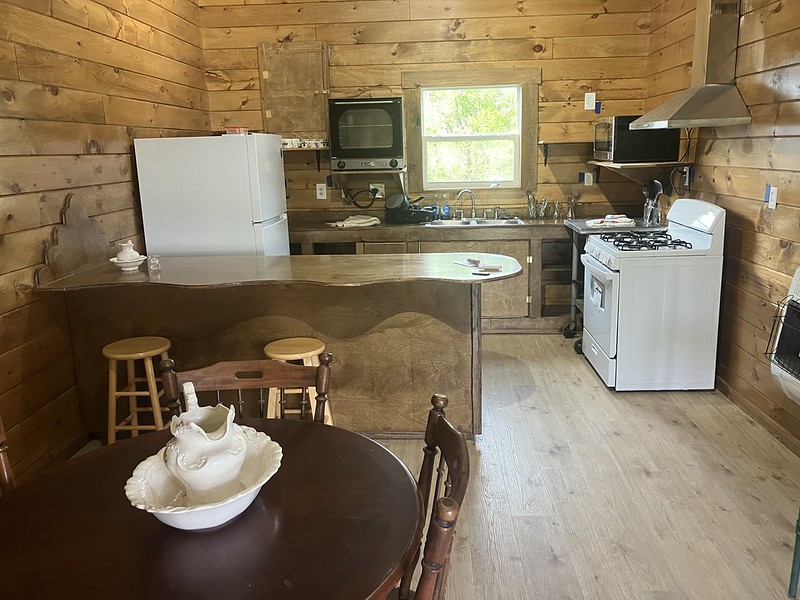
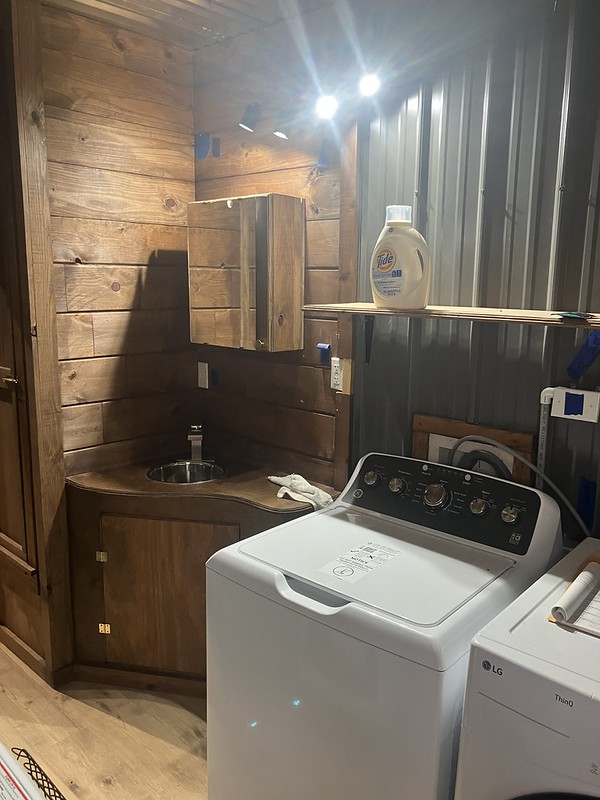
West Hollow is intentionally simple, but it is not meant to be harsh. Practical support is available by arrangement at the Hub, including bathroom, shower, water, charging, kitchen use, laundry, and indoor sitting or reading space.

That balance matters.

The cabin itself remains quiet and simple. The Hub provides enough ordinary support to keep the stay livable. The point is not to make basic needs difficult. The point is to keep the cabin free from the usual distractions that follow a person almost everywhere.

Oak Hollow now has two cabins, West Hollow and East Hollow, and we are learning to describe them more clearly.

East Hollow has its own place. It is also quiet and simple, with internal wiring powered by an external generator. It may be better suited for a longer quiet stay or for someone who needs more practical convenience during a temporary season.

West Hollow is different.

West Hollow asks less of the world and a little more of the guest.

It asks whether a person can sit still for a while.

It asks whether a day can become smaller.

It asks whether quiet might have something to give.

A reset stay does not promise transformation. It does not solve a life. It does not make decisions for anyone. It does not erase responsibility, grief, pressure, fatigue, or whatever waits back home.

But it can create room.

Room to sleep.

Room to read.

Room to write.

Room to breathe.

Room to think without being interrupted every few minutes.

Room to remember what a slower life feels like, even if only for a few days.

That is what makes West Hollow a reset cabin.

Not luxury.

Not novelty.

Not entertainment.

Not a long list of amenities.

A simple place.

One guest.

A quieter rhythm.

A short time away from ordinary noise.

Sometimes that is enough to begin again.

A Quiet Place to Step Away

Some people do not need a busy vacation.

They do not need a full schedule, a crowded place, another screen, or a long list of things to do.

They need quiet.

That is the simplest way to describe Oak Hollow Cabins.

Oak Hollow now offers two private, one-person off-grid cabin stays near Boaz, Alabama: West Hollow and East Hollow. Both are designed for people who need quiet, simplicity, and time away from ordinary noise.

They are not conventional vacation rentals. They are not party cabins, couple’s getaways, family rentals, or luxury retreats. They are simple cabins for one person at a time.

They are for someone who wants to read, write, rest, think, walk, sit by the fire, sleep, journal, or spend a few days unavailable on purpose.

That may sound unusual because many places are built around adding more.

More entertainment.

More amenities.

More activity.

More connection.

More reasons to keep the mind busy.

Oak Hollow is built around less.

Less noise.

Fewer distractions.

A slower rhythm.

A place where the day does not have to be filled.

A stay at Oak Hollow is not meant to impress anyone. It is not meant to perform. It is not designed for crowds, photographs, or constant sharing.

It is meant to give one person a quiet place to step away for a short time.

The cabins are intentionally simple, though they are not identical. West Hollow is fully off-grid with no built-in electricity, no pressurized running water, no indoor bathroom, no Wi-Fi, and no TV. East Hollow remains simple and quiet, but it does have internal wiring powered by an external generator. Neither cabin is designed around screens, entertainment, or ordinary household convenience.

For some people, that will be too simple.

For others, that may be the point.

The quiet is not an accident. It is part of the stay.

Practical support is available by arrangement at the Hub, including bathroom, shower, water, charging, kitchen use, laundry, and indoor sitting or reading space. The Hub helps make the off-grid cabin stay livable without turning the cabins themselves into ordinary rooms filled with the usual distractions.

A quiet place does not solve everything.

It does not make decisions for a person. It does not remove grief, responsibility, work, fatigue, or whatever waits back home.

But quiet can create room.

Room to breathe.

Room to think.

Room to sleep.

Room to read a few pages without interruption.

Room to write a few sentences.

Room to remember what a slower day feels like.

That is what Oak Hollow is trying to offer.

Not a resort.

Not a campground.

Not a traditional vacation rental.

A quiet place to step away.

For one person.

For a few days.

For enough silence to begin again.

Both West Hollow and East Hollow are now listed on Vrbo for guests who prefer to view availability, photos, and booking details there. Guests may also learn more through the Oak Hollow Cabins website.

However someone finds us, the purpose remains the same.

A simple cabin.

A quiet setting.

One guest at a time.

A place to step away from the noise long enough to hear yourself think again.

What the Hub Adds to an Off-Grid Stay

An off-grid cabin can sound peaceful in theory and uncertain in practice.

The word may call up images of candlelight, silence, trees, and a slower rhythm. But it may also raise practical questions. Where do I shower? Where do I charge a phone? What about water? What if I need a bathroom, a sink, a little indoor space, or a place to sit for a while outside the cabin?

At Oak Hollow Cabins, we want the cabins to remain simple without making the stay feel barren.

That is where the Hub matters.

West Hollow and East Hollow are private one-person cabins designed for quiet, rest, reading, writing, thinking, walking, and time away from noise. They are intentionally simple. They are not conventional vacation rentals, party cabins, couple’s getaways, or fully furnished tiny houses.

Inside the cabin, there is no built-in electricity, no pressurized running water, no indoor bathroom, no Wi-Fi, and no TV.

That simplicity is part of the point.

But simplicity does not have to mean abandonment.

The Hub provides practical support by arrangement. It is the place where ordinary needs can be met without turning the cabin itself into another version of everyday life.

At the Hub, guests may have access by arrangement to bathroom and shower facilities, water, charging, kitchen use, laundry, and indoor sitting or reading space.

That matters because a quiet stay is not helped by unnecessary hardship.

The cabin should remove noise, not create confusion. It should reduce distraction, not make every simple need difficult. It should allow a person to step away from the usual pace of life without having to pretend the body does not still need practical care.

In that sense, the Hub helps protect the purpose of the cabins.

The cabin remains quiet.

The cabin remains simple.

The cabin remains free of television, Wi-Fi, and the ordinary pull of constant availability.

But nearby, by arrangement, there is support.

That balance is important.

Some people do not need a resort. They do not need entertainment, a schedule, a group program, or a full calendar of things to do. They may not even need much comfort in the usual vacation-rental sense.

They may simply need a private place to sleep, read, write, think, walk, sit on a porch, sit by a fire, and let the day become less crowded.

For that kind of stay, the Hub adds enough.

Enough water.

Enough practical support.

Enough access to ordinary necessities.

Enough reassurance that the off-grid cabin is not isolated from help.

Oak Hollow is not trying to hide what the cabins are. They are simple. They are one-person cabins. They are off-grid. They are not for everyone.

But for the right guest, that simplicity is not a deficiency.

It is the invitation.

And the Hub makes that invitation more livable.

It lets the cabin be what it is meant to be: a quiet place apart.

Not a place to be entertained.

Not a place to perform.

Not a place filled with screens and noise.

A place to step away for a while, with enough support nearby to make the quiet possible.


The Life You Keep Postponing

Sometimes a person already knows they need to pause.

They may not say it out loud.

They may not have a plan.

They may not know where they would go, what they would do, or how they would explain it to anyone else.

But somewhere underneath the daily noise, they know.

They need to stop for a little while.

Not forever.

Not dramatically.

Not to abandon their responsibilities.

Just long enough to breathe, think, rest, and hear themselves again.

But instead of stopping, they keep saying the same thing:

Later.

After this week.

After this season.

After things calm down.

After everyone else is okay.

After the next decision is made.

After the next bill is paid.

After the next problem is solved.

And somehow, later keeps moving.

Later Can Become a Way of Life

There is nothing wrong with postponing something for a good reason.

Life has real obligations.

People have work, families, bills, appointments, animals, parents, children, deadlines, and responsibilities that cannot always be set aside.

But sometimes postponing becomes more than a temporary delay.

Sometimes it becomes a way of living.

The pause keeps getting pushed forward.

The walk never happens.

The notebook stays closed.

The question never gets asked.

The quiet never gets protected.

The person keeps going, keeps responding, keeps carrying, keeps adjusting, keeps saying yes, keeps making it through.

And from the outside, everything may look fine.

But inside, something important may be waiting for attention.

What Gets Lost While We Keep Going

The cost of postponement is not always obvious.

It may not look like a crisis.

It may look like ordinary life.

A person keeps working.

Keeps answering messages.

Keeps showing up.

Keeps being needed.

Keeps scrolling at night because stillness feels too hard.

Keeps filling the day because emptiness might reveal something.

Keeps waiting for a better time to ask what they actually need.

But while life keeps moving, certain things can quietly disappear.

The ability to rest.

The ability to think without interruption.

The ability to notice what the body has been saying.

The ability to tell the truth about a season that is over.

The ability to make a decision from clarity instead of exhaustion.

The ability to remember that life is not only something to manage.

Sometimes the saddest thing is not that a person never had time.

It is that they kept waiting for time to give them permission.

A Reset Is Not a Cure-All

A reset stay does not fix a life.

It does not solve grief.

It does not make a hard decision easy.

It does not replace medical care, counseling, friendship, work, family, or responsibility.

A cabin cannot do that.

Quiet cannot do everything.

A few days away cannot answer every question.

That matters.

Oak Hollow is not built around promises like that.

A reset stay is simpler.

It is a temporary step away from ordinary noise.

It is a place where the day is not already crowded before it begins.

It is a place where a person can rest, read, write, walk, sit by a fire, cook simply, sleep, think, or do very little.

It is not everything.

But it is something.

One Concrete Step

Sometimes the most important thing about a pause is that it becomes real.

Not an idea.

Not a someday wish.

Not a sentence that begins, “One of these days…”

A real place.

A real date.

A real cabin.

A real morning without the usual demands.

A real evening without the usual noise.

That is why a reset stay can matter.

Not because it solves everything, but because it interrupts the pattern of never stopping.

For some people, that may mean a long weekend.

For others, a week.

For someone in a deeper transition, maybe longer.

The length is not the main point.

The main point is choosing not to postpone the pause forever.

While There Is Still Time

There will always be reasons to wait.

Some of them will be real.

Some will be habits wearing the clothes of responsibility.

Each person has to know the difference for themselves.

But there is a question worth asking:

If you keep postponing the quiet you already know you need, what will that cost you?

Not in money.

In attention.

In clarity.

In peace.

In the ability to hear your own life before another year passes.

Oak Hollow exists for people who are ready for a quieter step away.

Not because life is simple.

Because life is not simple.

Not because responsibilities do not matter.

Because they do.

Not because a reset stay is magic.

Because sometimes one concrete pause is better than another season of saying later.

The life you keep postponing may not require a complete reinvention.

It may begin with a few quiet days.

A bed.

A chair.

A fire.

A walk.

A notebook.

A little space to breathe.

And the decision to stop waiting for a perfect time that may never arrive.

Learn more about Reset Cabins at Oak Hollow