The first time her phone rang, she answered it.
She had been at the cabin less than an hour.
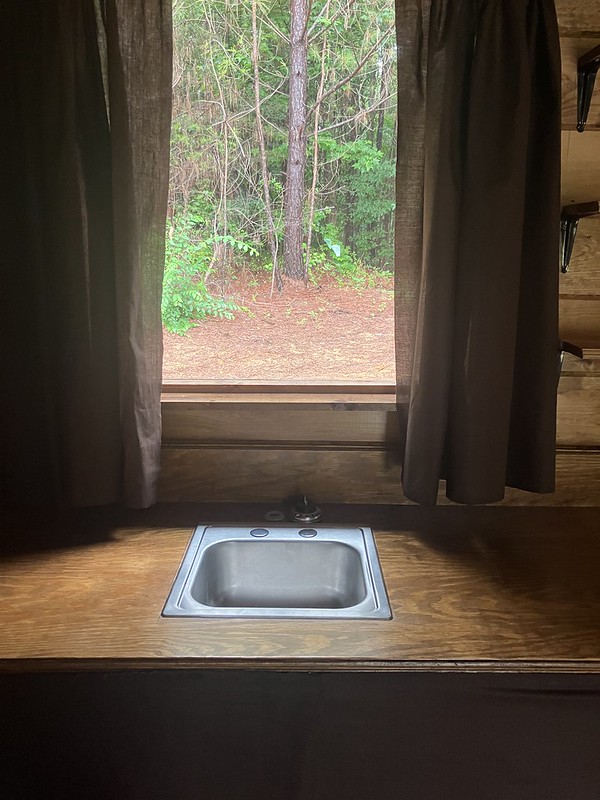
Her bag was still on the bed. A grocery sack sat on the floor beside the small counter. She had opened the curtains but had not yet sat down long enough to look through the window.
The call was from her mother.
Nothing was wrong.
Her mother wanted to know whether the pharmacy would have the prescription ready before closing.
She probably could have called the pharmacy herself.
But she called her daughter instead.
Her daughter knew the name of the medication, which pharmacy they used, what time it closed, and which road was under construction between her mother’s house and town.
She always knew.
She checked the pharmacy app, confirmed the prescription, and reminded her mother to take her insurance card.
The call lasted four minutes.
Afterward, she placed the phone on the counter.
Then it buzzed with a message from work.
Someone wanted to know where she had saved a document.
She answered that too.
The file was in the same shared folder where it had always been, but she sent the link and added a sentence explaining which version to use.
Then her sister texted.
Then her son.
Then the neighborhood group.
Nobody was demanding anything unreasonable.
That was what made the weight difficult to explain.
The person who usually knows
She had become the person who knew.
She knew when the appointment was.
She knew which bill had already been paid.
She knew what her mother needed from the store.
She knew where the spare key was kept.
She knew which relative was no longer speaking to which other relative and what subjects should be avoided at Sunday lunch.
At work, she remembered deadlines no one had placed on the calendar.
At home, she noticed what was running low before anyone else did.
She could listen to a problem, ask the right questions, and usually suggest what should happen next.
People described her as dependable.
She was proud of that.
Most days.
But being dependable had slowly become something else.
It had become constant availability.
Her phone did not merely connect her to other people.
It carried their unfinished thoughts, minor emergencies, forgotten details, decisions, requests, and uncertainties into every part of her day.
She answered while buying groceries.
While eating.
While sitting in the car.
While brushing her teeth.
Sometimes she woke during the night and remembered something that belonged to someone else.
She did not think of herself as exhausted.
She thought of herself as behind.
The reason she came
She had reserved three nights at Oak Hollow after an unusually ordinary Tuesday.
Nothing terrible happened that day.
Her mother had called twice.
A coworker had failed to complete a task.
Her son needed help comparing two insurance estimates.
A friend wanted advice about whether to accept a new job.
The washing machine began making a noise.
There was no milk.
Dinner had to be decided.
By seven o’clock, she was standing in the kitchen holding the refrigerator door open, unable to choose between eggs and a sandwich.
Her husband asked what was wrong.
She said, “I don’t want to answer another question.”
He looked concerned.
She laughed because she did not want him to think she was angry with him.
But later, alone in the bedroom, she searched for a quiet cabin.
Not a vacation destination.
Not a place with an itinerary.
Not somewhere she would be expected to sightsee, shop, or make the most of every hour.
She searched for somewhere close enough to reach without turning the trip into another project.
That was how she found Oak Hollow.
Her first evening
After the early calls, she considered placing the phone on airplane mode.
Instead, she carried it outside.
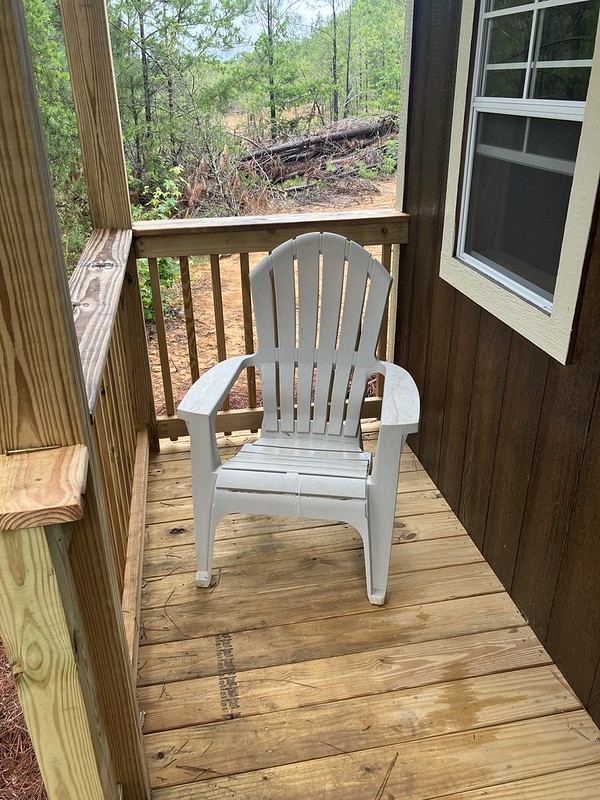
She sat on the porch and positioned it face down on the chair beside her.
For several minutes, she listened for it.
The woods were not silent.
There were birds, insects, and the occasional movement of leaves. Somewhere farther away, a dog barked once and stopped.
But none of those sounds required a response.
She noticed that difference.
The phone vibrated against the wooden seat.
She turned it over.
A message from her sister:
Do you remember the name of that place where Mama got her glasses?
She typed the name.
Then she added:
I’m putting my phone away for the evening. Everything is fine. I’ll check it tomorrow morning.
She stared at the message before sending it.
It felt unnecessarily dramatic.
She almost deleted the last two sentences.
Instead, she pressed send.
Then she took the phone inside, placed it in her bag, and zipped the bag closed.
What remained after the phone stopped
She expected immediate relief.
What came first was uneasiness.
She wondered whether her mother might need something.
Whether the work document was correct.
Whether her son would choose the wrong estimate.
Whether someone would interpret her silence as irritation.
She walked from the cabin toward the Hub and back again.
She heated soup.
She washed the bowl.
She opened a book but read the same paragraph three times.
At home, she often said that she wished people would stop needing her.
Now that they had stopped—at least temporarily—she did not know what to do with herself.
Her usefulness had become so closely tied to her identity that its absence felt almost like disappearance.
Who was she when nobody was asking?
The question followed her onto the porch as evening settled through the trees.
She did not answer it.
For once, no answer was required.
The second morning
She woke before daylight and reached toward the bedside table.
The phone was not there.
For a moment, she could not remember where she had put it.
Then she remembered the zipped bag.
She remained in bed.
The cabin was cool and dim. A faint gray light outlined the window.
She listened.
No television.
No incoming messages.
No voices from another room.
No question about breakfast.
She closed her eyes again and slept for another hour.
Later, she made coffee and carried it outside.
The porch boards were damp from the night air.
She sat without a book or notebook.
At first, she felt she should retrieve one.
She had brought both.
A reset should contain reflection, she thought.
Perhaps she ought to write something meaningful.
Instead, she watched a small bird move from one branch to another.
It disappeared, then returned.
She finished the coffee.
Nothing had been accomplished.
Still, the morning felt complete.
Nobody needed her for a while
She checked her phone at ten.
There were messages.
Her mother had found the optical shop’s number in an old receipt.
Her coworker had located the file without further help.
Her son had called the insurance company and made his own decision.
Her friend had texted:
No need to answer while you’re away. I think I know what I’m going to do.
The world had continued.
Not perfectly.
Not exactly as she would have arranged it.
But it had continued.
She read the messages twice.
Her first feeling was relief.
Her second was harder to name.
For years, she had believed that constant availability was an expression of love, competence, and responsibility.
Sometimes it was.
But perhaps it was also preventing other people from remembering what they could do for themselves.
Perhaps every unanswered question was not an emergency.
Perhaps her attention did not have to remain open like a store that never closed.
She placed the phone back in the bag.
This time she did not zip it shut.
She no longer needed the barrier.
A day without managing it
She walked through the Meadow.
She noticed where sunlight reached the grass and where the tree line held the shade.
She returned to the cabin when she felt like returning.
She ate cheese, crackers, and an apple because they required almost no preparation.
She read part of a novel.
She slept in the afternoon.
Later, she carried a towel and clean clothes to the Hub for a shower.
No one asked where she had been.
No one asked what she planned to do next.
No one asked what time dinner would be.
The day did not need to be coordinated.
It simply unfolded.
She began to understand that this was the thing she had needed.
Not distance from the people she loved.
Not permission to stop caring.
A temporary end to being the central switchboard through which everyone else’s life seemed to pass.
For three days, nobody needed an immediate answer from her.
Or perhaps they did, but discovered they could wait.
That difference mattered.
The question beneath the exhaustion
On her final morning, she opened the notebook.
She had imagined filling several pages.
She wrote only one sentence:
What would happen if I stopped answering every question before anyone else had the chance?
She did not make a plan.
She did not establish new rules for her family.
She did not promise herself that she would become unavailable, detached, or unconcerned.
She simply sat with the question.
There were good reasons people called her.
She was capable.
She paid attention.
She loved them.
But love did not always require an immediate answer.
Dependability did not require permanent access.
Being helpful did not require becoming responsible for every unfinished detail in another person’s life.
She closed the notebook.
Going home
Before leaving, she checked the cabin twice.
She folded the blanket.
Carried out the grocery sack.
Placed the used towel where instructed.
She put the phone in the cup holder and drove slowly along the gravel road.
At the first stop sign, it rang.
Her mother.
She smiled.
Then she let it ring once more before answering.
Not to punish her.
Not to prove a point.
Just to remind herself that a ringing phone was a request, not a command.
“Hey, Mama,” she said.
Her mother asked whether she had enjoyed the cabin.
“I did.”
“Did you figure everything out?”
She looked through the windshield at the road ahead.
“No,” she said. “But I remembered something.”
“What?”
She paused.
“That everybody doesn’t need an answer from me right this minute.”
Her mother was quiet for a moment.
Then she laughed.
“Well,” she said, “I could have told you that.”
Maybe she could have.
But sometimes we cannot hear even familiar truths until the noise around them becomes quiet.
Oak Hollow Cabins offers private one-person reset stays near Boaz, Alabama.
West Hollow and East Hollow are simple cabins for guests who need temporary distance from ordinary demands and room to rest, read, write, walk, think, or simply become unavailable for a little while.
Guests also have access to the shared Hub for practical support, including a bathroom, shower, water, kitchen use, charging, laundry, and quiet indoor space.
Reset stays are available for a long weekend, seven days, or thirty days.
You do not have to be in crisis to need a pause.
Sometimes you have simply been available to everyone for too long.