You Do Not Have to Make Your Reset Productive

A person can turn almost anything into work.

Even rest.

We can schedule the quiet, measure the walking, count the pages read, fill the notebook, evaluate our sleep, and quietly ask whether we are making good enough use of the time.

We can arrive at a cabin carrying fewer belongings but bring the same old pressure with us:

I need to accomplish something while I am here.

Maybe you believe you should finally make the decision you have been avoiding.

Maybe you expect to outline the next chapter of your life.

Maybe you intend to read three books, fill twenty pages of a journal, walk several miles every day, develop a new morning routine, and return home as a calmer and more certain person.

None of those things would be wrong.

But they are not requirements.

You do not have to make your reset productive.

The pressure can follow you into the quiet

Many of us are accustomed to evaluating a day by what it produced.

What did I finish?

What did I solve?

What did I decide?

What can I show for the time?

That habit does not disappear simply because we step into a quiet cabin.

In fact, the first hours without ordinary demands may make the habit more visible.

You sit down.

Nothing is ringing.

No one needs an immediate response.

There is no television filling the room. No list of attractions you are expected to visit. No schedule telling you where to be next.

And almost immediately, the mind begins creating work.

You should write.

You should think.

You should figure this out.

You should not waste the opportunity.

The room becomes quiet, but the pressure keeps talking.

That does not mean the reset is failing.

It may mean you are finally quiet enough to notice how much pressure you normally carry.

The first day may be mostly arrival

Your body may reach the cabin before the rest of you does.

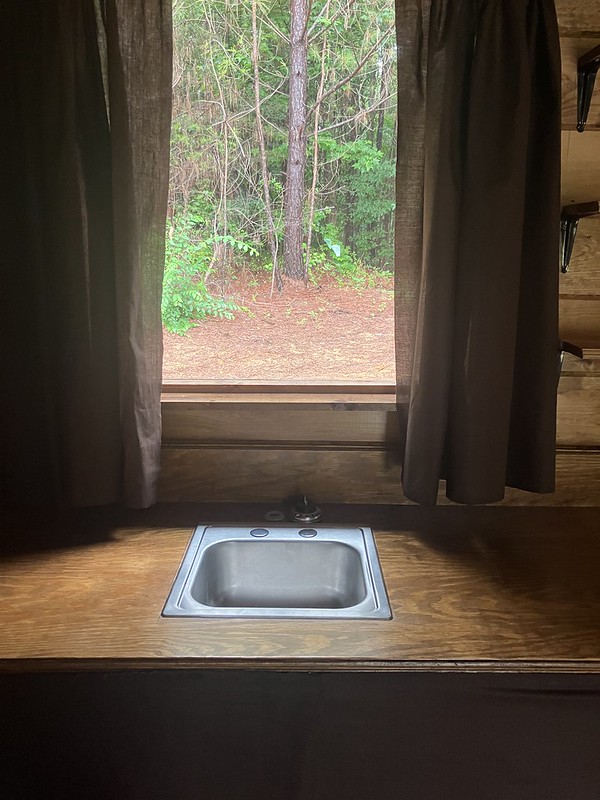
You have parked near the Hub, carried your things down toward West Hollow, placed a bag beside the bed, and looked through the large rear window.

Technically, you have arrived.

But your attention may still be somewhere else.

Part of you may still be answering a conversation from that morning.

Part of you may be thinking about what needs to happen when you return.

You may reach for your phone without deciding to.

You may feel restless.

You may wonder whether you brought the right food, chose the right book, or made a mistake coming.

A reset does not always begin with immediate peace.

Sometimes it begins with the uncomfortable discovery that you have forgotten how to stop.

That first afternoon may not need to contain an insight.

It may need to contain a nap.

A simple meal.

A slow walk through the Meadow.

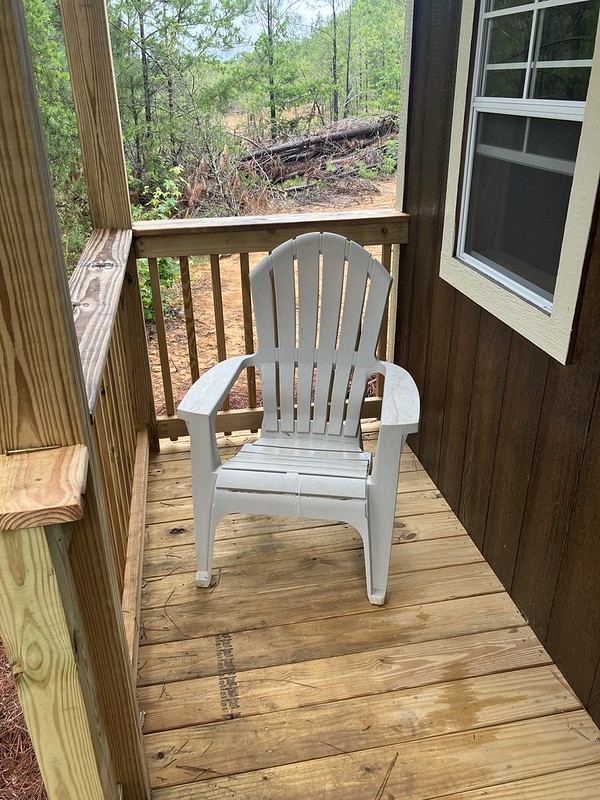
A chair on the porch.

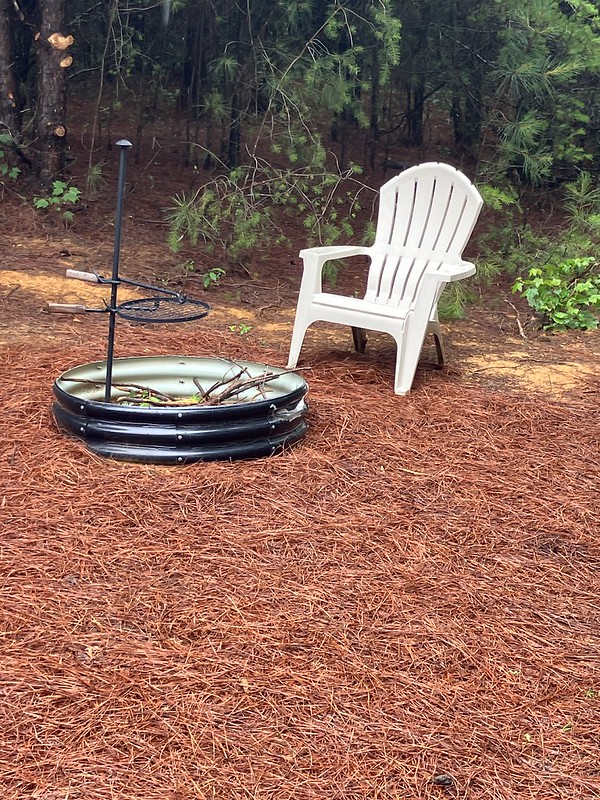
A few minutes beside the fire.

An early night.

Arrival is not wasted time.

Arrival is part of the reset.

Rest does not have to justify itself

We often treat rest as something that must earn its place.

We rest so we can work harder later.

We sleep so we can become more efficient.

We walk so we can improve our health.

We sit quietly so we can solve a problem.

Again, those benefits may come.

But rest does not always need to serve another purpose.

You may be tired.

That may be enough.

You may need to sit beside a window and watch the light change through the trees without turning the experience into a lesson.

You may need to read ten pages and then put the book down.

You may need to write one sentence in a notebook—or none.

You may need to let an entire morning pass without deciding what it meant.

A quieter day can still be a full day, even when it produces nothing you can measure.

Clarity often arrives indirectly

The harder we demand an answer, the more difficult it can become to hear one.

Suppose you arrive at West Hollow carrying a decision.

You have three possible directions. Each has consequences. Other people have opinions. You have already made lists, talked it through, and spent too many late nights trying to force certainty.

You may believe the purpose of the stay is to choose.

But what happens when you stop making the decision the assignment?

Perhaps you walk.

Perhaps you prepare something uncomplicated to eat at the Hub.

Perhaps you sit on the porch while the woods darken.

Perhaps you sleep longer than expected.

Perhaps you read something unrelated to your problem.

Then, sometime during the second morning, one part of the decision feels less urgent.

Or one question becomes more honest.

Or you realize you already know what you do not want, even though you do not yet know what comes next.

Clarity may come.

But it often arrives as a byproduct of reduced pressure, not as the reward for pressing harder.

And sometimes clarity does not arrive during the stay at all.

Sometimes the reset simply loosens something.

The answer appears later, after you have gone home, because you are no longer gripping the question in quite the same way.

A reset is not a performance

There is no correct way to spend a quiet stay at Oak Hollow.

You do not have to wake before sunrise.

You do not have to meditate.

You do not have to keep a journal.

You do not have to walk a certain number of miles.

You do not have to avoid your phone perfectly.

You do not have to build a fire, finish a book, discover your purpose, or return home with an announcement.

You may do some of those things.

But a reset is not a performance of simplicity.

It is not a test of whether you can become the kind of person who rests correctly.

It is a temporary reduction of ordinary noise and demand.

What happens within that quieter space will be different for each guest.

One person may write for hours.

Another may sleep.

One may walk repeatedly through the Meadow.

Another may sit almost motionless on the porch.

One may arrive with a large decision and leave with a clear answer.

Another may leave with only a little more room around the question.

Both stays may have mattered.

Enough for one day

A reset can become gentler when you stop asking what the whole stay must accomplish.

Ask instead:

What would be enough for this one day?

Enough might be unpacking your bag and settling into the room.

Enough might be eating when you are hungry.

Enough might be leaving the phone inside while you take one slow walk.

Enough might be writing down one question without trying to answer it.

Enough might be noticing the sound of rain on the cabin roof.

Enough might be going to bed early.

The next day can be allowed to become its own day.

You do not have to extract everything from the quiet at once.

What you may carry home

You may leave Oak Hollow with a decision.

You may leave with several notebook pages, a revised plan, or a conversation you know you need to have.

But you may carry home something less visible.

A night of deeper sleep.

The memory of an unhurried morning.

The recognition that your body was more tired than you had admitted.

A question that finally became clear enough to name.

The realization that you do not need to solve everything this week.

The experience of living for a few days without constant input.

The knowledge that less pressure did not cause your life to collapse.

Those things may not look productive.

They may still be important.

A reset does not have to transform your life to be worthwhile.

Sometimes it is enough for the noise to lessen.

Sometimes it is enough to rest before deciding.

Sometimes it is enough to remember that you are a person—not a project that must always be improved.


Oak Hollow Cabins offers one-person reset stays near Boaz, Alabama.

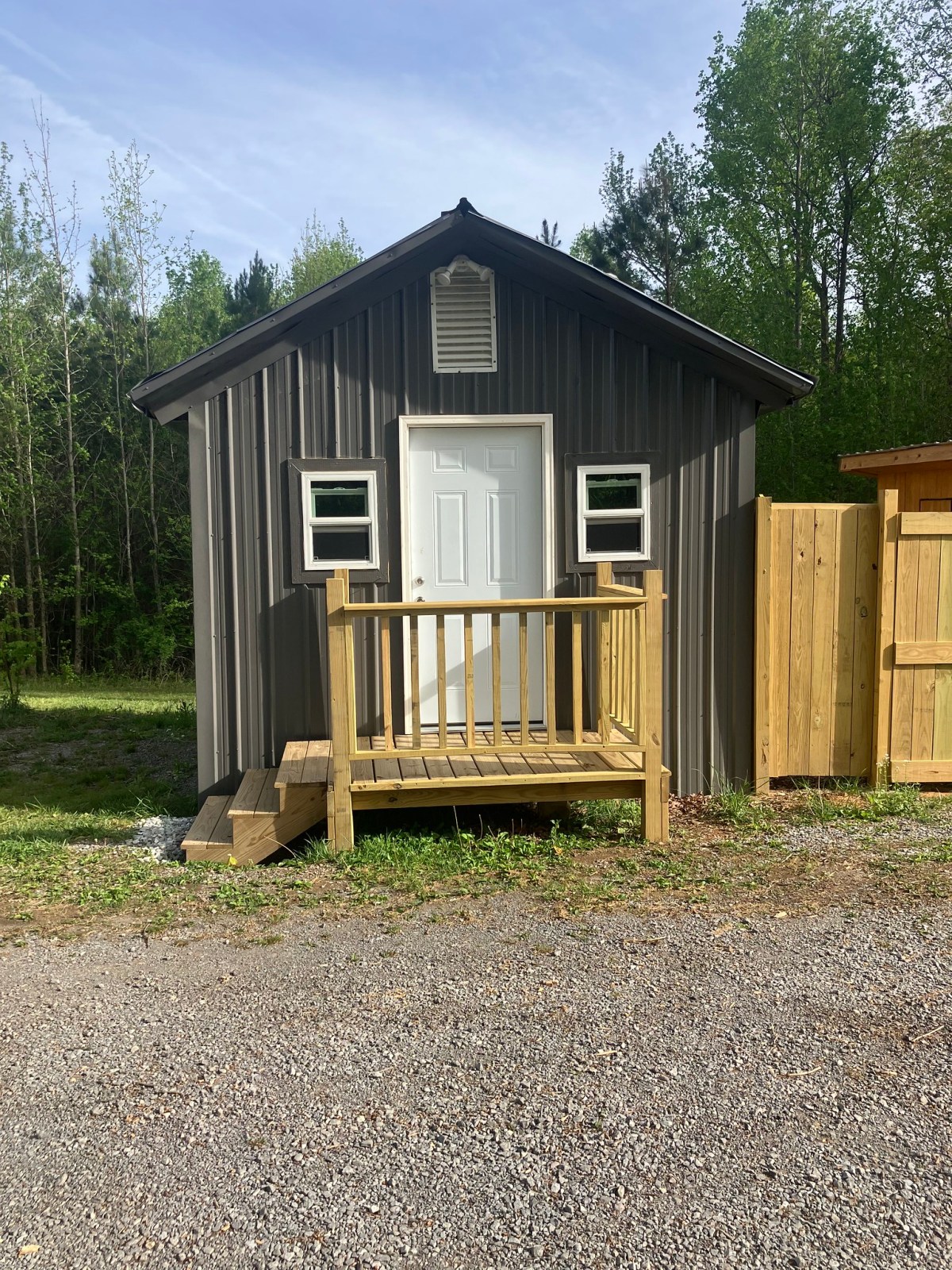
West Hollow is a simple, private, off-grid cabin supported by the nearby Hub, where guests have access to practical necessities including a bathroom, shower, water, charging, kitchen use, laundry, and quiet indoor space.

Reset stays are available for a long weekend, seven days, or thirty days.

You do not need to arrive with a plan for changing your life.

You may simply need somewhere quiet enough to stop pushing for a little while.

Learn more about West Hollow and Oak Hollow reset stays.

She Was Not Looking for a Vacation

She had looked at vacation rentals before.

Most of them promised more.

More activities. More attractions. More restaurants. More places to shop. More things to see before returning home exhausted from having successfully enjoyed herself.

That was not what she needed.

She was not unhappy enough to call her life a crisis. Nothing had collapsed. She still went to work, answered messages, bought groceries, kept appointments, and remembered most of what other people expected her to remember.

From the outside, her life was working.

That was part of the problem.

A life can keep working long after the person living it has lost enough quiet to know how she feels about it.

For several months, she had been carrying a decision.

It was not one decision, exactly. It was work, family, money, responsibility, and the growing suspicion that the life she had been maintaining no longer fit as well as it once had.

Every time she tried to think about it, another voice entered the room.

What would her family think?

What was financially sensible?

Was she being selfish?

Should she simply be grateful?

What if she changed something and regretted it?

What if she changed nothing and regretted that?

She did not lack advice.

She lacked a place where the advice could become quiet long enough for her own thought to appear.

One evening, she searched for cabins.

She did not type “luxury.”

She did not type “romantic getaway,” “family vacation,” or “things to do.”

She typed something closer to what she meant:

quiet cabin for one

That was how she found Oak Hollow.

The photographs did not show a resort. There was no swimming pool arranged for the camera, no game room, and no television mounted above a decorative fireplace.

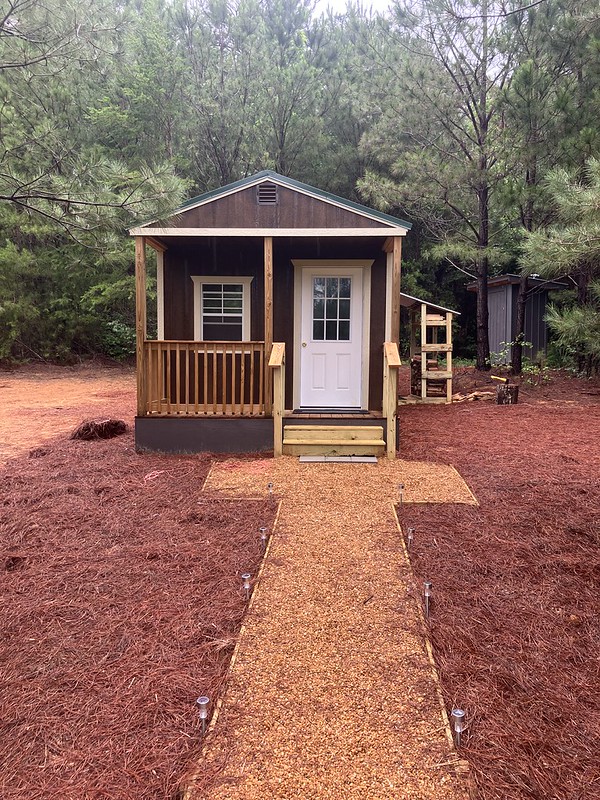
There was a small cabin.

A bed.

A chair.

A place to write.

Trees beyond the window.

A path leading back toward the shared Hub.

The description was almost unusually honest. The cabin was for one person. It was quiet and simple. West Hollow did not have built-in electricity, pressurized water, Wi-Fi, or a television. The Hub provided access to practical support—a bathroom, shower, water, charging, and basic kitchen use.

The simplicity was not hidden.

It was the point.

She kept reading.

Oak Hollow was not offering to entertain her. It was offering to stop competing for her attention.

She pictured arriving with one bag, a few groceries, two books, and the notebook she kept buying but rarely used.

She imagined putting her phone away.

Not forever.

Just long enough to discover which thoughts remained after the constant input stopped.

She imagined waking without immediately checking what had happened elsewhere.

She imagined carrying coffee to the porch and sitting there without converting the morning into a task.

She imagined walking through the Meadow slowly enough to notice that she had been holding tension in her shoulders.

Nothing dramatic happened in the picture she formed.

That was what made it feel possible.

She would not arrive as one person and leave three days later with her life solved.

She might simply sleep.

Read.

Write badly for a while.

Sit beside a fire.

Walk to the Hub for a shower.

Prepare something uncomplicated to eat.

Look through the large rear window after dark and allow the questions to remain questions.

Perhaps the decision she had been carrying would become clearer.

Perhaps it would not.

But clarity was not the only thing she needed.

She also needed relief from the feeling that every hour had to produce an answer.

She returned to the Oak Hollow page the following morning.

This time, she noticed the words reset stay.

Not escape.

Not reinvention.

Not vacation.

Reset.

The word felt modest enough to trust.

A reset did not promise a different life. It offered a little distance from the machinery of the present one.

Enough distance to notice what was exhausting her.

Enough quiet to distinguish responsibility from habit.

Enough simplicity to remember that a day did not have to be crowded to be worthwhile.

She still did not know whether she would reserve the cabin.

But she sent a message.

It was only a few sentences:

I am not exactly sure what kind of stay I need. I have several things I need to think through, and I believe I need to be alone somewhere quiet for a few days. Could you tell me whether West Hollow might be a good fit?

That was all.

She had not solved the decision.

She had done something smaller.

She had admitted that she could no longer hear herself think.

And she had begun looking for a place where she might.


Oak Hollow Cabins offers simple, private reset stays for one person near Boaz, Alabama. West Hollow is designed for reading, writing, resting, walking, and stepping temporarily away from ordinary demands.

It is not a conventional vacation rental or a full-service resort.

It is a quieter place to think.

Learn more about West Hollow or begin a conversation at Oak Hollow Cabins.

Maybe It Isn’t a Vacation You Need

Sometimes the word vacation does not quite fit.

A vacation can be good. There are times when people need travel, scenery, restaurants, events, family time, entertainment, or a change of place filled with things to do.

But not every tired person needs that kind of trip.

Some people do not need more activity.

They do not need a fuller schedule.

They do not need another place where the day has to be planned, photographed, shared, managed, or filled.

They need quiet.

That is one of the reasons Oak Hollow Cabins exists.

Oak Hollow is not trying to be a resort. It is not a campground, a party cabin, a family rental, or a conventional vacation place built around entertainment.

It is something simpler.

A quieter place to step away in North Alabama.

West Hollow and East Hollow are both one-person cabin stays near Boaz, Alabama. They are simple, private, and quiet on purpose. They are for people who may need a short time away from ordinary noise, pressure, screens, decisions, and the habit of being constantly available.

That need can be hard to name.

A person may only know she is tired.

Or restless.

Or stretched thin.

Or unable to think clearly.

Or tired of being needed.

Or tired of noise.

Or tired of living every day inside the same demands, the same rooms, the same screens, the same interruptions.

At first, she may think she needs a vacation.

But maybe what she really needs is a quieter day.

A place to sleep.

A place to read.

A place to sit without having to explain anything.

A place to write a few sentences.

A place to walk.

A place to sit by a fire.

A place where no one expects her to entertain, perform, host, manage, or respond right away.

That is a different kind of stay.

West Hollow may fit the person who needs a deeper reset — a simple, fully off-grid cabin for reading, writing, rest, thinking, and a few days away from ordinary convenience and noise.

East Hollow may fit someone who needs a quieter longer stay — still simple, still private, still for one person, but with internal wiring powered by an external generator and a more practical rhythm.

Both cabins are intentionally simple, but Oak Hollow is not meant to make ordinary needs unnecessarily difficult. The Hub provides practical support by arrangement, including bathroom, shower, water, charging, kitchen use, laundry, and indoor sitting or reading space.

The cabins themselves remain quiet.

That is the point.

No Wi-Fi in the cabin.

No television.

No crowd.

No full schedule.

No pressure to make the stay impressive.

Just a quieter place for one person to step away for a little while.

A quiet stay does not promise to solve a life.

It does not make decisions.

It does not erase responsibility.

It does not remove whatever waits back home.

But quiet can make room.

Room to breathe.

Room to sleep.

Room to notice what has been crowded out.

Room to remember what a slower day feels like.

Maybe it is not a vacation you need.

Maybe it is less than that.

And maybe, in another way, more.

A simple cabin.

A quiet setting.

One guest at a time.

Enough space to step away from the noise and hear yourself think again.

What Kind of Quiet Do You Need?

Not everyone needs the same kind of quiet.

That may seem obvious, but it has taken us some time to understand it clearly at Oak Hollow Cabins.

When we first began talking about resets, the word carried a simple meaning: a person steps away from ordinary noise for a short time. Less pressure. Fewer distractions. A slower day. A place to read, write, rest, think, walk, sit by the fire, or be unavailable on purpose.

That is still true.

But quiet can take more than one form.

Some people need deeper separation.

They may need a few days when ordinary convenience is reduced on purpose. No Wi-Fi. No television. No built-in electricity. No pressurized running water. No indoor bathroom. A cabin, a bed, a chair, a porch, a fire, and enough quiet for the mind to settle.

That is closer to West Hollow.

West Hollow is Oak Hollow’s clearest reset cabin. It is fully off-grid and simple in a way that asks something of the guest. It is not designed around entertainment, luxury, or constant convenience. It is designed for one person who wants to step farther away from ordinary life for a short time.

For the right person, that kind of simplicity is not a defect.

It is the invitation.

But not every person who needs quiet is looking for that kind of reset.

Some people may need a quieter place during a longer season.

They may be working a temporary assignment. They may be carrying responsibility day after day. They may not be looking for a vacation at all. They may simply need a private, simple place to return to at the end of the day.

A place to sleep.

A place to sit.

A place to read.

A place where the day does not have to keep shouting.

That may be closer to East Hollow.

East Hollow is also simple and quiet, but it has a different practical rhythm. It has internal wiring powered by an external generator, easier access, and a setup that may serve someone looking for a longer quiet stay rather than a deeper short reset.

Both cabins belong at Oak Hollow.

They are not identical, and that may be important.

West Hollow may be for the person who needs to step farther away from ordinary convenience for a few days.

East Hollow may be for the person who needs privacy, quiet, and simplicity during a longer temporary stay.

Both are for one person at a time.

Both are quiet on purpose.

Both are meant to reduce noise, not add more.

And both are supported by the Hub, where guests may have access by arrangement to practical needs such as bathroom, shower, water, charging, kitchen use, laundry, and indoor sitting or reading space. The cabins are simple, but they are not meant to make ordinary needs unnecessarily difficult.

So the question is not only, “Do I need a reset?”

The better question may be:

What kind of quiet do I need?

Do I need a few days with fewer conveniences and more separation?

Do I need a longer quiet stay during a demanding season?

Do I need to write?

Do I need to sleep?

Do I need to think?

Do I need to be alone without being lonely?

Do I need a place where nobody expects me to perform, explain, entertain, or be constantly available?

Oak Hollow does not answer those questions for anyone.

It simply offers a place where a person may have enough room to ask them.

That is the purpose.

Not a crowded vacation.

Not a resort.

Not a place built around noise.

A quieter place to step away.

For a few days.

For a longer quiet stay.

For one person at a time.

There is more than one kind of quiet.

The work is noticing which kind you need.

East Hollow and the Quieter Long Stay

Not every person who needs quiet is looking for the same kind of stay.

Some people need a few days away.

Some need a long weekend without noise, screens, interruption, or the ordinary habit of being available.

Some need a cabin like West Hollow — simple, fully off-grid, and set apart enough to make the day feel different almost immediately.

But some people may need another kind of quiet.

They may be working through a temporary assignment.

They may be in a demanding season.

They may need privacy, simplicity, and a slower setting for more than a few days.

They may not be looking for a vacation in the usual sense.

They may simply need a quiet place to return to at the end of the day.

That is where East Hollow may have its place.

East Hollow is still a one-person cabin. It is still simple. It is still part of Oak Hollow’s larger purpose: a quieter place to step away in North Alabama.

But East Hollow is not the same as West Hollow.

West Hollow is Oak Hollow’s clearest reset cabin. It is fully off-grid, with no built-in electricity, no pressurized running water, no indoor bathroom, no Wi-Fi, and no TV.

East Hollow has a slightly different practical rhythm. It has internal wiring powered by an external generator. It has easier access. It may be better suited for someone who needs a longer quiet stay, especially a person who wants privacy and simplicity during a temporary season of work or transition.

That difference matters.

A nurse, technician, traveling professional, writer, contractor, or someone between ordinary arrangements may not need a resort, a hotel room, an apartment complex, or a crowded vacation rental.

They may need something quieter.

A place to sleep.

A place to read.

A place to sit outside.

A place to return to after work.

A place where the day does not have to keep shouting.

East Hollow is not meant to be luxury lodging. It is not meant to be a party cabin, family rental, couple’s getaway, or conventional house.

It is a small, simple one-person cabin.

That simplicity is part of its value.

At the same time, simplicity should not mean unnecessary hardship. Oak Hollow includes the Hub, where practical support may be available by arrangement, including bathroom, shower, water, charging, kitchen use, laundry, and indoor sitting or reading space.

The cabins are meant to reduce noise and distraction, not make ordinary needs difficult.

We are learning to let each cabin be itself.

West Hollow may be the place for someone who wants a deeper reset — a few quiet days with fewer conveniences and more separation from ordinary life.

East Hollow may be the place for someone who needs a quieter longer stay — still simple, still private, still one person, but with a practical setup that may serve a different kind of need.

Both are part of Oak Hollow.

Both are quiet.

Both are for one person at a time.

Both begin with the same question:

What kind of quiet do you need?

For some, the answer may be a weekend in West Hollow.

For others, it may be a longer stay in East Hollow.

Either way, the hope is the same.

Less noise.

More room.

A slower rhythm.

A place to step away long enough to breathe again.