What Makes West Hollow a Reset Cabin

Not every cabin stay is trying to do the same thing.

Some cabins are built for entertainment.

Some are built for families.

Some are built for comfort, convenience, and a long list of amenities.

Some are built to make a trip feel full.

West Hollow was built for something quieter.

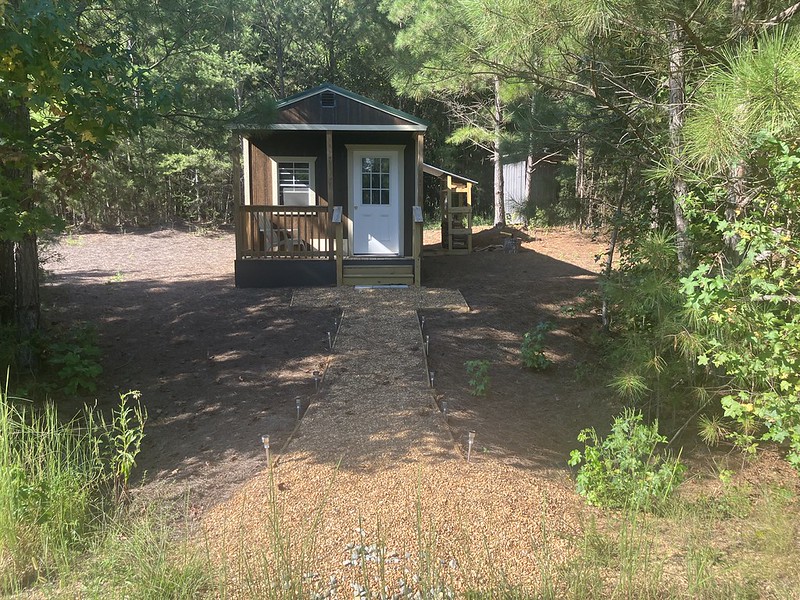
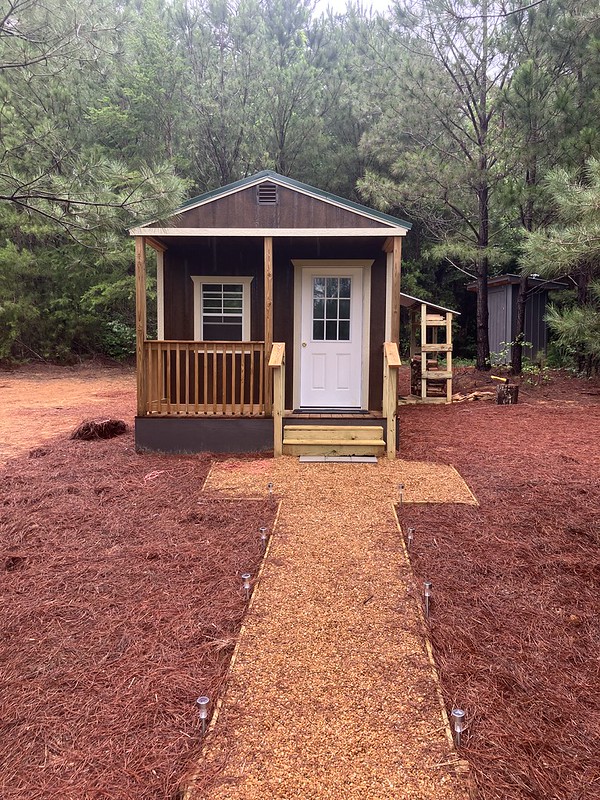
It is Oak Hollow’s clearest reset cabin.

That does not mean it is better than every other kind of cabin. It does not mean it is right for everyone. It simply means West Hollow has a particular purpose.

It is a simple one-person cabin for someone who needs less noise, fewer distractions, and a short time away from ordinary life.

West Hollow is not designed around screens, entertainment, or constant convenience. There is no Wi-Fi in the cabin. There is no television. There is no built-in electricity, no pressurized running water, and no indoor bathroom.

For some people, that will sound like too little.

For the right guest, it may be the reason to come.

A reset cabin is not meant to keep a person busy.

It is not meant to fill the day with activities.

It is not meant to replace one form of noise with another.

The purpose is almost the opposite.

West Hollow gives one person a place to read, write, rest, think, walk, sit on the porch, sit by the fire, sleep, journal, and spend a few days unavailable on purpose.

That kind of quiet can feel strange at first.

Most of us are used to being reachable. We are used to background sound. We are used to screens nearby, messages waiting, tasks unfinished, and some next thing asking for attention.

A reset cabin removes some of that.

Not everything.

But enough.

Enough to notice the silence.

Enough to notice the woods.

Enough to notice the fire.

Enough to notice how tired you are.

Enough to notice what has been crowded out.

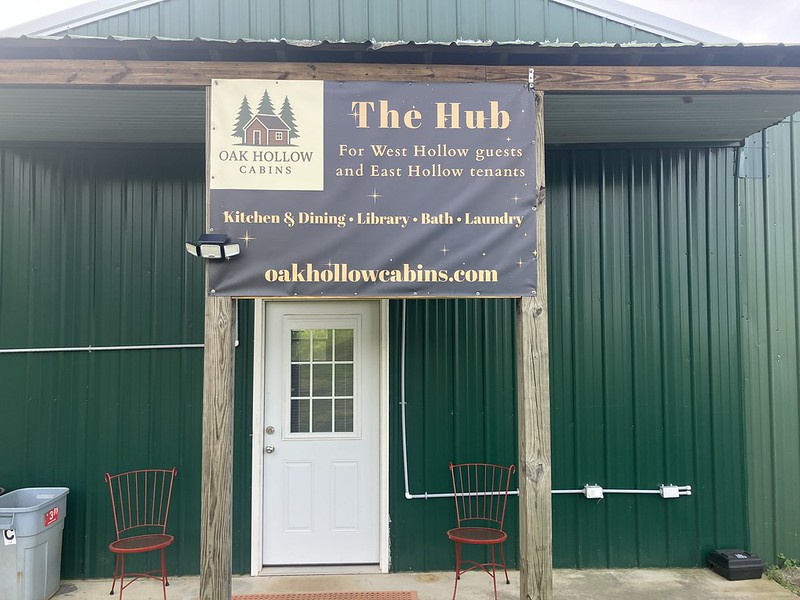
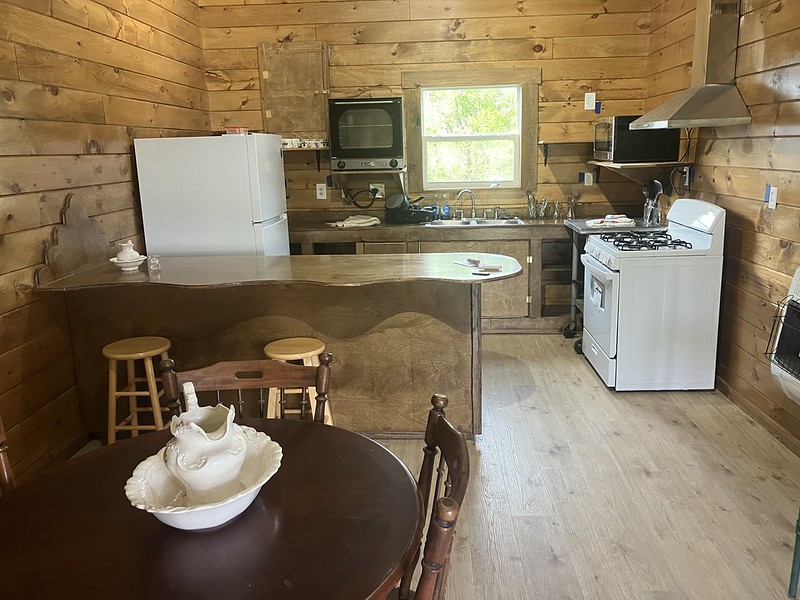
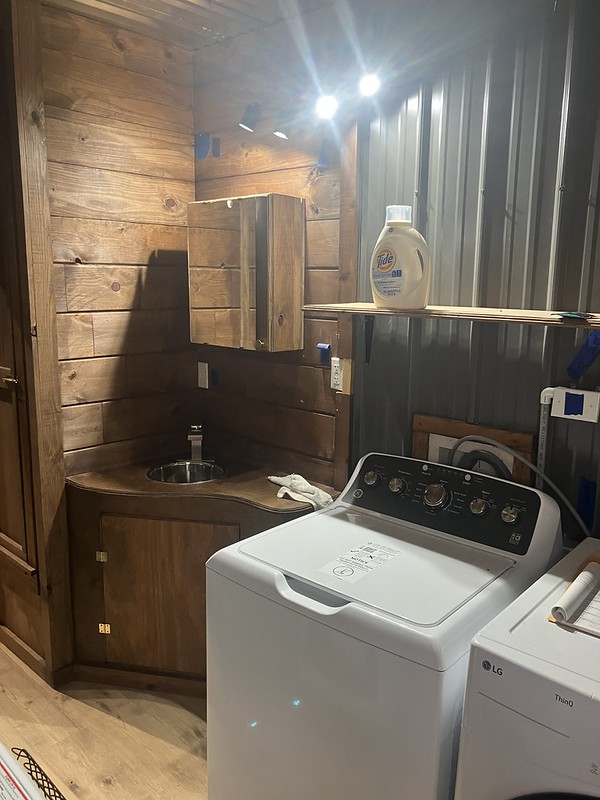
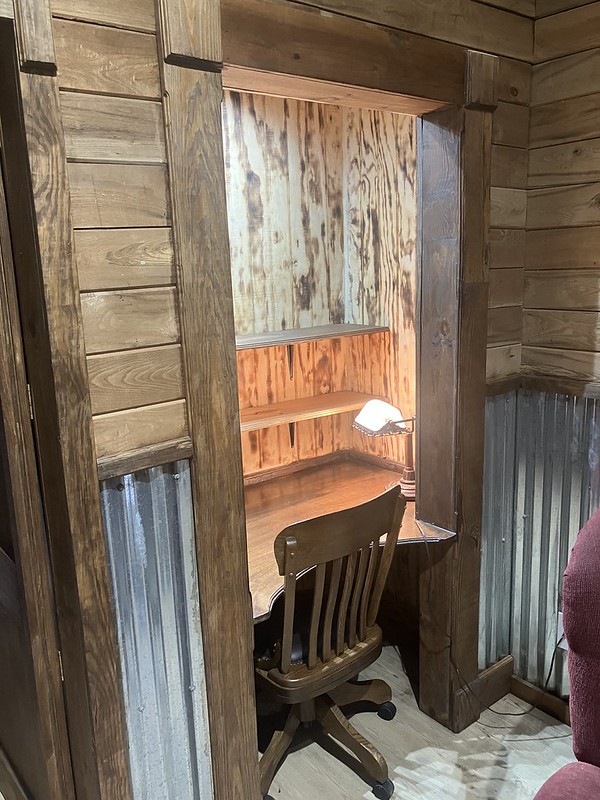
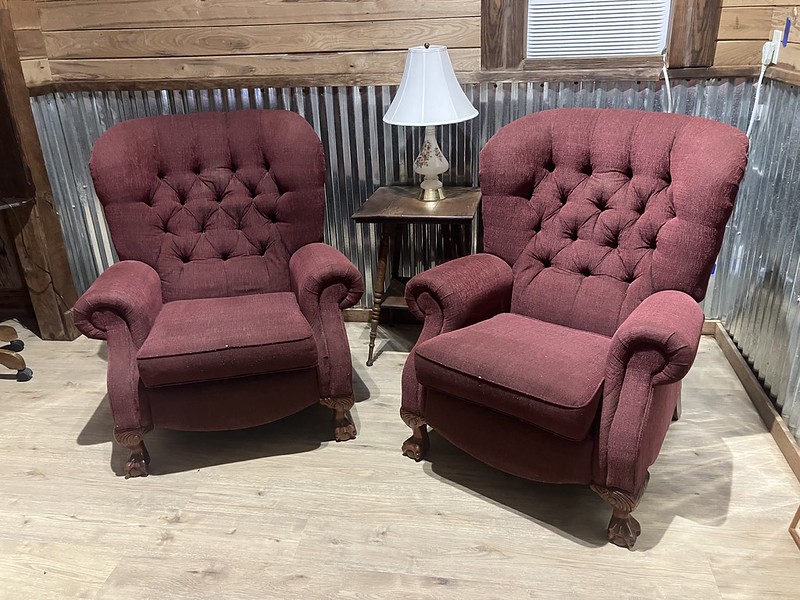
West Hollow is intentionally simple, but it is not meant to be harsh. Practical support is available by arrangement at the Hub, including bathroom, shower, water, charging, kitchen use, laundry, and indoor sitting or reading space.

That balance matters.

The cabin itself remains quiet and simple. The Hub provides enough ordinary support to keep the stay livable. The point is not to make basic needs difficult. The point is to keep the cabin free from the usual distractions that follow a person almost everywhere.

Oak Hollow now has two cabins, West Hollow and East Hollow, and we are learning to describe them more clearly.

East Hollow has its own place. It is also quiet and simple, with internal wiring powered by an external generator. It may be better suited for a longer quiet stay or for someone who needs more practical convenience during a temporary season.

West Hollow is different.

West Hollow asks less of the world and a little more of the guest.

It asks whether a person can sit still for a while.

It asks whether a day can become smaller.

It asks whether quiet might have something to give.

A reset stay does not promise transformation. It does not solve a life. It does not make decisions for anyone. It does not erase responsibility, grief, pressure, fatigue, or whatever waits back home.

But it can create room.

Room to sleep.

Room to read.

Room to write.

Room to breathe.

Room to think without being interrupted every few minutes.

Room to remember what a slower life feels like, even if only for a few days.

That is what makes West Hollow a reset cabin.

Not luxury.

Not novelty.

Not entertainment.

Not a long list of amenities.

A simple place.

One guest.

A quieter rhythm.

A short time away from ordinary noise.

Sometimes that is enough to begin again.

The Sign Beside the Road

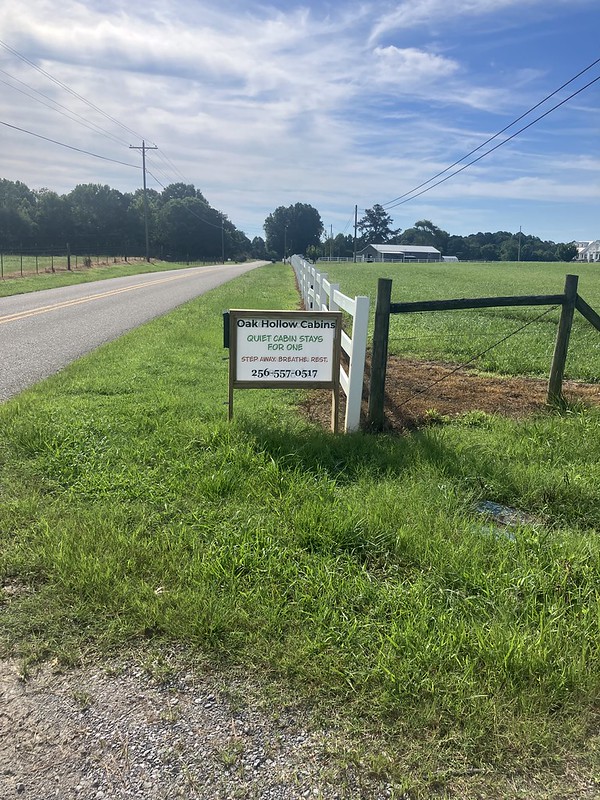
There is a small sign now beside Cox Gap Road.

It does not try to explain everything.

It does not say all that Oak Hollow Cabins is, or all that we have been trying to build, or all the reasons a person might need a quieter place for a few days.

There would not be room for that.

A road sign has to be simple.

Oak Hollow Cabins.

Quiet cabin stays for one.

Step away. Breathe. Rest.

A phone number.

That is enough for the sign.

The fuller explanation belongs elsewhere — on the website, in the cabin pages, in the photos, in the conversations, in the flyer someone may take from the box beside the sign.

But there is something important about putting even that much beside the road.

Until now, Oak Hollow has mostly been something being built back from the road. A cabin in the woods. A porch. A fire ring. A place to walk. A Hub for practical support. A thought about quiet that kept becoming more practical.

Now there is a small public marker.

Not loud.

Not flashy.

Not trying to become something it is not.

Just a sign beside a rural road saying, in a few words, that there is a place nearby where one person can step away for a short time.

That matters because Oak Hollow is not a conventional vacation rental.

It is not a party cabin, a family rental, a couple’s getaway, or a place designed around constant entertainment.

West Hollow and East Hollow are simple one-person cabin stays near Boaz, Alabama. They are for reading, writing, resting, thinking, walking, sitting by the fire, sleeping, journaling, or spending a few days unavailable on purpose.

That kind of place can be hard to explain quickly.

Most signs ask people to do something.

Stop here.

Buy this.

Come inside.

Oak Hollow’s sign is quieter than that.

It is closer to an invitation.

Step away.

Breathe.

Rest.

Those are small words, but they ask a real question.

What would it mean to step away for a little while?

What would it mean to let a day become less crowded?

What would it mean to sit somewhere without a television, without Wi-Fi in the cabin, without the ordinary habit of being constantly available?

Some people will drive by and not notice.

Some will notice and keep going.

Some may remember the name later.

Some may stop and take a flyer.

Some may visit the website.

Some may look at West Hollow or East Hollow on Vrbo.

And maybe one person, on the right day, after the wrong kind of week, will see the words and realize they name something he or she has been needing.

Quiet cabin stays for one.

That is not a complicated promise.

It is a simple one.

A cabin.

A quiet setting.

One guest.

A short time away from ordinary noise.

A place to step away long enough to hear yourself think again.

The sign beside the road is only a beginning.

But beginnings matter.

Sometimes a quiet place has to become visible before someone knows it is there.


Oak Hollow Cabins

What the Hub Adds to an Off-Grid Stay

An off-grid cabin can sound peaceful in theory and uncertain in practice.

The word may call up images of candlelight, silence, trees, and a slower rhythm. But it may also raise practical questions. Where do I shower? Where do I charge a phone? What about water? What if I need a bathroom, a sink, a little indoor space, or a place to sit for a while outside the cabin?

At Oak Hollow Cabins, we want the cabins to remain simple without making the stay feel barren.

That is where the Hub matters.

West Hollow and East Hollow are private one-person cabins designed for quiet, rest, reading, writing, thinking, walking, and time away from noise. They are intentionally simple. They are not conventional vacation rentals, party cabins, couple’s getaways, or fully furnished tiny houses.

Inside the cabin, there is no built-in electricity, no pressurized running water, no indoor bathroom, no Wi-Fi, and no TV.

That simplicity is part of the point.

But simplicity does not have to mean abandonment.

The Hub provides practical support by arrangement. It is the place where ordinary needs can be met without turning the cabin itself into another version of everyday life.

At the Hub, guests may have access by arrangement to bathroom and shower facilities, water, charging, kitchen use, laundry, and indoor sitting or reading space.

That matters because a quiet stay is not helped by unnecessary hardship.

The cabin should remove noise, not create confusion. It should reduce distraction, not make every simple need difficult. It should allow a person to step away from the usual pace of life without having to pretend the body does not still need practical care.

In that sense, the Hub helps protect the purpose of the cabins.

The cabin remains quiet.

The cabin remains simple.

The cabin remains free of television, Wi-Fi, and the ordinary pull of constant availability.

But nearby, by arrangement, there is support.

That balance is important.

Some people do not need a resort. They do not need entertainment, a schedule, a group program, or a full calendar of things to do. They may not even need much comfort in the usual vacation-rental sense.

They may simply need a private place to sleep, read, write, think, walk, sit on a porch, sit by a fire, and let the day become less crowded.

For that kind of stay, the Hub adds enough.

Enough water.

Enough practical support.

Enough access to ordinary necessities.

Enough reassurance that the off-grid cabin is not isolated from help.

Oak Hollow is not trying to hide what the cabins are. They are simple. They are one-person cabins. They are off-grid. They are not for everyone.

But for the right guest, that simplicity is not a deficiency.

It is the invitation.

And the Hub makes that invitation more livable.

It lets the cabin be what it is meant to be: a quiet place apart.

Not a place to be entertained.

Not a place to perform.

Not a place filled with screens and noise.

A place to step away for a while, with enough support nearby to make the quiet possible.


The Difference Between Getting Away and Resetting

Most people understand the idea of “getting away.”

You leave the house. You pack a bag. You drive somewhere different. You change the scenery for a few days.

There is nothing wrong with that. Sometimes a short trip helps. Sometimes a different view, a quieter road, or a slower morning gives the mind a little breathing room.

But a reset is something different.

A reset is not mainly about escape. It is not about entertainment. It is not about filling a weekend with activity so you can return home exhausted and call it a break.

A reset is quieter than that.

A reset is the deliberate choice to step away from the noise long enough to notice what the noise has been doing to you.

That is the heart of the West Hollow Reset Cabin at Oak Hollow Cabins.

It is not designed as a vacation rental in the usual sense. It is not a party cabin, a family getaway, or a campground. It is a simple, private, one-person off-grid cabin for someone who needs quiet, privacy, and enough space to breathe again.

The cabin is intentionally simple.

No television. No constant background noise. No crowd. No schedule being pushed on You. No pressure to perform.

Just a small cabin, a bed, a desk, a chair, a wood stove, a porch, a fire ring, a walking path, and the woods around you.

For some people, that may sound like too little.

For the right person, it may be exactly enough.

We live in a culture that often treats tiredness as something to manage, not something to understand. We drink more coffee. Scroll more. Work harder. Buy something. Watch something. Plan something. Distract ourselves with something.

But sometimes the deeper need is not another distraction.

Sometimes the need is silence.

Sometimes the need is to sit still long enough to hear your own thoughts without immediately obeying them.

Sometimes the need is to walk without a podcast, cook a simple meal, read a few pages, write a few sentences, build a small fire, and remember that life does not have to be as complicated as it has become.

That is what we mean by reset.

A reset does not fix your life for you. It does not make decisions for you. It does not hand you a new identity or a five-step plan.

It gives you space.

And sometimes space is the beginning of clarity.

The West Hollow Reset Cabin is being prepared for one guest at a time because solitude matters. Not loneliness. Not isolation in a painful sense. But intentional solitude — the kind that lets a person step outside the constant expectations of ordinary life and ask, quietly and honestly:

What is wearing me down?

What do I keep carrying that I may not need to carry?

What have I been avoiding because I have not had enough quiet to face it?

What would a simpler next step look like?

A long weekend reset may be enough for someone who simply needs to stop, rest, and recover from the pressure of daily life.

A seven-day reset may be better for someone who wants time to read, write, think, walk, and let the nervous system settle.

A thirty-day reset may fit someone in a deeper transition — after loss, burnout, retirement, divorce, career change, spiritual change, or a season of not knowing what comes next.

The point is not to disappear from life.

The point is to return to life with a little more clarity.

Oak Hollow Cabins is built around a simple belief: not everyone needs more. Some people need less, but better. Less noise. Less pressure. Less hurry. Less performance. More attention. More quiet. More room to think. More honest contact with ordinary life.

That is why the West Hollow Reset Cabin exists.

It is a place for one person to step away, not to escape life, but to meet it more clearly.

Sometimes getting away is about changing location.

Resetting is about changing attention.

And that can begin in a small cabin, in the woods, with no demand except this one:

Slow down long enough to notice what is true.