The Life You Keep Postponing

Sometimes a person already knows they need to pause.

They may not say it out loud.

They may not have a plan.

They may not know where they would go, what they would do, or how they would explain it to anyone else.

But somewhere underneath the daily noise, they know.

They need to stop for a little while.

Not forever.

Not dramatically.

Not to abandon their responsibilities.

Just long enough to breathe, think, rest, and hear themselves again.

But instead of stopping, they keep saying the same thing:

Later.

After this week.

After this season.

After things calm down.

After everyone else is okay.

After the next decision is made.

After the next bill is paid.

After the next problem is solved.

And somehow, later keeps moving.

Later Can Become a Way of Life

There is nothing wrong with postponing something for a good reason.

Life has real obligations.

People have work, families, bills, appointments, animals, parents, children, deadlines, and responsibilities that cannot always be set aside.

But sometimes postponing becomes more than a temporary delay.

Sometimes it becomes a way of living.

The pause keeps getting pushed forward.

The walk never happens.

The notebook stays closed.

The question never gets asked.

The quiet never gets protected.

The person keeps going, keeps responding, keeps carrying, keeps adjusting, keeps saying yes, keeps making it through.

And from the outside, everything may look fine.

But inside, something important may be waiting for attention.

What Gets Lost While We Keep Going

The cost of postponement is not always obvious.

It may not look like a crisis.

It may look like ordinary life.

A person keeps working.

Keeps answering messages.

Keeps showing up.

Keeps being needed.

Keeps scrolling at night because stillness feels too hard.

Keeps filling the day because emptiness might reveal something.

Keeps waiting for a better time to ask what they actually need.

But while life keeps moving, certain things can quietly disappear.

The ability to rest.

The ability to think without interruption.

The ability to notice what the body has been saying.

The ability to tell the truth about a season that is over.

The ability to make a decision from clarity instead of exhaustion.

The ability to remember that life is not only something to manage.

Sometimes the saddest thing is not that a person never had time.

It is that they kept waiting for time to give them permission.

A Reset Is Not a Cure-All

A reset stay does not fix a life.

It does not solve grief.

It does not make a hard decision easy.

It does not replace medical care, counseling, friendship, work, family, or responsibility.

A cabin cannot do that.

Quiet cannot do everything.

A few days away cannot answer every question.

That matters.

Oak Hollow is not built around promises like that.

A reset stay is simpler.

It is a temporary step away from ordinary noise.

It is a place where the day is not already crowded before it begins.

It is a place where a person can rest, read, write, walk, sit by a fire, cook simply, sleep, think, or do very little.

It is not everything.

But it is something.

One Concrete Step

Sometimes the most important thing about a pause is that it becomes real.

Not an idea.

Not a someday wish.

Not a sentence that begins, “One of these days…”

A real place.

A real date.

A real cabin.

A real morning without the usual demands.

A real evening without the usual noise.

That is why a reset stay can matter.

Not because it solves everything, but because it interrupts the pattern of never stopping.

For some people, that may mean a long weekend.

For others, a week.

For someone in a deeper transition, maybe longer.

The length is not the main point.

The main point is choosing not to postpone the pause forever.

While There Is Still Time

There will always be reasons to wait.

Some of them will be real.

Some will be habits wearing the clothes of responsibility.

Each person has to know the difference for themselves.

But there is a question worth asking:

If you keep postponing the quiet you already know you need, what will that cost you?

Not in money.

In attention.

In clarity.

In peace.

In the ability to hear your own life before another year passes.

Oak Hollow exists for people who are ready for a quieter step away.

Not because life is simple.

Because life is not simple.

Not because responsibilities do not matter.

Because they do.

Not because a reset stay is magic.

Because sometimes one concrete pause is better than another season of saying later.

The life you keep postponing may not require a complete reinvention.

It may begin with a few quiet days.

A bed.

A chair.

A fire.

A walk.

A notebook.

A little space to breathe.

And the decision to stop waiting for a perfect time that may never arrive.

Learn more about Reset Cabins at Oak Hollow

The Man Who Needed Three Quiet Days Before He Could Decide

Oak Hollow has two reset cabins.

They are not meant to be identical.

Each one offers quiet, simplicity, and a way to step back from the ordinary pressure of life. But each hollow has its own feel, its own rhythm, and its own kind of shelter.

This story begins in the West Hollow Reset Cabin.

West Hollow is the more off-grid of the two — simple, quiet, private, and intentionally limited. The cabin does not offer the usual conveniences people expect from a vacation rental. That is part of the point.

No television.
No full kitchen inside the cabin.
No running water in the cabin.
No ordinary household noise.

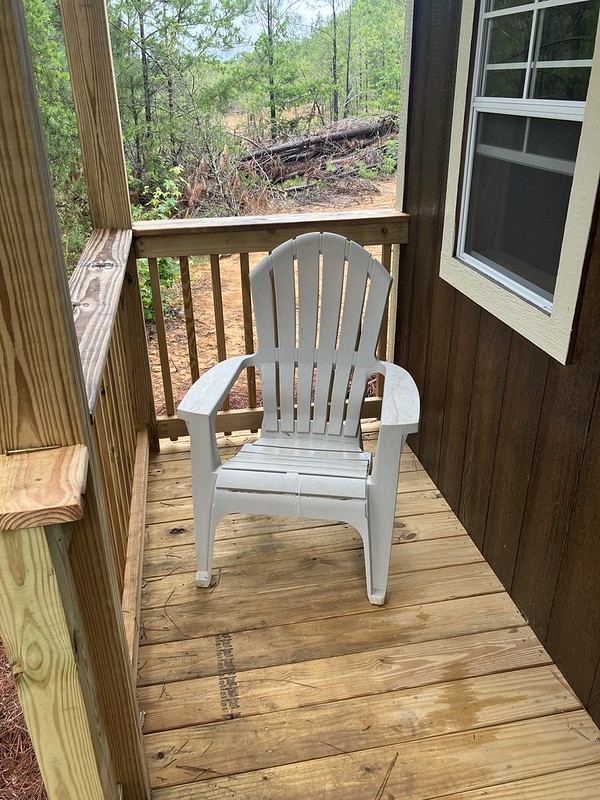
Just a small place in the woods, a bed, a chair, a porch, a window, a wood stove, nearby access to the Hearth, and the walk back toward the Hub when the guest needs water, a shower, charging, food prep, or an indoor place to sit for a while.

For some people, that would not be enough.

For him, it was exactly why he came.

He Was Not in Crisis

He did not come to Oak Hollow because his life had fallen apart.

That would have been easier to explain.

A crisis has a language people understand. A hospital room. A death. A divorce. A job loss. A visible rupture. Something happened, and now the person needs time.

But that was not his story.

His life still looked ordinary from the outside.

He answered messages.
He went to work.
He paid bills.
He kept appointments.
He said yes when people asked for help.
He kept showing up.

That was part of the problem.

Nothing had broken loudly enough to give him permission to stop.

But something in him had grown tired of continuing without listening.

For months, he had been carrying a decision he could not quite name. It showed up in small ways. A tightness before opening his email. A heaviness on Sunday evening. A strange irritation when someone asked, “What do you want to do?” A habit of reaching for the phone whenever the room got quiet.

He did not need entertainment.

He did not need a better vacation.

He did not need another weekend filled with driving, eating out, checking messages, and returning home more tired than when he left.

He needed enough quiet to hear what he already knew.

That is why he came for three days.

The First Evening

The first evening did not feel dramatic.

He parked, carried in a small bag, and stood for a few minutes without doing anything.

The West Hollow cabin was simple.

That was the first thing he noticed.

Not decorative simple.

Actually simple.

There was a place to sleep.
A place to sit.
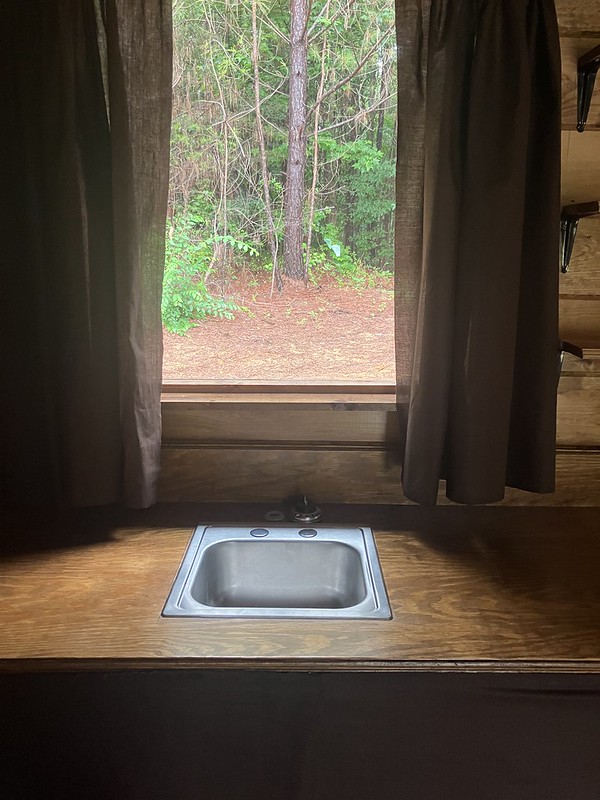
A window facing the trees.
A porch where he could step outside without needing a reason.
A wood stove for cold weather.
Enough shelter to feel held, but not enough convenience to fill the hours for him.

He had brought a notebook, a book, coffee, a few simple meals, and more clothes than he needed.

He had also brought the questions he had been trying not to ask.

For a while he stood near the window and listened.

At first, he heard almost nothing.

Then he heard what the ordinary noise of his life had been covering.

The trees moving.
A bird calling.
The small sounds of the cabin settling.
His own breathing.
His own uneasiness.

Quiet did not immediately make him peaceful.

It made him aware.

That surprised him.

He had imagined that stepping away would feel like relief. And it did, partly. But it also made him restless. His mind kept reaching for the familiar things: the phone, the calendar, the next task, the old argument, the unfinished obligation.

He wanted to check something.

He wanted to know what time it was.

He wanted to make a list.

He wanted to turn the quiet into another project.

Instead, he sat on the porch until the light began to fade.

For the first time in a long time, nothing required an immediate answer.

The Hub Matters

Before dark, he walked back toward the Hub.

That walk mattered more than he expected.

The Hub was not just a convenience building. It was part of what made the reset workable.

The cabin gave him quiet.

The Hub gave him support.

At the Hub, he could get water. He could shower. He could charge his phone if he needed to. He could prepare something simple to eat. He could sit indoors for a while, read, or step out of the weather.

That balance mattered.

The reset was not hardship.

It was not pretending to be a pioneer.

It was not a test of how much inconvenience a person could tolerate.

It was a simple cabin with intentional limits, supported by a shared place that made those limits possible.

He made a small meal without turning supper into an event. Nothing elaborate. Nothing that required a kitchen full of tools. Just enough.

Then he walked back toward West Hollow.

The sky had shifted. The trees were darker now. The cabin waited quietly.

He realized something before he reached the porch.

At home, every room seemed to ask something of him.

Here, the cabin did not ask him to perform.

It only asked him to be there.

The First Morning

The next morning, he woke earlier than expected.

There was no rush in the room.

That felt strange.

At home, mornings had become a kind of launch. Coffee, phone, weather, headlines, email, one task before the next task, the day gathering speed before he had even noticed himself inside it.

Here, the morning did not start without him.

He stepped outside.

The air was cool enough to make him pay attention.

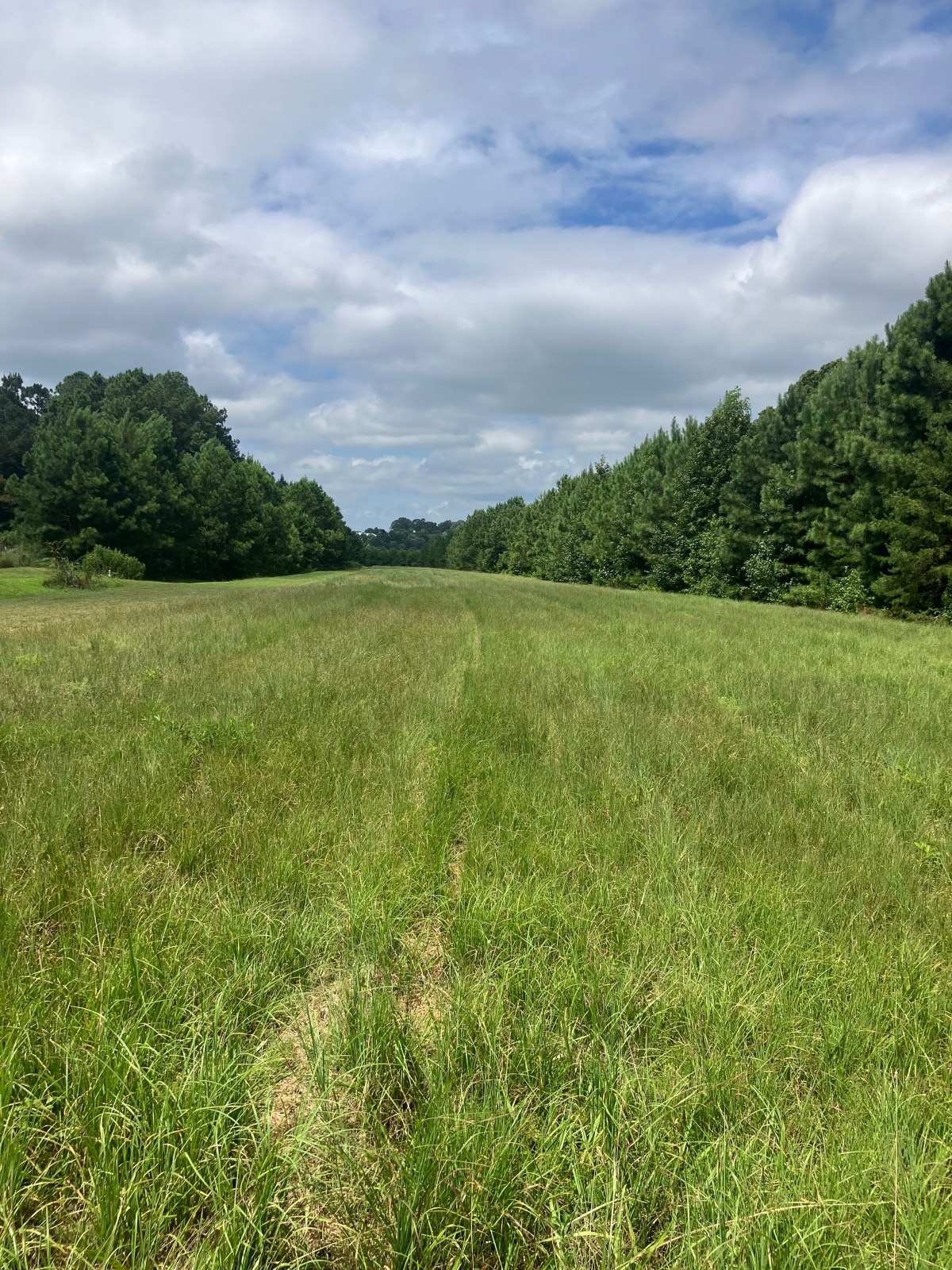
He walked toward the Meadow without calling it exercise. There was no route to finish, no time to beat, no fitness goal to track. He simply walked.

The openness of the Meadow changed the feel of the morning.

The cabin had given him shelter.
The trees had given him quiet.
The Meadow gave him room.

At first his thoughts kept moving in their usual circles.

Should I stay where I am?
Should I change direction?
Am I too old to begin again?
Am I being selfish?
What would people think?
What if I make the wrong choice?
What if I already made it years ago and have been pretending not to know?

He had brought those questions with him.

But walking changed their volume.

They were still there, but they no longer filled the whole sky.

By the time he returned to the cabin, he had not solved anything. But he had noticed something important.

Most of his fear was not about the decision itself.

It was about disappointing the version of himself other people had come to expect.

That sentence stayed with him.

He wrote it down.

The Second Day

The second day was quieter.

Not because his mind had gone silent.

It had not.

But something in him had stopped trying to force the stay to produce an answer.

He walked to the Hub again for water and a shower.

He prepared something simple.

He charged his phone, then turned it back off.

He sat for a while in the indoor quiet before returning to West Hollow.

That rhythm began to matter.

Cabin.
Porch.
Meadow.
Hub.
Notebook.
Simple meal.
Sleep.
Walking again.

Nothing about it was complicated.

That was the gift.

The fewer decisions the place asked of him, the more clearly he could hear the decision he had brought with him.

In the afternoon, he opened the notebook again.

This time he did not write a list of pros and cons.

Lists had been part of the problem. They made the decision seem like arithmetic. They let him pretend the answer would appear if he could only arrange the columns correctly.

Instead, he wrote one question at the top of the page:

What am I afraid would happen if I told the truth?

That question did not feel efficient.

It felt honest.

For several minutes, he wrote nothing.

Then the answers came slowly.

People might think I failed.
Someone might be disappointed.
I might lose the identity I have used for years.
I might not know who I am without the old role.
I might have to admit I stayed too long.
I might have to begin smaller than I wanted.

He read the list twice.

None of it surprised him.

That was how he knew it mattered.

The quiet had not given him new information. It had given him enough room to stop avoiding the information he already had.

The Third Morning

By the third morning, he still had not made a public decision.

He had not sent the email.
He had not announced a plan.
He had not explained anything to anyone.

But something had shifted.

The decision no longer felt like a storm he had to survive.

It felt like a truth he could approach.

He sat on the porch with his coffee and watched the light come through the trees.

He realized he had been asking the wrong question.

He had been asking, “What decision will make everyone comfortable?”

That question had no honest answer.

A better question had arrived slowly:

“What decision allows me to live without pretending?”

That was not a simple question.

It did not make the next step easy.

But it made the next step clearer.

And clarity was enough for now.

He packed slowly. He cleaned up behind himself. He stood for a moment at the door before leaving.

Nothing dramatic had happened.

No lightning bolt.
No grand revelation.
No perfect plan.

But he was leaving with one sentence he trusted more than all the noise he had brought with him:

I do not have to decide from inside the pressure.

That was the gift of three quiet days.


Why a Reset Helps

A reset does not make decisions for you.

It does not fix a life from the outside.

It does not remove responsibility, grief, uncertainty, or consequence.

But it can do something ordinary life often does not allow.

It can give you room.

Room to stop performing.
Room to notice what you are carrying.
Room to hear the question beneath the question.
Room to distinguish fear from truth.
Room to let the mind settle before asking it to choose.

Sometimes people do not need more advice.

Sometimes they do not need more information.

Sometimes they need distance from the pressure long enough to remember what honesty sounds like.

Oak Hollow is being shaped for that kind of pause.

Two reset cabins.
Two hollows.
One purpose.

Not escape.

Not entertainment.

Not a busy getaway dressed up as rest.

A reset.

A small, quiet place where a person can step away from the usual noise and listen for the next honest step.

Three days may not solve everything.

But sometimes three quiet days are enough to begin telling the truth.


Continue with Oak Hollow Cabins

Oak Hollow Cabins offers one-person reset stays near Boaz, Alabama.

The West Hollow Reset Cabin and East Hollow Reset Cabin are each shaped for quiet, simplicity, and a deliberate pause from ordinary demands.

A reset may be a long weekend, a week, or a longer stay.

The point is not to disappear from life.

The point is to return to it with more clarity.

Oak Hollow Is Becoming a Place for Resets

Oak Hollow Cabins is becoming clearer.

Not because the original idea has disappeared, but because the land, the work, the cabins, and the quiet have helped show us what this place is really meant to become.

Oak Hollow is not a subdivision.

It is not an apartment complex.

It is not a mobile home park.

It is not a campground.

It is not a vacation resort.

Oak Hollow Cabins is becoming a quiet rural place near Boaz, Alabama, for people who need a reset.

That is the center now.

Not long-term housing.

Not leased lots.

Not ordinary cabin rentals.

Resets.

A reset is not a vacation in the usual sense. It is not built around entertainment, sightseeing, noise, or convenience. It is a chance to step away from the normal pace of life long enough to slow down, breathe, think, walk, read, write, rest, and listen again.

Some people do not need more activity.

They need less noise.

They need space.

They need quiet.

They need a simple place where the day is not already filled before it begins.

That is what Oak Hollow is being shaped to offer.

Why Reset?

Modern life keeps many people moving faster than they know how to handle.

Work follows them home.

Phones fill every quiet space.

News, messages, errands, bills, family pressure, grief, transition, aging, burnout, and uncertainty can begin to crowd the mind.

Sometimes a person does not need a resort.

Sometimes a person does not need another weekend of entertainment.

Sometimes a person needs to step away from ordinary noise and recover the ability to pay attention.

That is what we mean by a reset.

A reset is not an escape from life.

It is a pause that may help a person return to life more clearly.

The West Hollow Reset Cabin

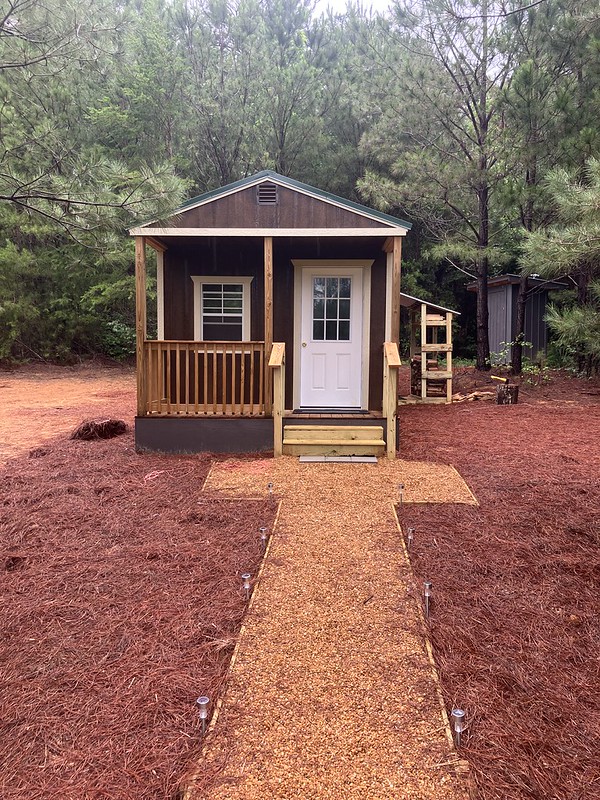
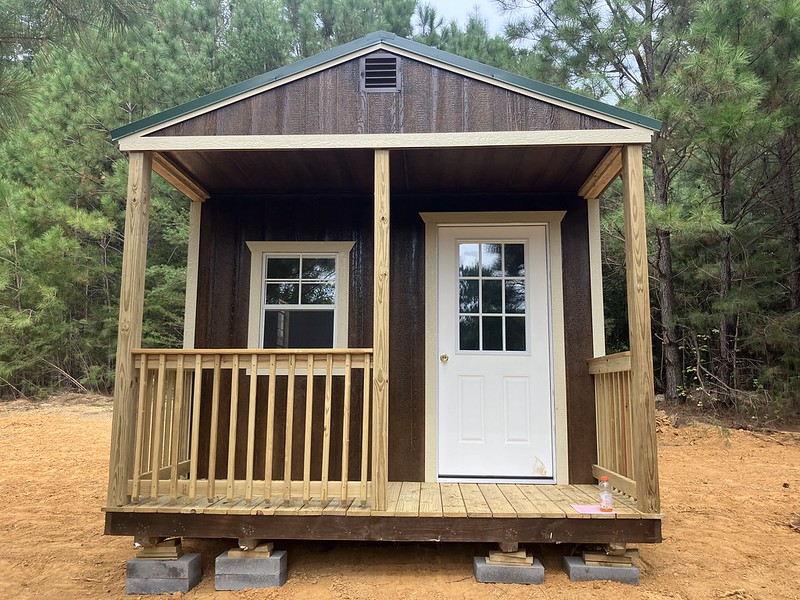
The first reset cabin at Oak Hollow is the West Hollow Reset Cabin.

It is small.

It is private.

It is off-grid.

It is designed for one person.

It has no electricity.

It has no running water.

It has no indoor plumbing.

It has an XL twin bed.

It has a wood stove inside.

It has an outside fire ring.

It has a private Hearth structure with a composting toilet.

For the wrong person, those details may sound like limitations.

For the right person, they are the point.

The West Hollow Reset Cabin is not trying to imitate a hotel room. It is not trying to provide every convenience. It is not trying to keep ordinary life running exactly as usual in a prettier setting.

It is trying to interrupt ordinary life just enough for quiet to return.

Water has to be carried.

Light has to be considered.

Heat has to be tended.

Food has to be prepared more slowly.

The phone does not have to govern the day.

The evening is allowed to become evening again.

That simplicity is not an accident.

It is part of the reset.

One Person at a Time

The West Hollow Reset Cabin is a one-person cabin by design.

That matters.

This is not a couple’s getaway.

It is not a family cabin.

It is not a party cabin.

It is not a place for a group retreat.

It is for one person who needs quiet.

One person who may be tired.

One person who may be grieving.

One person who may be in transition.

One person who may be approaching retirement and wondering what the next season should look like.

One person who may be recovering from burnout.

One person who may simply know that ordinary life has become too crowded.

A reset does not require a dramatic crisis.

Sometimes the need is quieter than that.

Sometimes a person simply needs room to think.

The Hub Makes the Simplicity Work

The West Hollow Reset Cabin is intentionally simple, but Oak Hollow is not designed to leave guests unsupported.

That is why the Hub matters.

The Hub provides the practical support that makes an off-grid reset workable.

Guests have access to a standard bathroom, shower, water, charging, simple kitchen use, laundry for longer stays, and a quiet indoor place to sit, read, write, or have coffee.

The cabin provides solitude.

The Hub provides support.

That combination is important.

Oak Hollow is not offering luxury.

It is not offering entertainment.

It is not offering a resort experience.

It is offering simplicity with support.

Fire, Food, and Slower Days

At the West Hollow Reset Cabin, ordinary things become part of the experience.

Making coffee.

Carrying water.

Starting a fire.

Preparing a simple meal.

Walking to the Hub.

Sitting outside.

Letting the evening come without filling it.

Inside the cabin, the wood stove provides warmth and may allow for simple cooking in the right circumstances. Outside, the fire ring gives the guest another way to prepare food, sit quietly, and let the day slow down.

A simple meal prepared this way changes the pace.

You cannot rush it the same way.

You have to notice the fire.

You have to wait.

You have to participate.

In ordinary life, food often becomes automatic. At Oak Hollow, a simple meal can become part of the reset.

Fire.

Food.

Warmth.

Time.

Attention.

For some people, that may be exactly what they need.

Three Reset Stays

Oak Hollow is being shaped around three possible reset stays.

The first is a Long Weekend Reset.

The idea is simple: arrive Friday afternoon and leave late Monday morning. That gives the guest Friday evening to arrive, all day Saturday and Sunday to settle into the quiet, and Monday morning to leave without a rushed Sunday checkout.

A normal weekend often ends just when the mind finally begins to slow down.

The Long Weekend Reset gives the quiet more room.

The second option is a 7-Day Reset.

A week gives a person time to move beyond the first layer of rest. The first day or two may simply be unwinding. After that, a quieter rhythm can begin to emerge: walking, reading, journaling, cooking simply, sitting by the fire, using the Hub when needed, and noticing what ordinary life usually keeps hidden.

The third option is a 30-Day Reset.

That is a deeper stay. It is not for everyone. But for the right person, thirty days may become a meaningful threshold between one season and the next.

A 30-Day Reset may fit someone in transition, recovering from burnout, grieving a loss, rethinking work, approaching retirement, or considering a simpler way to live.

The 30-Day Reset is not long-term housing.

It is not a rental arrangement.

It is a reset experience.

That distinction matters.

What Oak Hollow Is Not

Because the purpose is becoming clearer, it is also important to say what Oak Hollow is not.

Oak Hollow is not a vacation resort.

It is not a campground.

It is not a place for parties.

It is not a place for crowds.

It is not a long-term housing development.

It is not a leased-lot community.

It is not designed for people looking for maximum convenience.

Oak Hollow is for people who understand that quiet itself can be useful.

It is for people who are willing to live simply for a few days, a week, or a month.

It is for people who do not need everything made instant.

It is for people who are ready to step away from noise long enough to notice what remains.

A Place to Begin Again

Oak Hollow is still being built one step at a time.

That is part of the honesty of the place.

Some things are finished.

Some things are still being shaped.

Some things are being clarified as we work.

But the center is clearer now.

Oak Hollow Cabins is about Resets.

A quiet cabin.

A slower pace.

A simple stay.

A supported off-grid experience.

A place to step away.

A place to listen again.

A place to begin again.