
West Hollow would be easier to explain if it had electricity, running water, Wi-Fi, a refrigerator, an indoor bathroom, and all the other conveniences people expect when they reserve a place to stay.
Those features are familiar. People immediately understand what they provide.
A completely off-grid cabin raises a different question:
Why would anyone deliberately choose a place with less?
The answer is central to why West Hollow exists.
The cabin is not off-grid because ordinary conveniences are bad. It is not intended to romanticize hardship, test anyone’s endurance, or prove that a simpler way of living is morally superior.
West Hollow is off-grid because the conveniences surrounding us also help maintain the pace, habits, and distractions from which many people need a little distance.
The simplicity of the cabin changes the conditions of the day.
That change is the point.
Convenience Keeps Ordinary Life Close
Electricity does far more than keep the lights on.
It keeps our phones charged. It powers televisions, computers, appliances, clocks, and the countless devices through which ordinary life continues reaching us.
Running water allows us to use water without thinking about it. Wi-Fi keeps work, news, entertainment, social media, and other people’s demands immediately available. A full kitchen can turn a quiet afternoon into another sequence of decisions, preparations, and cleanup.
None of those things is inherently wrong.
They are useful. Most of us depend on them every day.
But they also make it remarkably easy to carry our ordinary life with us wherever we go.
We can leave home without leaving the noise.
We can travel somewhere quiet and spend the afternoon responding to the same messages, following the same news, scrolling the same pages, and meeting the same expectations that occupied us at home.
A different location does not necessarily create a different kind of attention.
Sometimes the surroundings must change enough for our habits to become visible.
Simplicity Changes the Rhythm
West Hollow has no electricity, pressurized running water, Wi-Fi, television, indoor bathroom, shower, refrigerator, or full kitchen.
Water is supplied in jugs. A separate composting toilet called The Hearth is located nearby. Guests bring the food, drinks, books, notebooks, art materials, and other simple provisions they want during their reservation.
The cabin provides shelter, an XL twin bed, a reading chair, a writing desk, a counter and sink setup, a covered porch, and, during appropriate cooler weather, a wood-burning stove.
That may sound like a list of limitations.
But spend a few hours inside the cabin, and those limitations begin changing the rhythm of your attention.
You notice how much water you use.
You become aware of the remaining daylight.
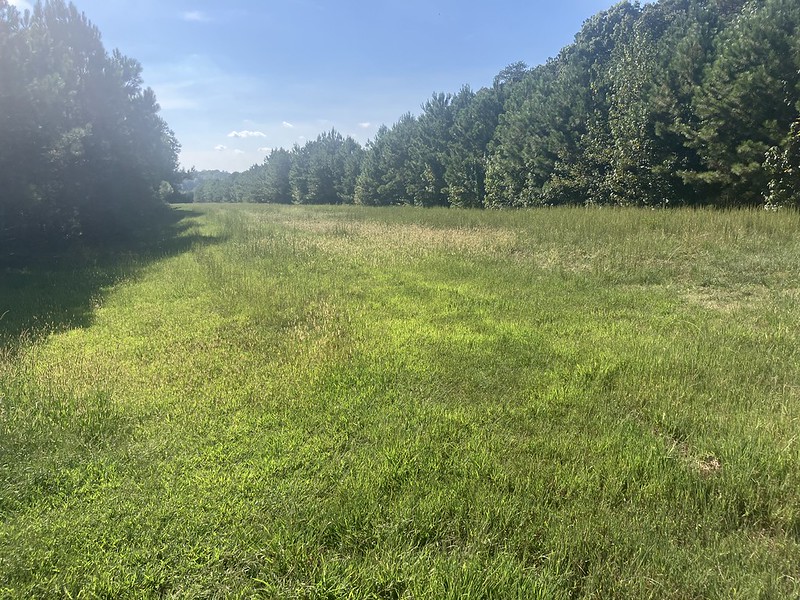
You choose whether to open a book, write something down, walk The Meadow, sit on the porch, or rest.
In cooler weather, warmth may come from an actual wood fire rather than the movement of a thermostat.
After dark, a flashlight or lantern matters.
Ordinary actions become deliberate again.
The purpose is not to make life unnecessarily difficult. The purpose is to interrupt some of the automatic behaviors that ordinarily fill the day before we consciously decide how we want to spend it.
The Cabin Does Not Confiscate Your Phone
West Hollow is not a forced digital detox.
No one takes your phone when you arrive. You may need it for safety, directions, photographs, communication, or the responsibilities that cannot be set aside completely.
The decision remains yours.
But the cabin gives you an unusual opportunity to notice your relationship with the device.
What happens when you silence it?
How often does your hand reach toward it without a conscious decision?
What do you feel when several minutes pass without checking it?
What thoughts appear when there is no screen immediately available to replace them?
The off-grid setting does not answer those questions for you. It simply makes them more difficult to avoid.
That is an important distinction.
West Hollow is not designed to impose an answer. It is designed to create conditions in which you may finally hear your own question.
Quiet Is More Than the Absence of Sound
West Hollow is not silent.
There may be wind in the trees, birds along The Meadow, rain on the roof, insects outside the window, or the sound of a fire inside the wood-burning stove. Somewhere on the larger property, ordinary rural life may still be taking place.
The quiet West Hollow offers is not perfect silence.
It is a reduction in demands.
Fewer things are asking you to respond.
Fewer conveniences are inviting you to consume.
Fewer signals are telling you what to watch, buy, fear, finish, or become.
That kind of quiet can feel unfamiliar at first. Some people may immediately relax. Others may become restless. A person accustomed to constant stimulation may discover that quiet does not initially feel peaceful.
That restlessness is not necessarily evidence that the time is being wasted.
It may be the first thing worth noticing.
Enough, Rather Than Everything
West Hollow provides enough.
Enough shelter to feel protected from the weather.
Enough furniture to sit, rest, read, write, or sleep.
Enough water for the reservation when used thoughtfully.
Enough space to bring a simple meal.
Enough warmth from the wood-burning stove when its use is permitted and conditions are appropriate.
Enough privacy for one person to be alone or two adults to spend uninterrupted time together.
Enough access to the natural setting to walk, observe, photograph, paint, talk, or sit quietly.
The cabin does not attempt to anticipate and satisfy every possible desire.
That is deliberate.
Most places compete by offering more. West Hollow is built around the possibility that, for a few hours or a few days, enough may be more helpful than more.
Off-Grid Is Not for Everyone
West Hollow will not fit every person or every occasion.
Someone who needs conventional electricity, dependable internet access, an indoor bathroom, a shower, a full kitchen, direct vehicle access, or a conventional sleeping arrangement should choose a place that provides those things.
There is no virtue in reserving an off-grid cabin that does not fit your needs.
We want prospective guests to understand West Hollow honestly before arriving. Its simplicity should be chosen, not discovered as an unwelcome surprise.
But for the person who wants a meaningful break from ordinary surroundings, the absence of those conveniences may be precisely what allows the experience to work.
A four-hour reservation can become more than four hours in another building.
A full day can develop a different pace.
An overnight stay can allow the evening to end without television, Wi-Fi, household chores, or the ordinary stream of information.
A weekend can provide enough time for the first restlessness to settle and something quieter to become noticeable.
Nothing dramatic is promised.
West Hollow will not solve a difficult marriage, settle a question of faith, remove grief, make an important decision, or redesign someone’s life.
It provides something smaller and more honest:
time and space in which fewer things interfere with paying attention.
The Simplicity Serves the Purpose
West Hollow is completely off-grid because its simplicity is not separate from its purpose.
The absence of ordinary conveniences creates a boundary between the cabin and everyday life. It changes how light, water, warmth, food, time, and attention are experienced. It makes certain habits visible and gives other possibilities room to emerge.
A guest may spend the time walking The Meadow.
Reading in the chair.
Writing at the desk.
Sorting through something that has been postponed.
Talking with someone without a television playing or a phone continually interrupting.
Resting on the bed without needing to justify the rest.
Sitting on the porch as daylight changes.
Or doing very little at all.
The cabin does not prescribe what should happen.
It simply stops supplying many of the distractions that ordinarily prevent anything else from happening.
That is why West Hollow remains off-grid.
Not because inconvenience is the goal.
Because attention is.
West Hollow Cabin & The Meadow may be reserved privately by one or two adults for four hours, a full day, an overnight stay, or a weekend.
Learn More About West Hollow & The Meadow
Discover more from Oak Hollow Cabins
Subscribe to get the latest posts sent to your email.

