
The Man Who Needed Three Quiet Days Before He Could Decide

Oak Hollow has two reset cabins.

They are not meant to be identical.

Each one offers quiet, simplicity, and a way to step back from the ordinary pressure of life. But each hollow has its own feel, its own rhythm, and its own kind of shelter.

This story begins in the West Hollow Reset Cabin.

West Hollow is the more off-grid of the two — simple, quiet, private, and intentionally limited. The cabin does not offer the usual conveniences people expect from a vacation rental. That is part of the point.

No television.
No full kitchen inside the cabin.
No running water in the cabin.
No ordinary household noise.

Just a small place in the woods, a bed, a chair, a porch, a window, a wood stove, nearby access to the Hearth, and the walk back toward the Hub when the guest needs water, a shower, charging, food prep, or an indoor place to sit for a while.

For some people, that would not be enough.

For him, it was exactly why he came.

He Was Not in Crisis

He did not come to Oak Hollow because his life had fallen apart.

That would have been easier to explain.

A crisis has a language people understand. A hospital room. A death. A divorce. A job loss. A visible rupture. Something happened, and now the person needs time.

But that was not his story.

His life still looked ordinary from the outside.

He answered messages.
He went to work.
He paid bills.
He kept appointments.
He said yes when people asked for help.
He kept showing up.

That was part of the problem.

Nothing had broken loudly enough to give him permission to stop.

But something in him had grown tired of continuing without listening.

For months, he had been carrying a decision he could not quite name. It showed up in small ways. A tightness before opening his email. A heaviness on Sunday evening. A strange irritation when someone asked, “What do you want to do?” A habit of reaching for the phone whenever the room got quiet.

He did not need entertainment.

He did not need a better vacation.

He did not need another weekend filled with driving, eating out, checking messages, and returning home more tired than when he left.

He needed enough quiet to hear what he already knew.

That is why he came for three days.

The First Evening

The first evening did not feel dramatic.

He parked, carried in a small bag, and stood for a few minutes without doing anything.

The West Hollow cabin was simple.

That was the first thing he noticed.

Not decorative simple.

Actually simple.

There was a place to sleep.
A place to sit.
A window facing the trees.
A porch where he could step outside without needing a reason.
A wood stove for cold weather.
Enough shelter to feel held, but not enough convenience to fill the hours for him.

He had brought a notebook, a book, coffee, a few simple meals, and more clothes than he needed.

He had also brought the questions he had been trying not to ask.

For a while he stood near the window and listened.

At first, he heard almost nothing.

Then he heard what the ordinary noise of his life had been covering.

The trees moving.
A bird calling.
The small sounds of the cabin settling.
His own breathing.
His own uneasiness.

Quiet did not immediately make him peaceful.

It made him aware.

That surprised him.

He had imagined that stepping away would feel like relief. And it did, partly. But it also made him restless. His mind kept reaching for the familiar things: the phone, the calendar, the next task, the old argument, the unfinished obligation.

He wanted to check something.

He wanted to know what time it was.

He wanted to make a list.

He wanted to turn the quiet into another project.

Instead, he sat on the porch until the light began to fade.

For the first time in a long time, nothing required an immediate answer.

The Hub Matters

Before dark, he walked back toward the Hub.

That walk mattered more than he expected.

The Hub was not just a convenience building. It was part of what made the reset workable.

The cabin gave him quiet.

The Hub gave him support.

At the Hub, he could get water. He could shower. He could charge his phone if he needed to. He could prepare something simple to eat. He could sit indoors for a while, read, or step out of the weather.

That balance mattered.

The reset was not hardship.

It was not pretending to be a pioneer.

It was not a test of how much inconvenience a person could tolerate.

It was a simple cabin with intentional limits, supported by a shared place that made those limits possible.

He made a small meal without turning supper into an event. Nothing elaborate. Nothing that required a kitchen full of tools. Just enough.

Then he walked back toward West Hollow.

The sky had shifted. The trees were darker now. The cabin waited quietly.

He realized something before he reached the porch.

At home, every room seemed to ask something of him.

Here, the cabin did not ask him to perform.

It only asked him to be there.

The First Morning

The next morning, he woke earlier than expected.

There was no rush in the room.

That felt strange.

At home, mornings had become a kind of launch. Coffee, phone, weather, headlines, email, one task before the next task, the day gathering speed before he had even noticed himself inside it.

Here, the morning did not start without him.

He stepped outside.

The air was cool enough to make him pay attention.

He walked toward the Meadow without calling it exercise. There was no route to finish, no time to beat, no fitness goal to track. He simply walked.

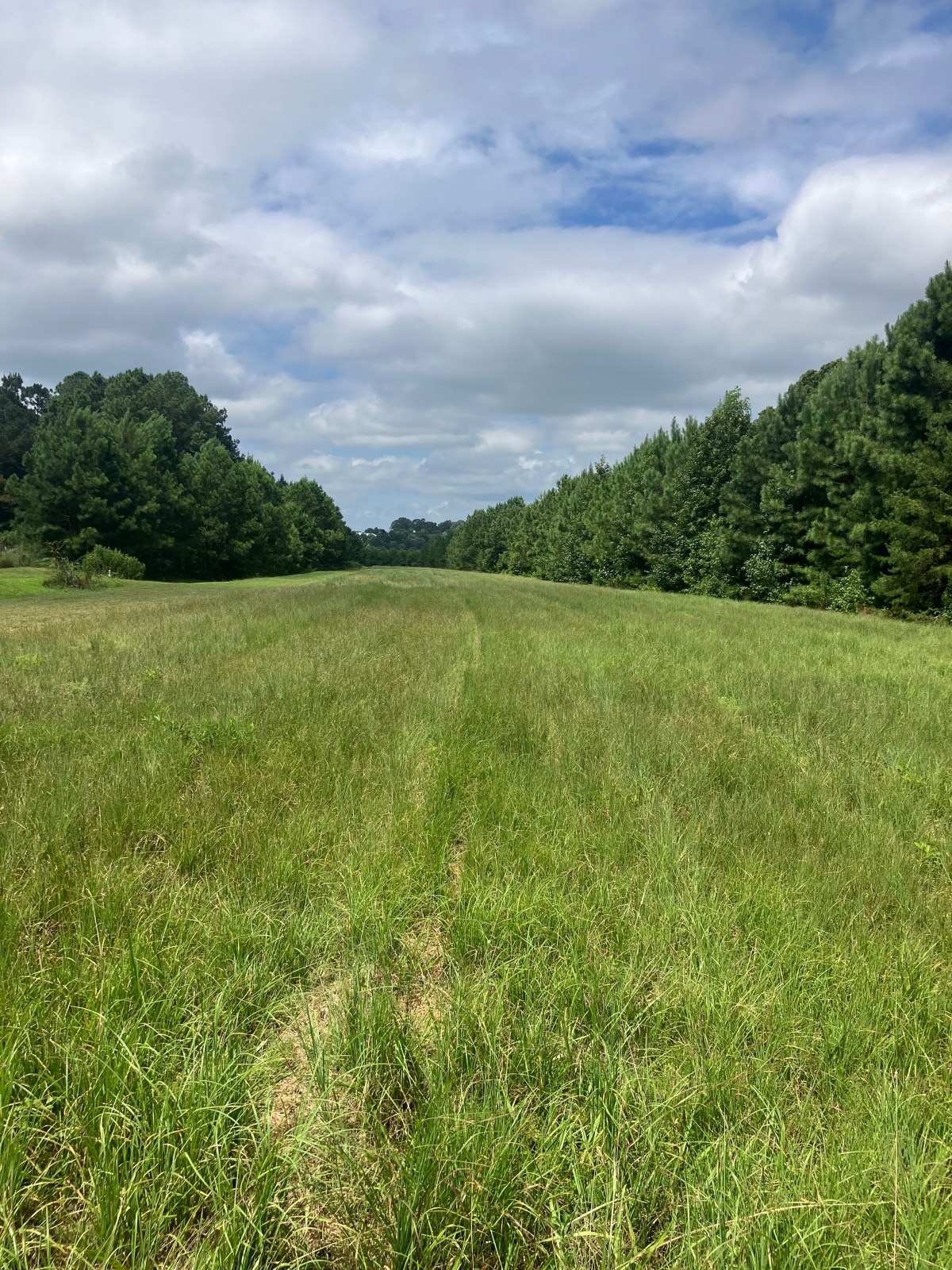
The openness of the Meadow changed the feel of the morning.

The cabin had given him shelter.
The trees had given him quiet.
The Meadow gave him room.

At first his thoughts kept moving in their usual circles.

Should I stay where I am?
Should I change direction?
Am I too old to begin again?
Am I being selfish?
What would people think?
What if I make the wrong choice?
What if I already made it years ago and have been pretending not to know?

He had brought those questions with him.

But walking changed their volume.

They were still there, but they no longer filled the whole sky.

By the time he returned to the cabin, he had not solved anything. But he had noticed something important.

Most of his fear was not about the decision itself.

It was about disappointing the version of himself other people had come to expect.

That sentence stayed with him.

He wrote it down.

The Second Day

The second day was quieter.

Not because his mind had gone silent.

It had not.

But something in him had stopped trying to force the stay to produce an answer.

He walked to the Hub again for water and a shower.

He prepared something simple.

He charged his phone, then turned it back off.

He sat for a while in the indoor quiet before returning to West Hollow.

That rhythm began to matter.

Cabin.
Porch.
Meadow.
Hub.
Notebook.
Simple meal.
Sleep.
Walking again.

Nothing about it was complicated.

That was the gift.

The fewer decisions the place asked of him, the more clearly he could hear the decision he had brought with him.

In the afternoon, he opened the notebook again.

This time he did not write a list of pros and cons.

Lists had been part of the problem. They made the decision seem like arithmetic. They let him pretend the answer would appear if he could only arrange the columns correctly.

Instead, he wrote one question at the top of the page:

What am I afraid would happen if I told the truth?

That question did not feel efficient.

It felt honest.

For several minutes, he wrote nothing.

Then the answers came slowly.

People might think I failed.
Someone might be disappointed.
I might lose the identity I have used for years.
I might not know who I am without the old role.
I might have to admit I stayed too long.
I might have to begin smaller than I wanted.

He read the list twice.

None of it surprised him.

That was how he knew it mattered.

The quiet had not given him new information. It had given him enough room to stop avoiding the information he already had.

The Third Morning

By the third morning, he still had not made a public decision.

He had not sent the email.
He had not announced a plan.
He had not explained anything to anyone.

But something had shifted.

The decision no longer felt like a storm he had to survive.

It felt like a truth he could approach.

He sat on the porch with his coffee and watched the light come through the trees.

He realized he had been asking the wrong question.

He had been asking, “What decision will make everyone comfortable?”

That question had no honest answer.

A better question had arrived slowly:

“What decision allows me to live without pretending?”

That was not a simple question.

It did not make the next step easy.

But it made the next step clearer.

And clarity was enough for now.

He packed slowly. He cleaned up behind himself. He stood for a moment at the door before leaving.

Nothing dramatic had happened.

No lightning bolt.
No grand revelation.
No perfect plan.

But he was leaving with one sentence he trusted more than all the noise he had brought with him:

I do not have to decide from inside the pressure.

That was the gift of three quiet days.


Why a Reset Helps

A reset does not make decisions for you.

It does not fix a life from the outside.

It does not remove responsibility, grief, uncertainty, or consequence.

But it can do something ordinary life often does not allow.

It can give you room.

Room to stop performing.
Room to notice what you are carrying.
Room to hear the question beneath the question.
Room to distinguish fear from truth.
Room to let the mind settle before asking it to choose.

Sometimes people do not need more advice.

Sometimes they do not need more information.

Sometimes they need distance from the pressure long enough to remember what honesty sounds like.

Oak Hollow is being shaped for that kind of pause.

Two reset cabins.
Two hollows.
One purpose.

Not escape.

Not entertainment.

Not a busy getaway dressed up as rest.

A reset.

A small, quiet place where a person can step away from the usual noise and listen for the next honest step.

Three days may not solve everything.

But sometimes three quiet days are enough to begin telling the truth.


Continue with Oak Hollow Cabins

Oak Hollow Cabins offers one-person reset stays near Boaz, Alabama.

The West Hollow Reset Cabin and East Hollow Reset Cabin are each shaped for quiet, simplicity, and a deliberate pause from ordinary demands.

A reset may be a long weekend, a week, or a longer stay.

The point is not to disappear from life.

The point is to return to it with more clarity.

The Quiet Choice to Live With Less

Most of us have been trained to think of progress as addition.

More space. More furniture. More subscriptions. More bills. More noise. More choices. More things to manage.

And for a while, more can feel like success.

A bigger house can feel like proof that life is working. A newer vehicle can feel like proof that we are moving forward. A crowded calendar can feel like proof that we matter. A phone full of notifications can feel like proof that we are connected.

But at some point, many people begin to wonder whether all that “more” is actually helping.

Sometimes more space means more to clean. More stuff means more to store. More bills mean more pressure. More noise means less attention. More activity means less room to think.

That is one of the quiet ideas behind Oak Hollow Cabins.

We are not trying to create a luxury resort. We are not trying to impress people with excess. We are not trying to offer the loudest, busiest, most complicated version of country living.

We are trying to make room for something simpler.

At Oak Hollow, simple living does not mean doing without everything. It does not mean hardship for the sake of hardship. It does not mean pretending modern life does not exist.

It means asking a different question.

Not, “How much can I add?”

But, “What can I let go of so I can live more clearly?”

That question matters for someone looking for a small long-term cabin instead of a larger, more expensive place. It matters for someone considering a simple leased lot where they can place their own cabin and build a quieter life over time. It matters for someone who needs a few days alone at the West Hollow Reset Cabin, away from noise, screens, pressure, and performance.

In each case, the heart of the idea is the same.

A simpler space can help create a simpler life.

Not automatically. Not magically. A cabin will not solve every problem. A wooded setting will not erase every worry. A quieter place will not make every hard decision disappear.

But it can give a person room.

Room to breathe. Room to notice. Room to reset. Room to think. Room to begin again.

That is easy to underestimate.

Many people are not looking for more entertainment. They are tired of entertainment. Many are not looking for more stimulation. They already have too much stimulation. Many are not even looking for a vacation in the usual sense.

They are looking for a pause.

They are looking for a place where the mind can settle a little.They are looking for a place where the day does not have to be packed full.They are looking for a place where ordinary things can become enough again.

A cup of coffee. A quiet morning. A gravel path. A porch chair. A notebook. A simple meal. A fire in the evening. A walk through the trees. A night without constant background noise.

Those things may not sound impressive in a world trained to chase bigger experiences.

But they can be powerful.

Because sometimes the life we need is not waiting on the other side of more. Sometimes it begins when we stop adding, stop rushing, stop proving, and stop carrying so much that was never really necessary.

Oak Hollow Cabins is still taking shape. Some parts are finished. Some parts are still being built. The work is practical and ordinary: gravel, porches, paths, water, power, wood, tools, paint, repairs, cleanup, and small decisions made one at a time.

But beneath all of that work is a simple belief:

A place can help people live differently.

Not by telling them who to be.Not by giving them a script.Not by selling them a fantasy.

But by offering enough quiet, enough privacy, enough simplicity, and enough space for them to hear themselves again.

That is what we mean by simplify on purpose.

It is not about having nothing.

It is about noticing what is enough.

And sometimes enough is far quieter, smaller, and simpler than we were taught to believe.

The Oak Hollow Way — The Difference Between Purpose and Presence

The Oak Hollow Way Series — Week 3

Few words carry as much weight in modern life as purpose.

We’re told to find it. Define it. Pursue it. Protect it. Build our lives around it.

Purpose is often framed as the answer to restlessness, confusion, or dissatisfaction. If life feels heavy or unclear, the solution—so the story goes—is to clarify your purpose and recommit yourself to it.

But many people arrive at quiet places carrying a surprising realization:

They had purpose.They were productive.They were committed.They were busy.

And they were still exhausted.

At Oak Hollow, we’re building a place that invites a different question—not What is my purpose? but:

What happens when I stop chasing purpose long enough to be present?


Purpose Is Future-Oriented. Presence Is Now.

Purpose almost always lives in the future.

It points forward:

  • toward goals
  • toward outcomes
  • toward expectations
  • toward who you’re trying to become

Presence, by contrast, lives here.

It doesn’t ask what comes next. It asks what’s happening now.

Purpose says, “When I achieve this, I’ll be fulfilled.”Presence says, “This moment is already here—can you meet it?”

Neither is inherently wrong. But confusing the two can quietly drain a life.


When Purpose Becomes Pressure

Purpose often begins with good intentions. It gives direction. It provides motivation. It can help people endure hardship or commit to meaningful work.

But when purpose becomes the primary lens through which life is measured, it can quietly turn into pressure:

  • pressure to optimize every moment
  • pressure to justify rest
  • pressure to always be moving toward something
  • pressure to measure worth by output

In that framework, stillness feels unproductive. Silence feels wasteful. Doing nothing feels irresponsible.

Many people don’t realize how tightly purpose has wrapped itself around their nervous system until they finally slow down—and feel the relief.


Presence Isn’t Aimless — It’s Grounded

Presence is often misunderstood as passive or disengaged. But presence isn’t about drifting through life without intention.

It’s about being fully where you are before deciding where to go next.

Presence allows:

  • clearer thinking
  • wiser decisions
  • deeper listening
  • more honest self-assessment

When you’re present, action still happens—but it emerges from clarity rather than compulsion.

At Oak Hollow, the land is shaped to encourage this kind of grounding. Quiet trails. Dark nights. Simple spaces. Slower rhythms. These aren’t meant to erase purpose, but to soften its grip.

Because purpose without presence becomes performance.


Why Quiet Reveals the Difference

In noisy environments, purpose and presence blur together. The constant motion keeps us from noticing the strain.

But when things slow—when the generator goes quiet, when the light fades, when the pace drops—something becomes clear:

You can be deeply purposeful and profoundly disconnected.

Presence exposes this gently, without accusation.

It doesn’t demand that you abandon your goals. It simply asks you to notice how you’re living while pursuing them.

Are you breathing?Are you listening?Are you rushing past your own life?


Purpose Can Wait. Presence Cannot.

One of the quiet truths many people discover in stillness is this:

Purpose is something you do. Presence is something you are.

Purpose can be revisited. It can evolve. It can change.

But presence is only available now.

You can’t be present later. You can’t schedule it. You can’t optimize it.

You can only notice it—or miss it.

Oak Hollow isn’t built to give people a new purpose. It’s built to create the conditions where presence can return, often naturally, without effort.

From that presence, purpose—if it’s needed at all—tends to emerge more gently and more honestly.


A Different Way to Live

A presence-first life doesn’t abandon responsibility. It doesn’t reject meaning. It doesn’t retreat from engagement.

It simply refuses to sacrifice being alive in the present moment for the promise of fulfillment later.

At Oak Hollow, we’re designing for that refusal.

Not as a statement. Not as a rebellion. But as a quiet correction.

You don’t need to figure out your purpose here. You don’t need to optimize your time. You don’t need to justify stillness.

You only need to arrive.

This is the third step in The Oak Hollow Way.


The Oak Hollow Way – The Cost of Modern Life’s Noise

The Oak Hollow Way Series–Week 2.

Most of us don’t recognize how loud our lives have become.

Not the obvious noise—traffic, notifications, television—but the deeper noise that rides just beneath the surface of modern life. The noise of urgency. The noise of expectation. The noise of comparison. The noise of being pulled in ten different directions at once.

Modern life hums with an undercurrent that never fully turns off.

We grow used to it, the way people who live near a railroad eventually stop noticing the trains. But the body notices. The mind notices. And somewhere, just beneath the daily rush, something inside knows:

This isn’t how human beings were meant to live.

At Oak Hollow, we’re building a place designed to quiet this deeper noise—not because we’ve already hosted guests, but because we understand something universal about human beings:

When the noise stops, you hear your life again.


Noise Isn’t Just Sound — It’s Pressure

Modern noise is rarely about decibels. It’s about velocity.

It’s the pressure to hurry.
The pressure to perform.
The pressure to say yes.
The pressure to stay reachable at all hours.
The pressure to move from one task to the next without pausing long enough to feel anything.

This kind of noise has a cost:

  • It scatters your attention.
  • It shortens your breath.
  • It keeps the mind on high alert.
  • It crowds out clarity and intuition.
  • It makes rest feel like laziness instead of a requirement for a healthy life.

The tragedy is that this noise is now considered “normal.”

Stillness feels unusual.
Silence feels uncomfortable.
Slower rhythms feel irresponsible.

And so we keep living inside a hum that never quiets.


Noise Numbs Us Without Our Awareness

One of the most startling discoveries people make when they finally step into true quiet—whether on a mountain trail, in a dark cabin, or during a rare silent morning—is how quickly their inner world changes.

Without noise:

You can feel again.
You can think again.
You can breathe without rushing.
You can hear your own thoughts without being drowned by them.

Stillness doesn’t just calm the mind; it recalibrates it.

But you don’t have to wait for a retreat or a cabin stay for this to happen.
It’s a universal truth about being human:

Silence restores what noise erodes.

That’s why Oak Hollow is being shaped intentionally for quiet—because quiet is not a luxury. It’s clarity. It’s health. It’s a return to yourself.


The Subtle Ways Noise Steals Our Life

Modern noise doesn’t only overwhelm—it distracts.

Here are the hidden costs we rarely name out loud:

1. Noise reduces our capacity to focus.

Constant interruption keeps us in a mental shallows—we never get to the deeper waters where insight lives.

2. Noise makes small problems feel big.

When the mind is overloaded, even simple frustrations flare into stress.

3. Noise makes time feel compressed.

A noisy life always feels like “not enough time,” even when there technically is.

4. Noise keeps us performing instead of being present.

You start living for the next task, the next alert, the next obligation.

5. Noise blocks intuition.

Most people’s best ideas don’t come at a desk—they come on a walk, in the shower, or in silence.

We don’t lose clarity because we’re incapable of finding it.
We lose clarity because we drown it in noise.


The Body Knows What the Mind Ignores

Noise keeps the nervous system slightly elevated, always bracing for the next demand. But when noise begins to fall away—even a little—the body responds instantly:

  • shoulders drop
  • breath deepens
  • the jaw unclenches
  • heart rate steadies
  • the mind stops scanning for danger

This shift is not psychological—it’s biological.

Human beings evolved in environments where silence was the default, not the exception. Our bodies recognize quiet as safety.

At Oak Hollow, that’s the experience we’re designing toward—not luxury, not entertainment, but the biological relief of a life no longer dominated by noise.


Quiet Isn’t Empty — It’s Medicine

When people imagine silence, they often imagine emptiness. But true silence isn’t empty. It’s full. It’s spacious. It’s alive with subtle sounds you were too distracted to notice:

The wind through branches.
The shift of small animals.
The distant calling of birds.
The rhythm of your own heartbeat.

These sounds don’t interrupt you.
They accompany you.

They remind you that being alive doesn’t require constant stimulation.
It requires attention.


Noise Has a Cost — Quiet Has a Gift

Noise takes:
clarity, presence, rest, creativity, emotional stability.

Quiet gives:
perspective, focus, depth, ease, breath, spaciousness.

Oak Hollow isn’t being built to entertain people.
It’s being built to restore them.

Not because we think modern life is bad, but because we know something simple and true:

A life filled with noise leaves no room for you.

Quiet doesn’t erase your life.
It lets you return to it.


An Invitation to Notice Your Own Noise

You don’t need to wait for a cabin stay to feel the truth of this.
Try this today:

  • Sit in silence for two minutes.
  • Turn off notifications for one morning.
  • Eat a meal without a screen.
  • Walk outside without headphones.
  • Pause between tasks long enough to breathe.

You’ll notice something immediately:
The noise has been costing more than you realized.

And in that brief space, you may also notice something else—an emerging calm, a tiny shift, a small clearing in your mind.

That is what the land at Oak Hollow is designed to offer on a much deeper scale:
a place where clarity has room to return.

This is the second step in The Oak Hollow Way.


The Oak Hollow Way – What It Means to Simplify on Purpose

(The Oak Hollow Way Series)

Most people stumble into simplicity by accident.

A phone dies. A storm knocks out the power. A long day ends sooner than expected. For a brief moment, the world quiets, and something loosens inside us. We breathe deeper. We notice things. We move more slowly.

Then the lights return, the phone charges, and the moment disappears.

At Oak Hollow, we’re building a place where simplicity isn’t accidental. It’s intentional.

To simplify on purpose means choosing to clear out the noise—not to escape life, but to feel it more clearly.

It’s not minimalism. It’s not deprivation. It’s not about stripping your life bare.

It’s about removing everything that keeps you from fully experiencing it.


Simplicity Isn’t the Absence of Things — It’s the Presence of Yourself

People often don’t realize how much mental noise they’re carrying until it stops. Our culture normalizes distraction, multitasking, rushing, striving, and filling every empty moment with stimulation.

Simplicity isn’t about becoming ascetic. It’s about letting the unnecessary fall away long enough to remember who you are without constant interruption.

At Oak Hollow, this philosophy shapes every decision:

  • cabins deliberately small
  • nights left deliberately dark
  • work deliberately simple
  • routines deliberately unhurried
  • nature deliberately unfiltered

You simplify not to have less—but to be more present in what remains.


Why the “On Purpose” Part Matters

People often experience quiet only when circumstances force it on them—a snowstorm, a blackout, a delayed appointment, a long drive with no radio signal. But choosing simplicity is different.

To simplify on purpose means:

  • You slow down with intention.
  • You create space rather than waiting for it.
  • You allow stillness, even if it feels unfamiliar.
  • You open yourself to clarity instead of crowding it out.

Stillness reveals things we often hide from ourselves. But it also reveals things we long for—peace, reflection, creativity, presence.

At Oak Hollow, the land is being shaped to support this kind of clarity. Not because we’ve hosted guests yet, but because we understand the universal human response to quiet: the mind settles, the breath deepens, and the internal pressure begins to release.


Simplicity Is a Return to Your Senses

Noise numbs. Pace blinds. Busyness dulls.

When you step into true quiet—even for one evening—your senses return:

  • You hear the shift of wind.
  • You notice the changing light.
  • You track your own thoughts without rushing past them.
  • You feel your body relax in ways you’d forgotten it could.

Simplicity brings you back to yourself.

Whether sitting on a cabin porch, walking through a hollow, or simply cooking a slow meal in the Hub’s kitchen, the world around you becomes less cluttered—and the world within becomes more clear.


Simplify on Purpose: The Invitation

“Simplify on Purpose” is more than a phrase. It’s a practice of:

  • breathing instead of performing
  • noticing instead of numbing
  • being instead of striving

You don’t need to earn simplicity. You don’t need a special skillset. You don’t need to retreat from life.

You only need the willingness to live differently—quietly, thoughtfully, intentionally.

That’s the Oak Hollow Way. And this post is just the beginning.