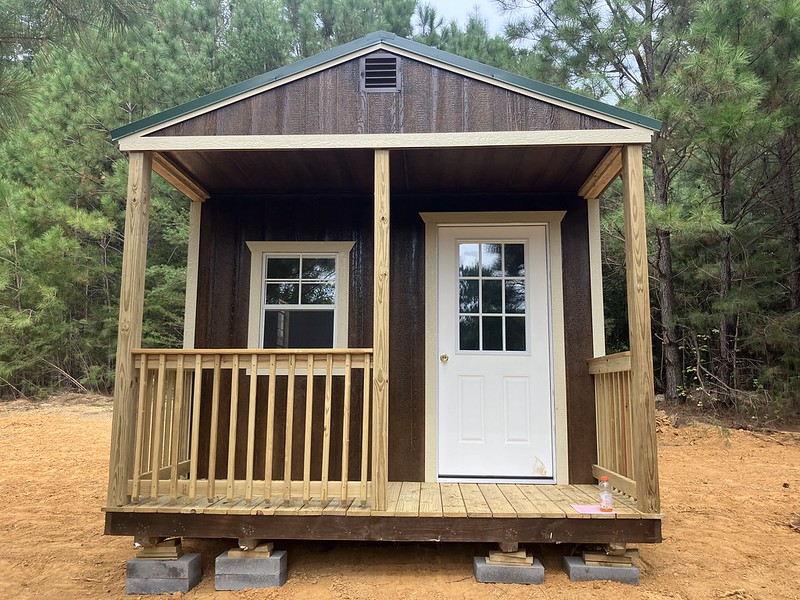
The Oak Hollow Way – Why Our Cabins Are Small on Purpose

The Oak Hollow Way — Week 7

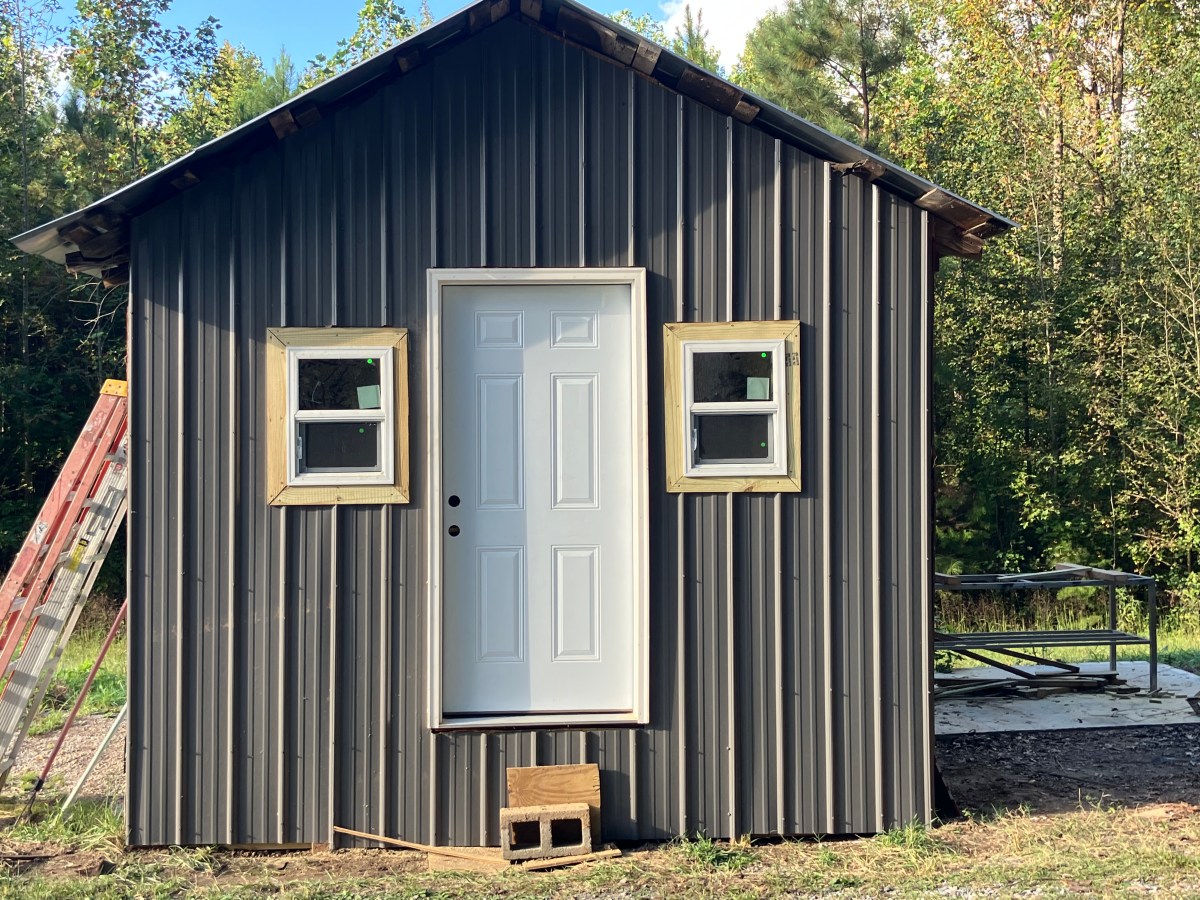
In a culture that equates more space with more success, building small can look like a compromise.

Bigger homes promise comfort. Extra rooms suggest freedom. Square footage is treated as progress—proof that you’ve arrived, expanded, improved.

So when people hear that Oak Hollow cabins are intentionally small, the assumption is often that something is missing.

But smallness here isn’t a limitation. It’s a design choice.

And it exists for a reason.


Small Spaces Ask Different Questions

Large spaces invite accumulation.Small spaces invite attention.

In a big house, it’s easy to spread out—physically and mentally. Rooms fill with objects. Schedules fill with obligations. Attention diffuses.

In a small cabin, that diffusion doesn’t happen.

You notice what’s there. You notice what isn’t. You notice what matters.

Small spaces gently ask questions that large ones often allow us to avoid:

  • What do I actually need?
  • What earns its place here?
  • What can be let go?
  • How much space does a meaningful life really require?

These aren’t questions we answer intellectually. We answer them by living inside the space.


Constraint Creates Clarity

Constraint gets a bad reputation. We associate it with restriction, loss, or sacrifice.

But constraint, when chosen intentionally, creates clarity.

In a small cabin:

  • there’s less visual noise
  • fewer decisions compete for attention
  • movement becomes simpler
  • routines settle naturally
  • the mind has less to manage

Nothing is wasted. Nothing is excessive. Everything has a role.

This isn’t about minimalism as an aesthetic. It’s about mental spaciousness.

When your environment stops demanding constant management, your attention is freed to move inward and outward in healthier ways.


Small Spaces Bring You Back to the Body

Large spaces can keep us moving.Small spaces invite us to settle.

In a cabin where everything is within reach, life slows down. You sit more. You notice posture. You feel temperature changes. You hear subtle sounds. You become aware of your body again.

This is not accidental.

Small spaces bring the body back into the conversation. They anchor you physically, which steadies you mentally.

At Oak Hollow, the cabins are designed to support this grounding. Not to confine—but to orient.


Small Doesn’t Mean Sparse

There’s an assumption that small spaces must feel empty or austere. That comfort requires excess.

But comfort doesn’t come from quantity. It comes from coherence.

A small space that is thoughtfully designed—where light, materials, warmth, and layout work together—often feels more supportive than a large space filled without intention.

At Oak Hollow, cabins are built to feel complete, not cramped.

They offer what’s essential and nothing that distracts from it.

That balance matters.


Small Spaces Change How You Relate to Time

In large homes, it’s easy to stay busy—moving from room to room, managing things, maintaining spaces.

In a small cabin, time stretches.

With fewer tasks and fewer places to go, moments open up. Evenings feel longer. Mornings feel quieter. Days regain shape instead of blurring together.

This shift is subtle, but powerful.

When time slows, people stop living ahead of themselves. They arrive where they are.

That arrival is one of the quiet gifts of small living.


Small Encourages Going Outside

Small cabins naturally push life outward.

You step onto the porch. You walk the land. You cook simply, then move outside. You let the weather matter.

The cabin becomes a shelter, not a container for life.

This relationship—inside for warmth and rest, outside for movement and perspective—mirrors how humans have lived for most of history. It restores a rhythm that modern architecture often disrupts.

At Oak Hollow, the cabins are meant to belong to the land, not replace it.


Small Is Honest

Large spaces can hide things—clutter, avoidance, excess.

Small spaces are honest.

You see what you own. You feel how you live. You notice what works and what doesn’t.

This honesty isn’t harsh. It’s clarifying.

Many people discover that what they thought they needed was actually noise. And what they feared losing was rarely essential.

Small living gently reveals this—without lectures, without rules, without force.


Why Oak Hollow Builds Small

Oak Hollow cabins are small because:

  • clarity thrives in simplicity
  • attention deepens in contained spaces
  • the body settles more easily
  • the land remains the primary experience
  • life becomes less about managing things and more about inhabiting moments

Small is not a statement here. It’s a support system.

The cabins exist to serve presence, not status.


An Invitation to Reconsider “Enough”

You don’t have to live small to learn from it.

But spending time in a small, intentional space often recalibrates what enough feels like.

Enough warmth.Enough light.Enough quiet.Enough space to breathe.

More rarely adds to that list.

At Oak Hollow, smallness is not about taking something away. It’s about giving something back.

This is why our cabins are small on purpose.

This is the Oak Hollow Way.

The Oak Hollow Way: 70 Acres of Quiet: What the Hollow Teaches

The Oak Hollow Way — Week 6

Quiet is often misunderstood.

People tend to think of it as an absence—of sound, of activity, of stimulation. Something empty. Something neutral. Something you pass through on the way to something more interesting.

But spend enough time in a quiet place, and you discover something different:

Quiet is not empty. It is instructive.

At Oak Hollow, the land itself is part of the philosophy. Not as scenery, not as backdrop, but as teacher. The 70 acres aren’t designed to entertain or impress. They’re designed to slow you down—and in doing so, to show you things modern life rarely does.


The Hollow Doesn’t Demand Attention

One of the first lessons the land teaches is subtle but profound:

Nothing here is trying to get your attention.

There are no alerts. No notifications. No signage telling you what to do next. No curated experiences asking to be consumed.

The woods don’t compete. The fields don’t persuade. The trails don’t hurry you.

At first, this can feel disorienting. Many of us are accustomed to being pulled forward by external cues. When those cues disappear, the question arises:

What do I do now?

The hollow answers quietly: You notice.


Slower Landscapes Restore Natural Rhythm

Modern environments are designed for efficiency. Roads move us quickly. Buildings compress space. Artificial light erases natural cycles. Time becomes something to manage instead of something to inhabit.

The hollow works differently.

Light changes gradually. Sounds travel farther. Movement slows naturally. Distances are walked, not rushed.

Without trying, the land reintroduces rhythm—morning and evening, effort and rest, movement and stillness. You don’t need to schedule this rhythm. You fall back into it simply by being there.

This is one of the reasons quiet places feel restorative. They remind the body of a pace it recognizes.


The Land Reveals What the Mind Skips Over

When life is busy, attention becomes narrow. We focus on what’s necessary and skim over everything else. The hollow widens attention again.

You begin to notice:

  • how many kinds of silence exist
  • how wind sounds different at different times of day
  • how shadows shift across the same ground
  • how your own pace changes without instruction

Nothing dramatic is happening.And yet something fundamental is returning.

The land teaches through repetition, not revelation. Through consistency, not spectacle.

It doesn’t tell you what to think. It shows you how to see.


Quiet Makes Space for Inner Movement

In noisy environments, inner movement is often drowned out. Thoughts are interrupted. Feelings are postponed. Questions are deferred.

Quiet removes that buffer.

In the hollow, thoughts finish themselves. Emotions surface without distraction. Questions linger long enough to be felt rather than answered.

This can be uncomfortable at first. But it’s also clarifying.

The land doesn’t solve anything for you. It simply gives your inner life enough space to reorganize itself.

That reorganization often looks like:

  • clearer priorities
  • softened urgency
  • renewed creativity
  • deeper rest
  • honest self-assessment

These aren’t imposed. They emerge.


The Hollow Teaches Through Constraint

Seventy acres may sound expansive, but it’s also contained. You can walk it. Learn it. Become familiar with it. This balance—spacious but bounded—is important.

Unlimited choice overwhelms. Clear boundaries calm.

The hollow teaches that freedom doesn’t come from endless options. It comes from inhabiting a place deeply enough to stop scanning for alternatives.

When you’re not constantly deciding where else you could be, attention settles where you are.

This is one of the quiet gifts of the land.


Nothing Here Is Optimized

The hollow is not optimized for productivity, speed, or output.

Paths wander. Terrain varies. Weather matters. Time stretches.

This isn’t inefficiency It’s wisdom.

Life unfolds more fully when it isn’t forced into straight lines. When movement responds to conditions rather than ignoring them.

The land teaches adaptability without urgency—a skill modern life rarely cultivates.


Why Oak Hollow Was Built Around the Land

Oak Hollow wasn’t planned around buildings first. It was shaped around the land itself—its contours, its quiet, its natural flow.

The cabins, trails, and shared spaces exist within the hollow, not over it.

This matters.

When a place respects its land, the land teaches the people who spend time there. Not through instruction, but through experience.

You don’t leave with answers. You leave with perspective.


An Invitation to Listen

You don’t need seventy acres to learn these lessons.

Any quiet place can teach you—if you let it.

Stand somewhere without distraction. Notice what doesn’t ask for your attention. Let time pass without filling it.

The hollow simply makes this easier by removing the noise that usually prevents it.

Oak Hollow exists to protect that ease.

To preserve a kind of quiet that doesn’t disappear when you notice it. To offer a landscape that teaches without speaking. To remind you that clarity often arrives not through effort, but through listening.

This is what the hollow teaches—patiently, consistently, and without demand.

This is the Oak Hollow Way.

The Oak Hollow Way – The Power of Returning to Your Senses

The Oak Hollow Way — Week 5

Most of us live our lives from the neck up.

We think, plan, worry, anticipate, analyze, rehearse. Our attention stays tethered to screens, schedules, conversations, and obligations. Even when we’re physically present, we’re often mentally elsewhere—reviewing the past or preparing for the next thing.

Over time, something subtle happens.

We lose contact with our senses.

Not completely, of course—we still see, hear, taste, touch—but only at a surface level. The senses become background noise instead of a doorway into being alive.

At Oak Hollow, one of the quiet intentions behind everything we’re building is this:

To help people return to their senses—and through them, return to themselves.


Why the Senses Matter More Than We Think

The senses are not luxuries.They are not embellishments to life.

They are how life actually arrives.

Before language, before goals, before beliefs, before stories about who we are or where we’re going, there is sensation:

  • light and shadow
  • warmth and cold
  • sound and silence
  • texture and movement
  • breath entering and leaving the body

When we lose contact with our senses, life becomes abstract. We start living about life instead of inside it.

Modern life quietly encourages this disconnection. Screens flatten experience. Artificial light blurs time. Noise crowds out subtlety. Speed bypasses awareness.

The result is not just stress or fatigue—it’s a kind of numbness.

Returning to the senses is how that numbness begins to dissolve.


Stillness Reawakens What Noise Dulls

When external noise falls away, the senses wake up.

Not dramatically at first—but unmistakably.

You notice how the air feels on your skin. You hear distance again. You taste food instead of consuming it. You feel the ground under your feet instead of rushing across it.

These aren’t spiritual achievements. They are biological responses.

Human beings evolved in environments where sensory awareness mattered—where listening, noticing, and attuning to subtle changes meant safety and survival. Our nervous systems still recognize this.

Quiet tells the body: you’re safe. Safety allows attention to soften. Soft attention lets sensation return.

This is one of the most understated but powerful shifts that happens when a person slows down long enough.


The Senses Anchor Us in the Present

The mind is always moving—forward, backward, sideways. The senses, by contrast, only exist now.

You can think about yesterday. You can plan tomorrow. But you can only feel the warmth of sunlight right now You can only hear the wind right now. You can only feel your breath right now.

This is why returning to the senses brings such immediate relief. It pulls attention out of mental noise and back into direct experience.

You don’t need to solve your life to feel your feet on the ground. You don’t need clarity to hear birds in the distance. You don’t need answers to notice your breathing slow.

Presence doesn’t require effort. It requires attention.


Why Nature Makes This Easier

Nature is patient.

It doesn’t demand anything from you. It doesn’t hurry you. It doesn’t compete for your attention.

A tree does not notify you. A creek does not interrupt you. The wind does not require a response.

At Oak Hollow, the land itself does much of the teaching. The woods, the open spaces, the changing light, the quiet evenings—they invite your senses back online without instruction.

You begin to notice:

  • the difference between morning and evening light
  • how temperature shifts across the day
  • how silence has texture, not emptiness
  • how movement slows when there’s nowhere to rush

This isn’t escape. It’s re-entry.


Doing Less Allows You to Feel More

One of the great misconceptions of modern life is that meaning comes from doing more.

More productivity. More engagement. More stimulation. More accomplishment.

But sensation works the opposite way.

You feel more when you do less.

Less rushing creates space for noticing. Less noise makes subtle sounds audible. Less distraction allows depth to return.

This is why people often report feeling “more alive” during quiet walks, slow meals, or evenings without screens. Nothing extraordinary is happening—yet something essential is restored.

At Oak Hollow, we’re not trying to add experiences to people’s lives.

We’re trying to remove what blocks them.


The Quiet Intelligence of the Body

The body knows how to live in the present long before the mind does.

When attention returns to the senses:

  • breathing deepens without instruction
  • muscles release without effort
  • the nervous system downshifts
  • mental urgency softens

This isn’t a mindset shift. It’s a physiological one.

The body responds to safety, not slogans. Quiet, darkness, simplicity, and rhythm speak directly to it.

This is why returning to the senses feels restorative rather than demanding. You’re not learning something new—you’re remembering something old.


An Invitation to Practice—Anywhere

You don’t need a cabin, a trail, or a retreat to begin this.

Try this today:

  • Step outside and stand still for one full minute.
  • Feel the ground under your feet.
  • Listen for the most distant sound you can hear.
  • Notice the temperature on your skin.
  • Take three unhurried breaths.

That’s it.

No insight required. No goal to reach.

Just sensation.

In that moment, you are fully alive.

That is what Oak Hollow is being built to support on a deeper, longer scale: a way of living where your senses are no longer drowned out by noise, speed, and expectation.

Returning to your senses isn’t a retreat from life. It’s how you return to it.

The Oak Hollow Way — Why Doing Less Creates More

(Week 4 of The Oak Hollow Way Series)

Modern life teaches a quiet but relentless lesson:
More effort produces more results.

More hours.
More hustle.
More commitments.
More productivity tools.
More urgency.

We’re conditioned to believe that progress comes from adding—adding tasks, adding goals, adding pressure. If something isn’t working, we assume the solution is to do more.

And yet, most people feel overwhelmed, depleted, and strangely unfulfilled—despite doing more than any generation before them.

At Oak Hollow, we’re building around a different truth:

Often, the most meaningful progress comes not from doing more—but from doing less.


Doing Less Isn’t Laziness — It’s Discernment

“Doing less” is easily misunderstood.

It doesn’t mean disengaging from life.
It doesn’t mean avoiding responsibility.
It doesn’t mean lowering standards or ambition.

Doing less means choosing carefully where your energy goes.

It means noticing how much of what fills your days isn’t essential, nourishing, or even meaningful—but simply habitual. Obligations accumulate quietly. Expectations stack up. Commitments linger long after they’ve stopped serving us.

Without intention, life fills itself.

Doing less is the practice of asking:

  • What actually matters here?
  • What can be let go without harm?
  • What drains energy without giving anything back?
  • What remains when the unnecessary is removed?

At Oak Hollow, this principle shows up everywhere—from the size of the cabins to the pace of daily life. Less space. Fewer distractions. Simpler routines. The result isn’t emptiness. It’s clarity.


Why More Effort Often Produces Less

There’s a paradox most people don’t notice until they slow down:

The harder we push, the narrower our world becomes.

Constant busyness fragments attention. It shortens patience. It reduces creativity. It makes everything feel urgent—even things that aren’t important.

When the mind is overloaded:

  • Insight becomes rare
  • Creativity feels forced
  • Small problems feel large
  • Decisions feel heavier
  • Rest feels undeserved

More effort doesn’t automatically lead to better outcomes. Often, it leads to diminishing returns—where additional energy produces less clarity, less joy, and less meaning.

Doing less creates space.
Space allows perspective.
Perspective changes everything.


Stillness Is Where Clarity Emerges

Some of the most valuable things in life don’t respond well to pressure.

Clarity.
Insight.
Creativity.
Emotional honesty.
A sense of direction.

These don’t arrive on demand. They surface in quiet moments—during a slow walk, an unhurried meal, a silent morning, or a long pause between obligations.

When we stop filling every gap, something else moves in.

At Oak Hollow, the land itself encourages this rhythm. Without constant stimulation, the mind naturally settles. Without endless tasks, attention deepens. Without hurry, awareness expands.

Doing less doesn’t force clarity.
It makes room for it.


Less Doing Reveals What Matters

When you strip away excess activity, priorities reorganize themselves.

What once felt urgent often turns out to be optional.
What once felt essential sometimes reveals itself as habit.
And what truly matters tends to stand quietly, waiting for attention.

This is why simplifying on purpose isn’t about rules or restrictions. It’s about listening—to your body, your energy, your attention, and your inner signals.

When life slows:

  • relationships deepen
  • work becomes more focused
  • rest becomes restorative
  • decisions become simpler
  • presence becomes natural

Less doing allows life to regain its natural proportions.


The Body Understands Before the Mind Does

When people begin doing less—even slightly—the body responds immediately.

Breathing slows.
Muscles soften.
The nervous system settles.
Sleep improves.
The mind stops racing ahead.

This isn’t a mindset shift. It’s a biological one.

Human beings aren’t built for constant acceleration. We’re built for rhythm—effort followed by rest, movement followed by stillness. When that rhythm returns, health follows.

Oak Hollow isn’t designed to keep people busy. It’s designed to restore this rhythm—to allow effort and rest to find their natural balance again.


Less Can Be an Act of Courage

Doing less often requires more courage than doing more.

It means saying no.
It means stepping out of comparison.
It means releasing the illusion that worth is measured by output.
It means trusting that life doesn’t fall apart when you stop pushing it.

This can feel unsettling at first. When noise fades, thoughts become audible. When busyness slows, questions surface. But what emerges alongside that discomfort is something most people haven’t felt in a long time:

Relief.

Relief doesn’t come from finishing everything.
It comes from realizing not everything needs to be done.


What Oak Hollow Is Designed to Support

Oak Hollow isn’t about escape. It’s about recalibration.

Every element—the cabins, the land, the absence of constant stimulation—is designed to support a life where doing less creates more:

  • more clarity
  • more depth
  • more presence
  • more ease
  • more meaning

It’s not a rejection of modern life. It’s a counterbalance to it.

A place where life can breathe again.


An Invitation to Experiment

You don’t need to change your life overnight to experience this truth. You can test it gently:

  • Leave one evening unplanned.
  • Reduce your to-do list by one unnecessary task.
  • Pause before filling empty time.
  • Walk without a destination.
  • Sit without a screen.

Notice what happens when you resist the urge to add.

Often, what emerges is not boredom—but insight.
Not emptiness—but spaciousness.
Not loss—but something quietly regained.


Doing Less Isn’t About Withdrawal — It’s About Return

When you do less of what drains you, you create space for what restores you.

When you stop filling every moment, life starts speaking again.

That’s the quiet wisdom behind this way of living—and one of the reasons Oak Hollow exists.

This is the Oak Hollow Way.


The Oak Hollow Way — The Difference Between Purpose and Presence

The Oak Hollow Way Series — Week 3

Few words carry as much weight in modern life as purpose.

We’re told to find it. Define it. Pursue it. Protect it. Build our lives around it.

Purpose is often framed as the answer to restlessness, confusion, or dissatisfaction. If life feels heavy or unclear, the solution—so the story goes—is to clarify your purpose and recommit yourself to it.

But many people arrive at quiet places carrying a surprising realization:

They had purpose.They were productive.They were committed.They were busy.

And they were still exhausted.

At Oak Hollow, we’re building a place that invites a different question—not What is my purpose? but:

What happens when I stop chasing purpose long enough to be present?


Purpose Is Future-Oriented. Presence Is Now.

Purpose almost always lives in the future.

It points forward:

  • toward goals
  • toward outcomes
  • toward expectations
  • toward who you’re trying to become

Presence, by contrast, lives here.

It doesn’t ask what comes next. It asks what’s happening now.

Purpose says, “When I achieve this, I’ll be fulfilled.”Presence says, “This moment is already here—can you meet it?”

Neither is inherently wrong. But confusing the two can quietly drain a life.


When Purpose Becomes Pressure

Purpose often begins with good intentions. It gives direction. It provides motivation. It can help people endure hardship or commit to meaningful work.

But when purpose becomes the primary lens through which life is measured, it can quietly turn into pressure:

  • pressure to optimize every moment
  • pressure to justify rest
  • pressure to always be moving toward something
  • pressure to measure worth by output

In that framework, stillness feels unproductive. Silence feels wasteful. Doing nothing feels irresponsible.

Many people don’t realize how tightly purpose has wrapped itself around their nervous system until they finally slow down—and feel the relief.


Presence Isn’t Aimless — It’s Grounded

Presence is often misunderstood as passive or disengaged. But presence isn’t about drifting through life without intention.

It’s about being fully where you are before deciding where to go next.

Presence allows:

  • clearer thinking
  • wiser decisions
  • deeper listening
  • more honest self-assessment

When you’re present, action still happens—but it emerges from clarity rather than compulsion.

At Oak Hollow, the land is shaped to encourage this kind of grounding. Quiet trails. Dark nights. Simple spaces. Slower rhythms. These aren’t meant to erase purpose, but to soften its grip.

Because purpose without presence becomes performance.


Why Quiet Reveals the Difference

In noisy environments, purpose and presence blur together. The constant motion keeps us from noticing the strain.

But when things slow—when the generator goes quiet, when the light fades, when the pace drops—something becomes clear:

You can be deeply purposeful and profoundly disconnected.

Presence exposes this gently, without accusation.

It doesn’t demand that you abandon your goals. It simply asks you to notice how you’re living while pursuing them.

Are you breathing?Are you listening?Are you rushing past your own life?


Purpose Can Wait. Presence Cannot.

One of the quiet truths many people discover in stillness is this:

Purpose is something you do. Presence is something you are.

Purpose can be revisited. It can evolve. It can change.

But presence is only available now.

You can’t be present later. You can’t schedule it. You can’t optimize it.

You can only notice it—or miss it.

Oak Hollow isn’t built to give people a new purpose. It’s built to create the conditions where presence can return, often naturally, without effort.

From that presence, purpose—if it’s needed at all—tends to emerge more gently and more honestly.


A Different Way to Live

A presence-first life doesn’t abandon responsibility. It doesn’t reject meaning. It doesn’t retreat from engagement.

It simply refuses to sacrifice being alive in the present moment for the promise of fulfillment later.

At Oak Hollow, we’re designing for that refusal.

Not as a statement. Not as a rebellion. But as a quiet correction.

You don’t need to figure out your purpose here. You don’t need to optimize your time. You don’t need to justify stillness.

You only need to arrive.

This is the third step in The Oak Hollow Way.


The Oak Hollow Way – The Cost of Modern Life’s Noise

The Oak Hollow Way Series–Week 2.

Most of us don’t recognize how loud our lives have become.

Not the obvious noise—traffic, notifications, television—but the deeper noise that rides just beneath the surface of modern life. The noise of urgency. The noise of expectation. The noise of comparison. The noise of being pulled in ten different directions at once.

Modern life hums with an undercurrent that never fully turns off.

We grow used to it, the way people who live near a railroad eventually stop noticing the trains. But the body notices. The mind notices. And somewhere, just beneath the daily rush, something inside knows:

This isn’t how human beings were meant to live.

At Oak Hollow, we’re building a place designed to quiet this deeper noise—not because we’ve already hosted guests, but because we understand something universal about human beings:

When the noise stops, you hear your life again.


Noise Isn’t Just Sound — It’s Pressure

Modern noise is rarely about decibels. It’s about velocity.

It’s the pressure to hurry.
The pressure to perform.
The pressure to say yes.
The pressure to stay reachable at all hours.
The pressure to move from one task to the next without pausing long enough to feel anything.

This kind of noise has a cost:

  • It scatters your attention.
  • It shortens your breath.
  • It keeps the mind on high alert.
  • It crowds out clarity and intuition.
  • It makes rest feel like laziness instead of a requirement for a healthy life.

The tragedy is that this noise is now considered “normal.”

Stillness feels unusual.
Silence feels uncomfortable.
Slower rhythms feel irresponsible.

And so we keep living inside a hum that never quiets.


Noise Numbs Us Without Our Awareness

One of the most startling discoveries people make when they finally step into true quiet—whether on a mountain trail, in a dark cabin, or during a rare silent morning—is how quickly their inner world changes.

Without noise:

You can feel again.
You can think again.
You can breathe without rushing.
You can hear your own thoughts without being drowned by them.

Stillness doesn’t just calm the mind; it recalibrates it.

But you don’t have to wait for a retreat or a cabin stay for this to happen.
It’s a universal truth about being human:

Silence restores what noise erodes.

That’s why Oak Hollow is being shaped intentionally for quiet—because quiet is not a luxury. It’s clarity. It’s health. It’s a return to yourself.


The Subtle Ways Noise Steals Our Life

Modern noise doesn’t only overwhelm—it distracts.

Here are the hidden costs we rarely name out loud:

1. Noise reduces our capacity to focus.

Constant interruption keeps us in a mental shallows—we never get to the deeper waters where insight lives.

2. Noise makes small problems feel big.

When the mind is overloaded, even simple frustrations flare into stress.

3. Noise makes time feel compressed.

A noisy life always feels like “not enough time,” even when there technically is.

4. Noise keeps us performing instead of being present.

You start living for the next task, the next alert, the next obligation.

5. Noise blocks intuition.

Most people’s best ideas don’t come at a desk—they come on a walk, in the shower, or in silence.

We don’t lose clarity because we’re incapable of finding it.
We lose clarity because we drown it in noise.


The Body Knows What the Mind Ignores

Noise keeps the nervous system slightly elevated, always bracing for the next demand. But when noise begins to fall away—even a little—the body responds instantly:

  • shoulders drop
  • breath deepens
  • the jaw unclenches
  • heart rate steadies
  • the mind stops scanning for danger

This shift is not psychological—it’s biological.

Human beings evolved in environments where silence was the default, not the exception. Our bodies recognize quiet as safety.

At Oak Hollow, that’s the experience we’re designing toward—not luxury, not entertainment, but the biological relief of a life no longer dominated by noise.


Quiet Isn’t Empty — It’s Medicine

When people imagine silence, they often imagine emptiness. But true silence isn’t empty. It’s full. It’s spacious. It’s alive with subtle sounds you were too distracted to notice:

The wind through branches.
The shift of small animals.
The distant calling of birds.
The rhythm of your own heartbeat.

These sounds don’t interrupt you.
They accompany you.

They remind you that being alive doesn’t require constant stimulation.
It requires attention.


Noise Has a Cost — Quiet Has a Gift

Noise takes:
clarity, presence, rest, creativity, emotional stability.

Quiet gives:
perspective, focus, depth, ease, breath, spaciousness.

Oak Hollow isn’t being built to entertain people.
It’s being built to restore them.

Not because we think modern life is bad, but because we know something simple and true:

A life filled with noise leaves no room for you.

Quiet doesn’t erase your life.
It lets you return to it.


An Invitation to Notice Your Own Noise

You don’t need to wait for a cabin stay to feel the truth of this.
Try this today:

  • Sit in silence for two minutes.
  • Turn off notifications for one morning.
  • Eat a meal without a screen.
  • Walk outside without headphones.
  • Pause between tasks long enough to breathe.

You’ll notice something immediately:
The noise has been costing more than you realized.

And in that brief space, you may also notice something else—an emerging calm, a tiny shift, a small clearing in your mind.

That is what the land at Oak Hollow is designed to offer on a much deeper scale:
a place where clarity has room to return.

This is the second step in The Oak Hollow Way.


The Oak Hollow Way – What It Means to Simplify on Purpose

(The Oak Hollow Way Series)

Most people stumble into simplicity by accident.

A phone dies. A storm knocks out the power. A long day ends sooner than expected. For a brief moment, the world quiets, and something loosens inside us. We breathe deeper. We notice things. We move more slowly.

Then the lights return, the phone charges, and the moment disappears.

At Oak Hollow, we’re building a place where simplicity isn’t accidental. It’s intentional.

To simplify on purpose means choosing to clear out the noise—not to escape life, but to feel it more clearly.

It’s not minimalism. It’s not deprivation. It’s not about stripping your life bare.

It’s about removing everything that keeps you from fully experiencing it.


Simplicity Isn’t the Absence of Things — It’s the Presence of Yourself

People often don’t realize how much mental noise they’re carrying until it stops. Our culture normalizes distraction, multitasking, rushing, striving, and filling every empty moment with stimulation.

Simplicity isn’t about becoming ascetic. It’s about letting the unnecessary fall away long enough to remember who you are without constant interruption.

At Oak Hollow, this philosophy shapes every decision:

  • cabins deliberately small
  • nights left deliberately dark
  • work deliberately simple
  • routines deliberately unhurried
  • nature deliberately unfiltered

You simplify not to have less—but to be more present in what remains.


Why the “On Purpose” Part Matters

People often experience quiet only when circumstances force it on them—a snowstorm, a blackout, a delayed appointment, a long drive with no radio signal. But choosing simplicity is different.

To simplify on purpose means:

  • You slow down with intention.
  • You create space rather than waiting for it.
  • You allow stillness, even if it feels unfamiliar.
  • You open yourself to clarity instead of crowding it out.

Stillness reveals things we often hide from ourselves. But it also reveals things we long for—peace, reflection, creativity, presence.

At Oak Hollow, the land is being shaped to support this kind of clarity. Not because we’ve hosted guests yet, but because we understand the universal human response to quiet: the mind settles, the breath deepens, and the internal pressure begins to release.


Simplicity Is a Return to Your Senses

Noise numbs. Pace blinds. Busyness dulls.

When you step into true quiet—even for one evening—your senses return:

  • You hear the shift of wind.
  • You notice the changing light.
  • You track your own thoughts without rushing past them.
  • You feel your body relax in ways you’d forgotten it could.

Simplicity brings you back to yourself.

Whether sitting on a cabin porch, walking through a hollow, or simply cooking a slow meal in the Hub’s kitchen, the world around you becomes less cluttered—and the world within becomes more clear.


Simplify on Purpose: The Invitation

“Simplify on Purpose” is more than a phrase. It’s a practice of:

  • breathing instead of performing
  • noticing instead of numbing
  • being instead of striving

You don’t need to earn simplicity. You don’t need a special skillset. You don’t need to retreat from life.

You only need the willingness to live differently—quietly, thoughtfully, intentionally.

That’s the Oak Hollow Way. And this post is just the beginning.