The Oak Hollow Way: 70 Acres of Quiet: What the Hollow Teaches

The Oak Hollow Way — Week 6

Quiet is often misunderstood.

People tend to think of it as an absence—of sound, of activity, of stimulation. Something empty. Something neutral. Something you pass through on the way to something more interesting.

But spend enough time in a quiet place, and you discover something different:

Quiet is not empty. It is instructive.

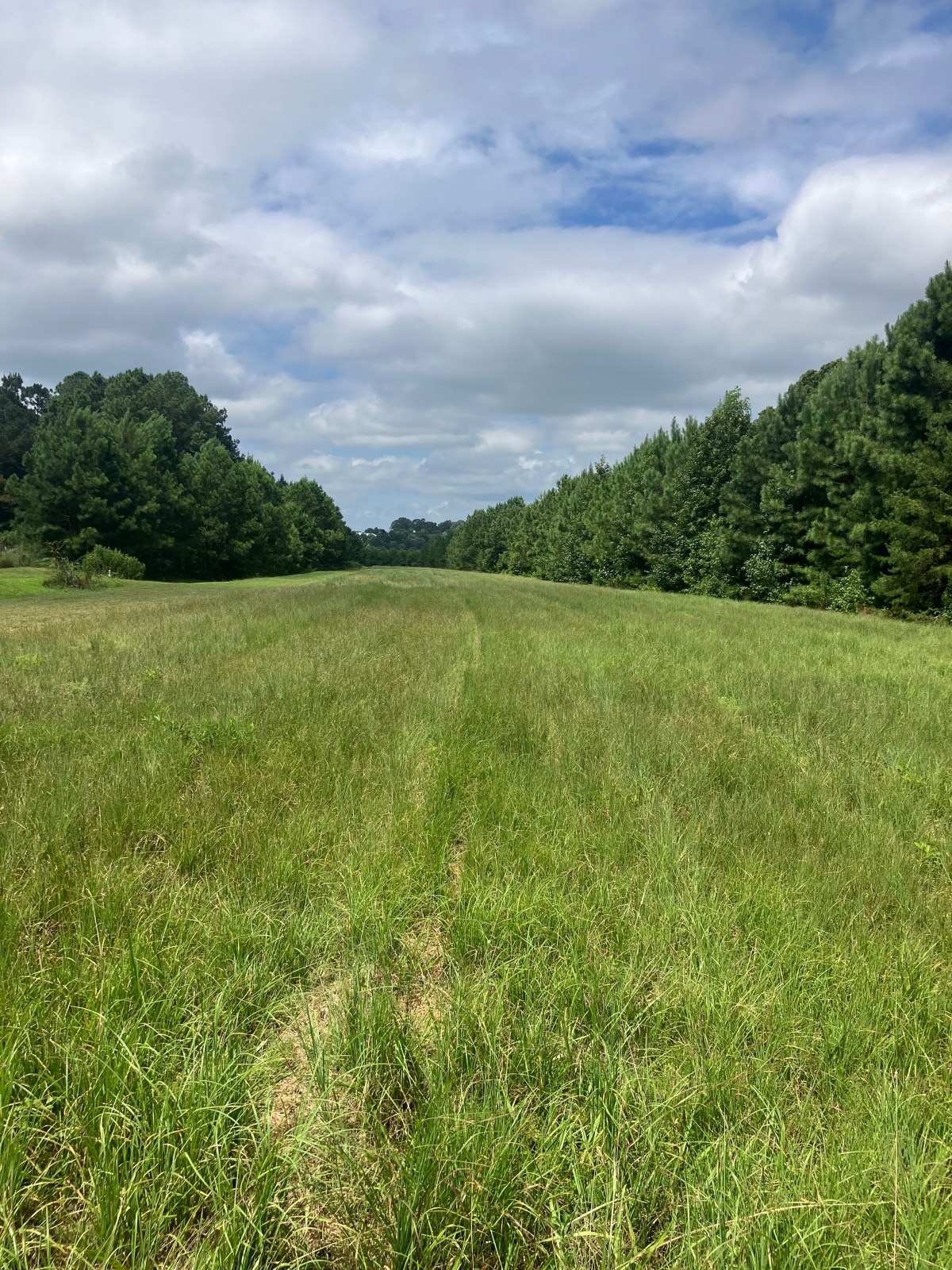
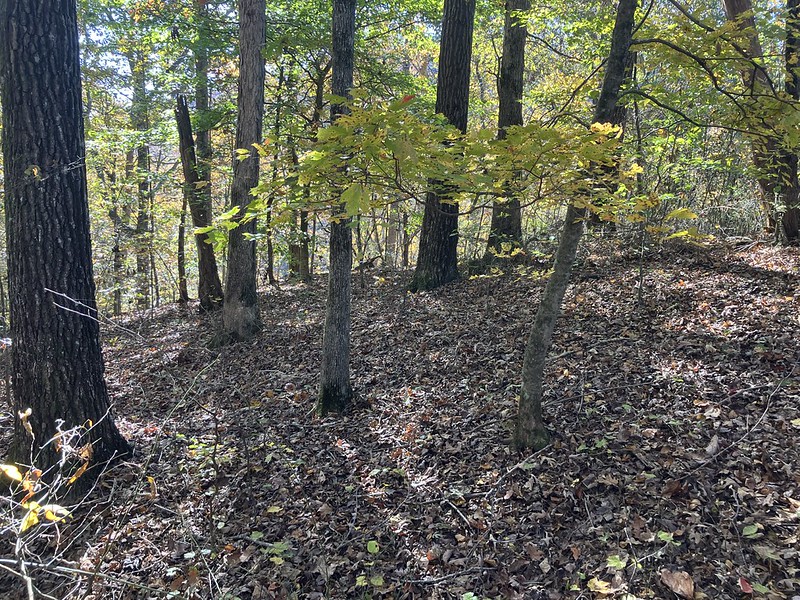
At Oak Hollow, the land itself is part of the philosophy. Not as scenery, not as backdrop, but as teacher. The 70 acres aren’t designed to entertain or impress. They’re designed to slow you down—and in doing so, to show you things modern life rarely does.


The Hollow Doesn’t Demand Attention

One of the first lessons the land teaches is subtle but profound:

Nothing here is trying to get your attention.

There are no alerts. No notifications. No signage telling you what to do next. No curated experiences asking to be consumed.

The woods don’t compete. The fields don’t persuade. The trails don’t hurry you.

At first, this can feel disorienting. Many of us are accustomed to being pulled forward by external cues. When those cues disappear, the question arises:

What do I do now?

The hollow answers quietly: You notice.


Slower Landscapes Restore Natural Rhythm

Modern environments are designed for efficiency. Roads move us quickly. Buildings compress space. Artificial light erases natural cycles. Time becomes something to manage instead of something to inhabit.

The hollow works differently.

Light changes gradually. Sounds travel farther. Movement slows naturally. Distances are walked, not rushed.

Without trying, the land reintroduces rhythm—morning and evening, effort and rest, movement and stillness. You don’t need to schedule this rhythm. You fall back into it simply by being there.

This is one of the reasons quiet places feel restorative. They remind the body of a pace it recognizes.


The Land Reveals What the Mind Skips Over

When life is busy, attention becomes narrow. We focus on what’s necessary and skim over everything else. The hollow widens attention again.

You begin to notice:

  • how many kinds of silence exist
  • how wind sounds different at different times of day
  • how shadows shift across the same ground
  • how your own pace changes without instruction

Nothing dramatic is happening.And yet something fundamental is returning.

The land teaches through repetition, not revelation. Through consistency, not spectacle.

It doesn’t tell you what to think. It shows you how to see.


Quiet Makes Space for Inner Movement

In noisy environments, inner movement is often drowned out. Thoughts are interrupted. Feelings are postponed. Questions are deferred.

Quiet removes that buffer.

In the hollow, thoughts finish themselves. Emotions surface without distraction. Questions linger long enough to be felt rather than answered.

This can be uncomfortable at first. But it’s also clarifying.

The land doesn’t solve anything for you. It simply gives your inner life enough space to reorganize itself.

That reorganization often looks like:

  • clearer priorities
  • softened urgency
  • renewed creativity
  • deeper rest
  • honest self-assessment

These aren’t imposed. They emerge.


The Hollow Teaches Through Constraint

Seventy acres may sound expansive, but it’s also contained. You can walk it. Learn it. Become familiar with it. This balance—spacious but bounded—is important.

Unlimited choice overwhelms. Clear boundaries calm.

The hollow teaches that freedom doesn’t come from endless options. It comes from inhabiting a place deeply enough to stop scanning for alternatives.

When you’re not constantly deciding where else you could be, attention settles where you are.

This is one of the quiet gifts of the land.


Nothing Here Is Optimized

The hollow is not optimized for productivity, speed, or output.

Paths wander. Terrain varies. Weather matters. Time stretches.

This isn’t inefficiency It’s wisdom.

Life unfolds more fully when it isn’t forced into straight lines. When movement responds to conditions rather than ignoring them.

The land teaches adaptability without urgency—a skill modern life rarely cultivates.


Why Oak Hollow Was Built Around the Land

Oak Hollow wasn’t planned around buildings first. It was shaped around the land itself—its contours, its quiet, its natural flow.

The cabins, trails, and shared spaces exist within the hollow, not over it.

This matters.

When a place respects its land, the land teaches the people who spend time there. Not through instruction, but through experience.

You don’t leave with answers. You leave with perspective.


An Invitation to Listen

You don’t need seventy acres to learn these lessons.

Any quiet place can teach you—if you let it.

Stand somewhere without distraction. Notice what doesn’t ask for your attention. Let time pass without filling it.

The hollow simply makes this easier by removing the noise that usually prevents it.

Oak Hollow exists to protect that ease.

To preserve a kind of quiet that doesn’t disappear when you notice it. To offer a landscape that teaches without speaking. To remind you that clarity often arrives not through effort, but through listening.

This is what the hollow teaches—patiently, consistently, and without demand.

This is the Oak Hollow Way.

The Oak Hollow Way – The Cost of Modern Life’s Noise

The Oak Hollow Way Series–Week 2.

Most of us don’t recognize how loud our lives have become.

Not the obvious noise—traffic, notifications, television—but the deeper noise that rides just beneath the surface of modern life. The noise of urgency. The noise of expectation. The noise of comparison. The noise of being pulled in ten different directions at once.

Modern life hums with an undercurrent that never fully turns off.

We grow used to it, the way people who live near a railroad eventually stop noticing the trains. But the body notices. The mind notices. And somewhere, just beneath the daily rush, something inside knows:

This isn’t how human beings were meant to live.

At Oak Hollow, we’re building a place designed to quiet this deeper noise—not because we’ve already hosted guests, but because we understand something universal about human beings:

When the noise stops, you hear your life again.


Noise Isn’t Just Sound — It’s Pressure

Modern noise is rarely about decibels. It’s about velocity.

It’s the pressure to hurry.
The pressure to perform.
The pressure to say yes.
The pressure to stay reachable at all hours.
The pressure to move from one task to the next without pausing long enough to feel anything.

This kind of noise has a cost:

  • It scatters your attention.
  • It shortens your breath.
  • It keeps the mind on high alert.
  • It crowds out clarity and intuition.
  • It makes rest feel like laziness instead of a requirement for a healthy life.

The tragedy is that this noise is now considered “normal.”

Stillness feels unusual.
Silence feels uncomfortable.
Slower rhythms feel irresponsible.

And so we keep living inside a hum that never quiets.


Noise Numbs Us Without Our Awareness

One of the most startling discoveries people make when they finally step into true quiet—whether on a mountain trail, in a dark cabin, or during a rare silent morning—is how quickly their inner world changes.

Without noise:

You can feel again.
You can think again.
You can breathe without rushing.
You can hear your own thoughts without being drowned by them.

Stillness doesn’t just calm the mind; it recalibrates it.

But you don’t have to wait for a retreat or a cabin stay for this to happen.
It’s a universal truth about being human:

Silence restores what noise erodes.

That’s why Oak Hollow is being shaped intentionally for quiet—because quiet is not a luxury. It’s clarity. It’s health. It’s a return to yourself.


The Subtle Ways Noise Steals Our Life

Modern noise doesn’t only overwhelm—it distracts.

Here are the hidden costs we rarely name out loud:

1. Noise reduces our capacity to focus.

Constant interruption keeps us in a mental shallows—we never get to the deeper waters where insight lives.

2. Noise makes small problems feel big.

When the mind is overloaded, even simple frustrations flare into stress.

3. Noise makes time feel compressed.

A noisy life always feels like “not enough time,” even when there technically is.

4. Noise keeps us performing instead of being present.

You start living for the next task, the next alert, the next obligation.

5. Noise blocks intuition.

Most people’s best ideas don’t come at a desk—they come on a walk, in the shower, or in silence.

We don’t lose clarity because we’re incapable of finding it.
We lose clarity because we drown it in noise.


The Body Knows What the Mind Ignores

Noise keeps the nervous system slightly elevated, always bracing for the next demand. But when noise begins to fall away—even a little—the body responds instantly:

  • shoulders drop
  • breath deepens
  • the jaw unclenches
  • heart rate steadies
  • the mind stops scanning for danger

This shift is not psychological—it’s biological.

Human beings evolved in environments where silence was the default, not the exception. Our bodies recognize quiet as safety.

At Oak Hollow, that’s the experience we’re designing toward—not luxury, not entertainment, but the biological relief of a life no longer dominated by noise.


Quiet Isn’t Empty — It’s Medicine

When people imagine silence, they often imagine emptiness. But true silence isn’t empty. It’s full. It’s spacious. It’s alive with subtle sounds you were too distracted to notice:

The wind through branches.
The shift of small animals.
The distant calling of birds.
The rhythm of your own heartbeat.

These sounds don’t interrupt you.
They accompany you.

They remind you that being alive doesn’t require constant stimulation.
It requires attention.


Noise Has a Cost — Quiet Has a Gift

Noise takes:
clarity, presence, rest, creativity, emotional stability.

Quiet gives:
perspective, focus, depth, ease, breath, spaciousness.

Oak Hollow isn’t being built to entertain people.
It’s being built to restore them.

Not because we think modern life is bad, but because we know something simple and true:

A life filled with noise leaves no room for you.

Quiet doesn’t erase your life.
It lets you return to it.


An Invitation to Notice Your Own Noise

You don’t need to wait for a cabin stay to feel the truth of this.
Try this today:

  • Sit in silence for two minutes.
  • Turn off notifications for one morning.
  • Eat a meal without a screen.
  • Walk outside without headphones.
  • Pause between tasks long enough to breathe.

You’ll notice something immediately:
The noise has been costing more than you realized.

And in that brief space, you may also notice something else—an emerging calm, a tiny shift, a small clearing in your mind.

That is what the land at Oak Hollow is designed to offer on a much deeper scale:
a place where clarity has room to return.

This is the second step in The Oak Hollow Way.


The Oak Hollow Way – What It Means to Simplify on Purpose

(The Oak Hollow Way Series)

Most people stumble into simplicity by accident.

A phone dies. A storm knocks out the power. A long day ends sooner than expected. For a brief moment, the world quiets, and something loosens inside us. We breathe deeper. We notice things. We move more slowly.

Then the lights return, the phone charges, and the moment disappears.

At Oak Hollow, we’re building a place where simplicity isn’t accidental. It’s intentional.

To simplify on purpose means choosing to clear out the noise—not to escape life, but to feel it more clearly.

It’s not minimalism. It’s not deprivation. It’s not about stripping your life bare.

It’s about removing everything that keeps you from fully experiencing it.


Simplicity Isn’t the Absence of Things — It’s the Presence of Yourself

People often don’t realize how much mental noise they’re carrying until it stops. Our culture normalizes distraction, multitasking, rushing, striving, and filling every empty moment with stimulation.

Simplicity isn’t about becoming ascetic. It’s about letting the unnecessary fall away long enough to remember who you are without constant interruption.

At Oak Hollow, this philosophy shapes every decision:

  • cabins deliberately small
  • nights left deliberately dark
  • work deliberately simple
  • routines deliberately unhurried
  • nature deliberately unfiltered

You simplify not to have less—but to be more present in what remains.


Why the “On Purpose” Part Matters

People often experience quiet only when circumstances force it on them—a snowstorm, a blackout, a delayed appointment, a long drive with no radio signal. But choosing simplicity is different.

To simplify on purpose means:

  • You slow down with intention.
  • You create space rather than waiting for it.
  • You allow stillness, even if it feels unfamiliar.
  • You open yourself to clarity instead of crowding it out.

Stillness reveals things we often hide from ourselves. But it also reveals things we long for—peace, reflection, creativity, presence.

At Oak Hollow, the land is being shaped to support this kind of clarity. Not because we’ve hosted guests yet, but because we understand the universal human response to quiet: the mind settles, the breath deepens, and the internal pressure begins to release.


Simplicity Is a Return to Your Senses

Noise numbs. Pace blinds. Busyness dulls.

When you step into true quiet—even for one evening—your senses return:

  • You hear the shift of wind.
  • You notice the changing light.
  • You track your own thoughts without rushing past them.
  • You feel your body relax in ways you’d forgotten it could.

Simplicity brings you back to yourself.

Whether sitting on a cabin porch, walking through a hollow, or simply cooking a slow meal in the Hub’s kitchen, the world around you becomes less cluttered—and the world within becomes more clear.


Simplify on Purpose: The Invitation

“Simplify on Purpose” is more than a phrase. It’s a practice of:

  • breathing instead of performing
  • noticing instead of numbing
  • being instead of striving

You don’t need to earn simplicity. You don’t need a special skillset. You don’t need to retreat from life.

You only need the willingness to live differently—quietly, thoughtfully, intentionally.

That’s the Oak Hollow Way. And this post is just the beginning.

What’s Next at Oak Hollow?

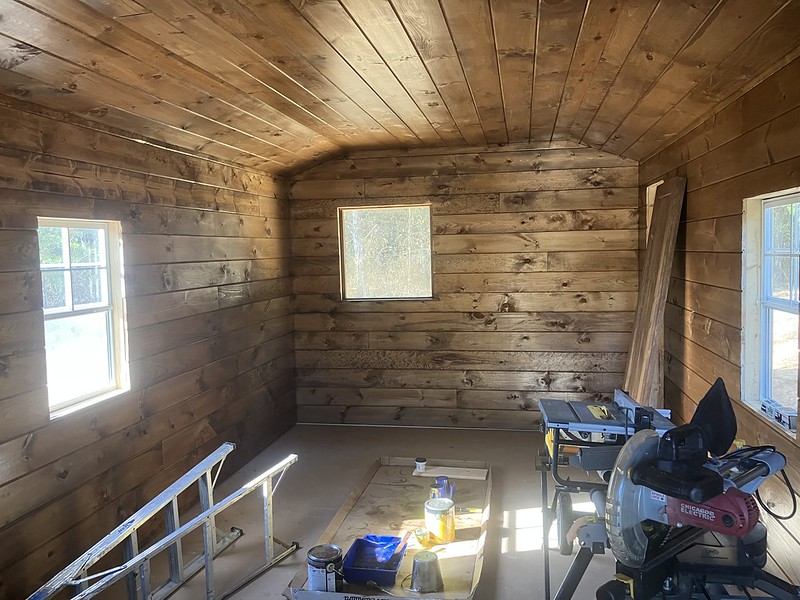
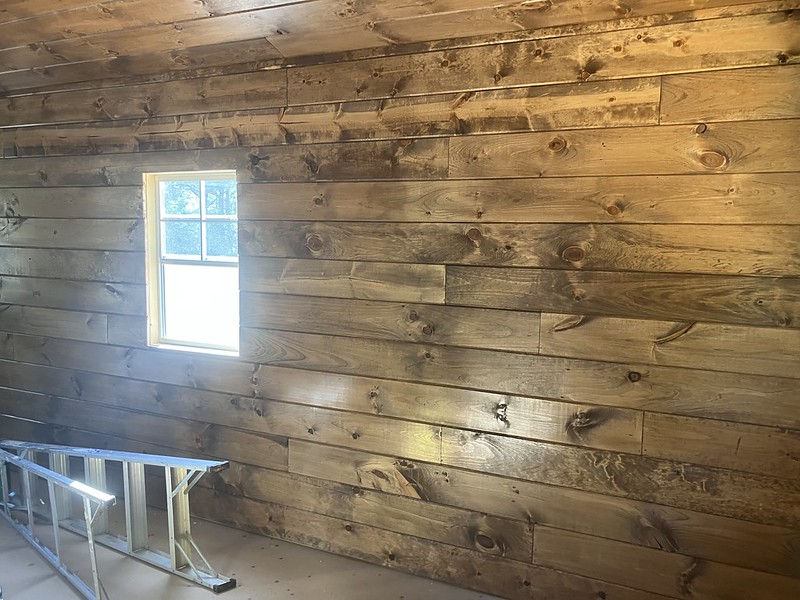
After flooring is finished, we’ll turn to the handmade door hardware, exterior steps, and all the small but essential details that make a place feel like home.

And once Cabin 1 is complete—inside and out—we’ll shift our full attention to the central hub and Cabin 2. Together, these will set the stage for our soft launch with volunteer guests in early 2026, followed by a full public opening in March 2026.


🧭 Why It Matters

When you book a stay at Oak Hollow, you’re not just reserving a room. You’re stepping into a space built by real hands, with real intention. Every board, every brush stroke, every fixture has a story—and we’re honored to share it with you.


📬 Stay Connected
If you’re enjoying the journey as we build Oak Hollow Cabins, subscribe to Simplify on Purpose. Each post will come directly to your inbox—no algorithms, no noise, just the real story.

A Digital Home for Oak Hollow

Our Website Is Live

Today marks a new step in the journey of Oak Hollow Cabins. Until now, everything has lived in sketches, conversations, and the quiet work of clearing land and building Cabin 1. But this morning, Oak Hollow found its digital home. Our website is live.

If you’ve read earlier posts here on Simplify on Purpose, you already know the heart of this project: stepping away from noise, hurry, and clutter to remember what matters. Oak Hollow Cabins is about living at a slower rhythm—one our great-grandparents would have recognized.

This new site is simply the next step. It’s a place where you can follow our progress, see how the cabins come together, and walk alongside us as we prepare for our opening in March 2026.

There is still much to do. But sometimes it’s worth pausing to notice the milestones. And today, this milestone feels worth celebrating.

So here’s the invitation: bookmark the site, visit often, and share it with someone you know who longs for simplicity. We’ll keep building—both cabins and stories. And in time, we hope Oak Hollow will be a place where you can come, sit by the stove, and let the quiet speak for itself.


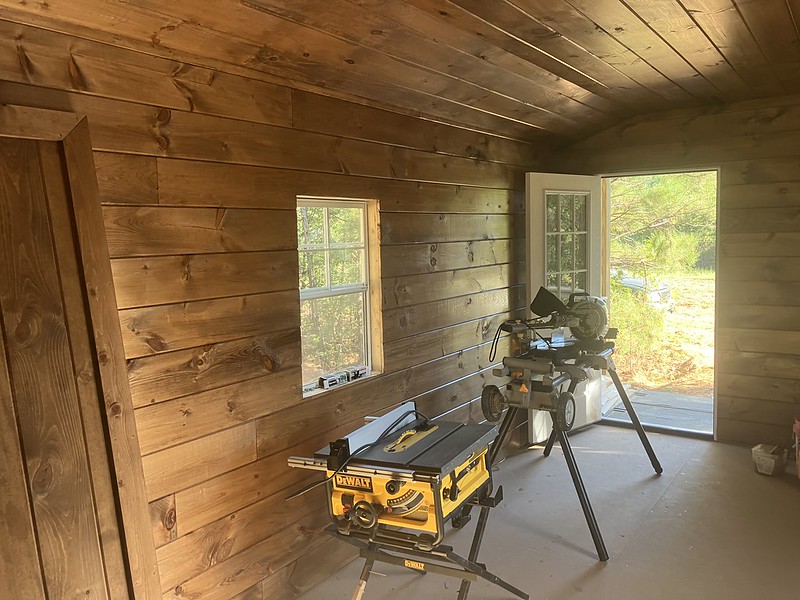
Our future office


So here’s the invitation: bookmark the site, visit often, and share it with someone you know who longs for simplicity. We’ll keep building—both cabins and stories. And in time, we hope Oak Hollow will be a place where you can come, sit by the stove, and let the quiet speak for itself.

To receive every Simplify on Purpose post in your inbox, complete the following: