The Oak Hollow Way – Why Our Cabins Are Small on Purpose

The Oak Hollow Way — Week 7

In a culture that equates more space with more success, building small can look like a compromise.

Bigger homes promise comfort. Extra rooms suggest freedom. Square footage is treated as progress—proof that you’ve arrived, expanded, improved.

So when people hear that Oak Hollow cabins are intentionally small, the assumption is often that something is missing.

But smallness here isn’t a limitation. It’s a design choice.

And it exists for a reason.


Small Spaces Ask Different Questions

Large spaces invite accumulation.Small spaces invite attention.

In a big house, it’s easy to spread out—physically and mentally. Rooms fill with objects. Schedules fill with obligations. Attention diffuses.

In a small cabin, that diffusion doesn’t happen.

You notice what’s there. You notice what isn’t. You notice what matters.

Small spaces gently ask questions that large ones often allow us to avoid:

  • What do I actually need?
  • What earns its place here?
  • What can be let go?
  • How much space does a meaningful life really require?

These aren’t questions we answer intellectually. We answer them by living inside the space.


Constraint Creates Clarity

Constraint gets a bad reputation. We associate it with restriction, loss, or sacrifice.

But constraint, when chosen intentionally, creates clarity.

In a small cabin:

  • there’s less visual noise
  • fewer decisions compete for attention
  • movement becomes simpler
  • routines settle naturally
  • the mind has less to manage

Nothing is wasted. Nothing is excessive. Everything has a role.

This isn’t about minimalism as an aesthetic. It’s about mental spaciousness.

When your environment stops demanding constant management, your attention is freed to move inward and outward in healthier ways.


Small Spaces Bring You Back to the Body

Large spaces can keep us moving.Small spaces invite us to settle.

In a cabin where everything is within reach, life slows down. You sit more. You notice posture. You feel temperature changes. You hear subtle sounds. You become aware of your body again.

This is not accidental.

Small spaces bring the body back into the conversation. They anchor you physically, which steadies you mentally.

At Oak Hollow, the cabins are designed to support this grounding. Not to confine—but to orient.


Small Doesn’t Mean Sparse

There’s an assumption that small spaces must feel empty or austere. That comfort requires excess.

But comfort doesn’t come from quantity. It comes from coherence.

A small space that is thoughtfully designed—where light, materials, warmth, and layout work together—often feels more supportive than a large space filled without intention.

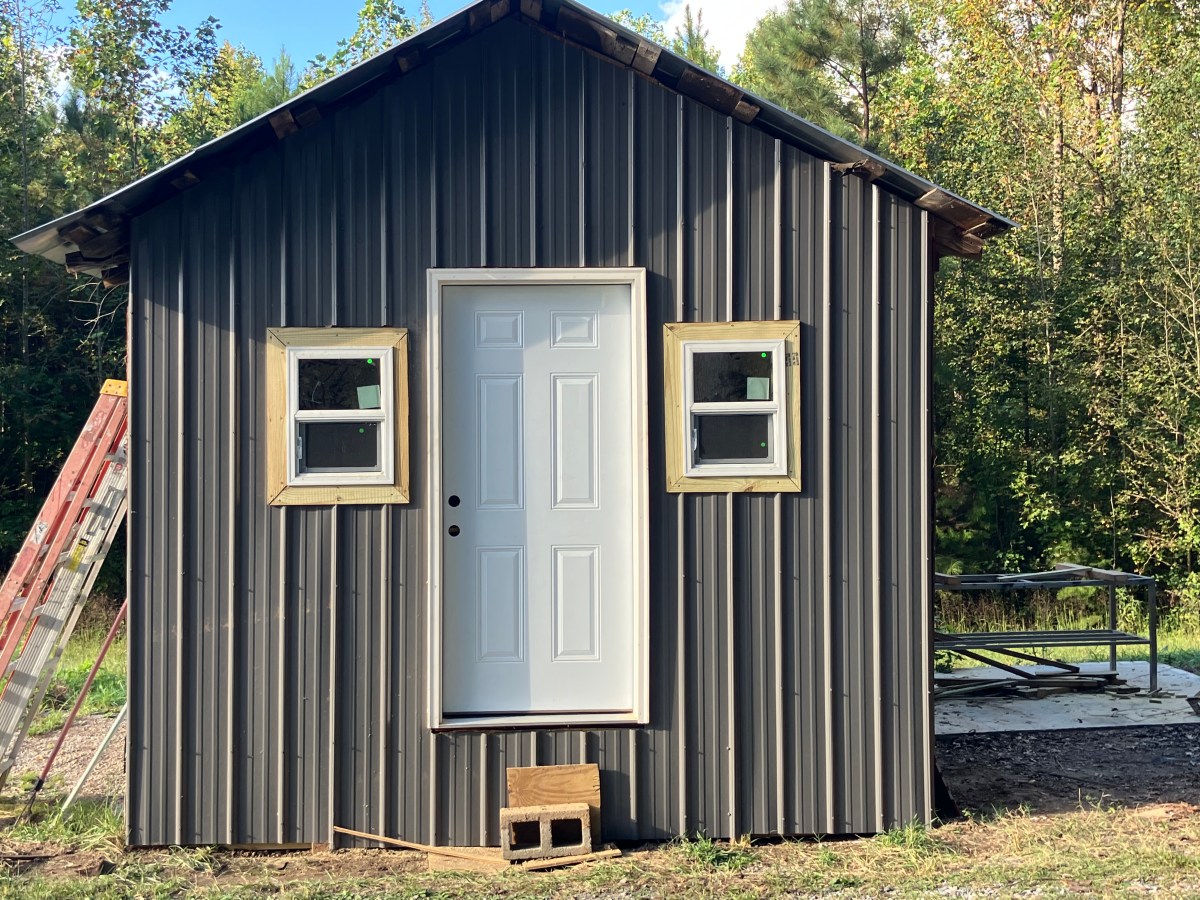
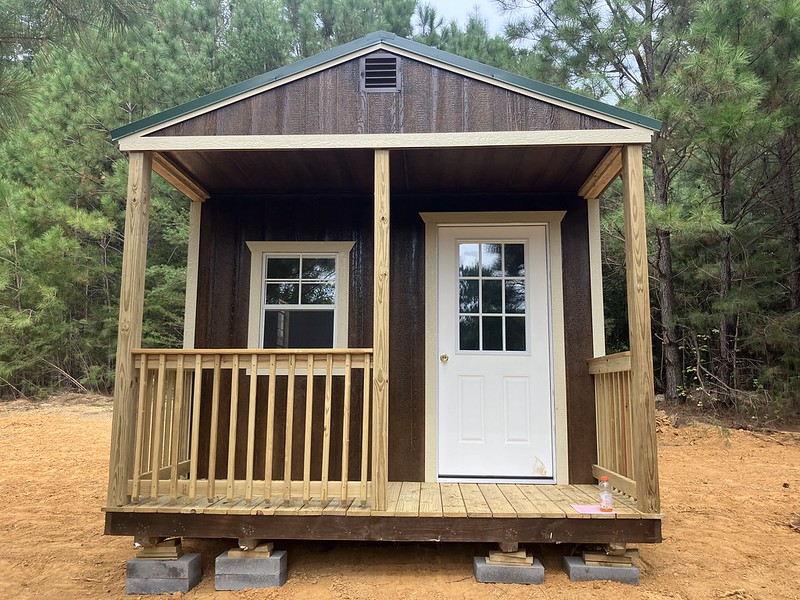
At Oak Hollow, cabins are built to feel complete, not cramped.

They offer what’s essential and nothing that distracts from it.

That balance matters.


Small Spaces Change How You Relate to Time

In large homes, it’s easy to stay busy—moving from room to room, managing things, maintaining spaces.

In a small cabin, time stretches.

With fewer tasks and fewer places to go, moments open up. Evenings feel longer. Mornings feel quieter. Days regain shape instead of blurring together.

This shift is subtle, but powerful.

When time slows, people stop living ahead of themselves. They arrive where they are.

That arrival is one of the quiet gifts of small living.


Small Encourages Going Outside

Small cabins naturally push life outward.

You step onto the porch. You walk the land. You cook simply, then move outside. You let the weather matter.

The cabin becomes a shelter, not a container for life.

This relationship—inside for warmth and rest, outside for movement and perspective—mirrors how humans have lived for most of history. It restores a rhythm that modern architecture often disrupts.

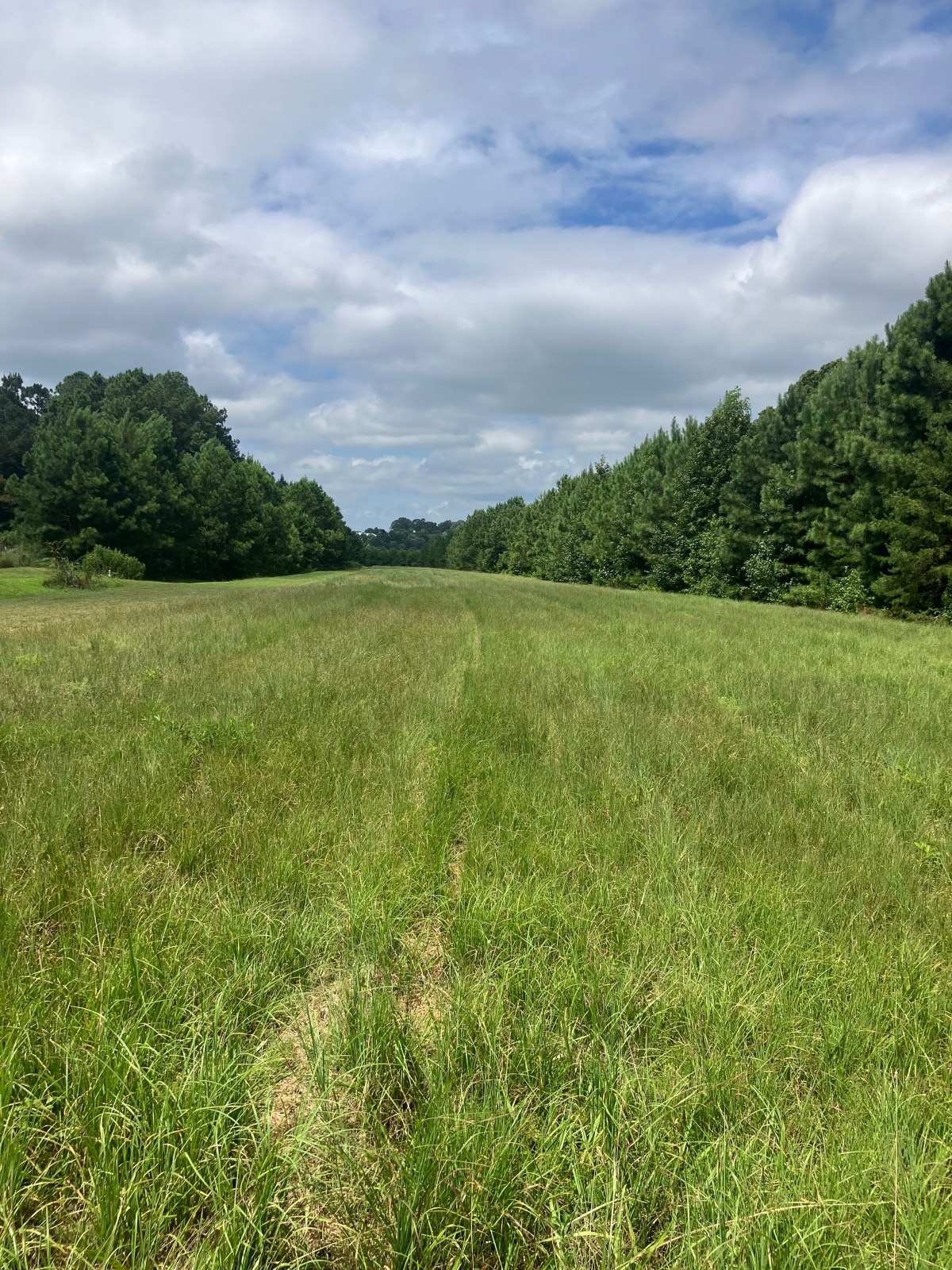
At Oak Hollow, the cabins are meant to belong to the land, not replace it.


Small Is Honest

Large spaces can hide things—clutter, avoidance, excess.

Small spaces are honest.

You see what you own. You feel how you live. You notice what works and what doesn’t.

This honesty isn’t harsh. It’s clarifying.

Many people discover that what they thought they needed was actually noise. And what they feared losing was rarely essential.

Small living gently reveals this—without lectures, without rules, without force.


Why Oak Hollow Builds Small

Oak Hollow cabins are small because:

  • clarity thrives in simplicity
  • attention deepens in contained spaces
  • the body settles more easily
  • the land remains the primary experience
  • life becomes less about managing things and more about inhabiting moments

Small is not a statement here. It’s a support system.

The cabins exist to serve presence, not status.


An Invitation to Reconsider “Enough”

You don’t have to live small to learn from it.

But spending time in a small, intentional space often recalibrates what enough feels like.

Enough warmth.Enough light.Enough quiet.Enough space to breathe.

More rarely adds to that list.

At Oak Hollow, smallness is not about taking something away. It’s about giving something back.

This is why our cabins are small on purpose.

This is the Oak Hollow Way.

The Oak Hollow Way – The Cost of Modern Life’s Noise

The Oak Hollow Way Series–Week 2.

Most of us don’t recognize how loud our lives have become.

Not the obvious noise—traffic, notifications, television—but the deeper noise that rides just beneath the surface of modern life. The noise of urgency. The noise of expectation. The noise of comparison. The noise of being pulled in ten different directions at once.

Modern life hums with an undercurrent that never fully turns off.

We grow used to it, the way people who live near a railroad eventually stop noticing the trains. But the body notices. The mind notices. And somewhere, just beneath the daily rush, something inside knows:

This isn’t how human beings were meant to live.

At Oak Hollow, we’re building a place designed to quiet this deeper noise—not because we’ve already hosted guests, but because we understand something universal about human beings:

When the noise stops, you hear your life again.


Noise Isn’t Just Sound — It’s Pressure

Modern noise is rarely about decibels. It’s about velocity.

It’s the pressure to hurry.
The pressure to perform.
The pressure to say yes.
The pressure to stay reachable at all hours.
The pressure to move from one task to the next without pausing long enough to feel anything.

This kind of noise has a cost:

  • It scatters your attention.
  • It shortens your breath.
  • It keeps the mind on high alert.
  • It crowds out clarity and intuition.
  • It makes rest feel like laziness instead of a requirement for a healthy life.

The tragedy is that this noise is now considered “normal.”

Stillness feels unusual.
Silence feels uncomfortable.
Slower rhythms feel irresponsible.

And so we keep living inside a hum that never quiets.


Noise Numbs Us Without Our Awareness

One of the most startling discoveries people make when they finally step into true quiet—whether on a mountain trail, in a dark cabin, or during a rare silent morning—is how quickly their inner world changes.

Without noise:

You can feel again.
You can think again.
You can breathe without rushing.
You can hear your own thoughts without being drowned by them.

Stillness doesn’t just calm the mind; it recalibrates it.

But you don’t have to wait for a retreat or a cabin stay for this to happen.
It’s a universal truth about being human:

Silence restores what noise erodes.

That’s why Oak Hollow is being shaped intentionally for quiet—because quiet is not a luxury. It’s clarity. It’s health. It’s a return to yourself.


The Subtle Ways Noise Steals Our Life

Modern noise doesn’t only overwhelm—it distracts.

Here are the hidden costs we rarely name out loud:

1. Noise reduces our capacity to focus.

Constant interruption keeps us in a mental shallows—we never get to the deeper waters where insight lives.

2. Noise makes small problems feel big.

When the mind is overloaded, even simple frustrations flare into stress.

3. Noise makes time feel compressed.

A noisy life always feels like “not enough time,” even when there technically is.

4. Noise keeps us performing instead of being present.

You start living for the next task, the next alert, the next obligation.

5. Noise blocks intuition.

Most people’s best ideas don’t come at a desk—they come on a walk, in the shower, or in silence.

We don’t lose clarity because we’re incapable of finding it.
We lose clarity because we drown it in noise.


The Body Knows What the Mind Ignores

Noise keeps the nervous system slightly elevated, always bracing for the next demand. But when noise begins to fall away—even a little—the body responds instantly:

  • shoulders drop
  • breath deepens
  • the jaw unclenches
  • heart rate steadies
  • the mind stops scanning for danger

This shift is not psychological—it’s biological.

Human beings evolved in environments where silence was the default, not the exception. Our bodies recognize quiet as safety.

At Oak Hollow, that’s the experience we’re designing toward—not luxury, not entertainment, but the biological relief of a life no longer dominated by noise.


Quiet Isn’t Empty — It’s Medicine

When people imagine silence, they often imagine emptiness. But true silence isn’t empty. It’s full. It’s spacious. It’s alive with subtle sounds you were too distracted to notice:

The wind through branches.
The shift of small animals.
The distant calling of birds.
The rhythm of your own heartbeat.

These sounds don’t interrupt you.
They accompany you.

They remind you that being alive doesn’t require constant stimulation.
It requires attention.


Noise Has a Cost — Quiet Has a Gift

Noise takes:
clarity, presence, rest, creativity, emotional stability.

Quiet gives:
perspective, focus, depth, ease, breath, spaciousness.

Oak Hollow isn’t being built to entertain people.
It’s being built to restore them.

Not because we think modern life is bad, but because we know something simple and true:

A life filled with noise leaves no room for you.

Quiet doesn’t erase your life.
It lets you return to it.


An Invitation to Notice Your Own Noise

You don’t need to wait for a cabin stay to feel the truth of this.
Try this today:

  • Sit in silence for two minutes.
  • Turn off notifications for one morning.
  • Eat a meal without a screen.
  • Walk outside without headphones.
  • Pause between tasks long enough to breathe.

You’ll notice something immediately:
The noise has been costing more than you realized.

And in that brief space, you may also notice something else—an emerging calm, a tiny shift, a small clearing in your mind.

That is what the land at Oak Hollow is designed to offer on a much deeper scale:
a place where clarity has room to return.

This is the second step in The Oak Hollow Way.


The Oak Hollow Way – What It Means to Simplify on Purpose

(The Oak Hollow Way Series)

Most people stumble into simplicity by accident.

A phone dies. A storm knocks out the power. A long day ends sooner than expected. For a brief moment, the world quiets, and something loosens inside us. We breathe deeper. We notice things. We move more slowly.

Then the lights return, the phone charges, and the moment disappears.

At Oak Hollow, we’re building a place where simplicity isn’t accidental. It’s intentional.

To simplify on purpose means choosing to clear out the noise—not to escape life, but to feel it more clearly.

It’s not minimalism. It’s not deprivation. It’s not about stripping your life bare.

It’s about removing everything that keeps you from fully experiencing it.


Simplicity Isn’t the Absence of Things — It’s the Presence of Yourself

People often don’t realize how much mental noise they’re carrying until it stops. Our culture normalizes distraction, multitasking, rushing, striving, and filling every empty moment with stimulation.

Simplicity isn’t about becoming ascetic. It’s about letting the unnecessary fall away long enough to remember who you are without constant interruption.

At Oak Hollow, this philosophy shapes every decision:

  • cabins deliberately small
  • nights left deliberately dark
  • work deliberately simple
  • routines deliberately unhurried
  • nature deliberately unfiltered

You simplify not to have less—but to be more present in what remains.


Why the “On Purpose” Part Matters

People often experience quiet only when circumstances force it on them—a snowstorm, a blackout, a delayed appointment, a long drive with no radio signal. But choosing simplicity is different.

To simplify on purpose means:

  • You slow down with intention.
  • You create space rather than waiting for it.
  • You allow stillness, even if it feels unfamiliar.
  • You open yourself to clarity instead of crowding it out.

Stillness reveals things we often hide from ourselves. But it also reveals things we long for—peace, reflection, creativity, presence.

At Oak Hollow, the land is being shaped to support this kind of clarity. Not because we’ve hosted guests yet, but because we understand the universal human response to quiet: the mind settles, the breath deepens, and the internal pressure begins to release.


Simplicity Is a Return to Your Senses

Noise numbs. Pace blinds. Busyness dulls.

When you step into true quiet—even for one evening—your senses return:

  • You hear the shift of wind.
  • You notice the changing light.
  • You track your own thoughts without rushing past them.
  • You feel your body relax in ways you’d forgotten it could.

Simplicity brings you back to yourself.

Whether sitting on a cabin porch, walking through a hollow, or simply cooking a slow meal in the Hub’s kitchen, the world around you becomes less cluttered—and the world within becomes more clear.


Simplify on Purpose: The Invitation

“Simplify on Purpose” is more than a phrase. It’s a practice of:

  • breathing instead of performing
  • noticing instead of numbing
  • being instead of striving

You don’t need to earn simplicity. You don’t need a special skillset. You don’t need to retreat from life.

You only need the willingness to live differently—quietly, thoughtfully, intentionally.

That’s the Oak Hollow Way. And this post is just the beginning.