
The Oak Hollow Way — Week 6
Quiet is often misunderstood.
People tend to think of it as an absence—of sound, of activity, of stimulation. Something empty. Something neutral. Something you pass through on the way to something more interesting.
But spend enough time in a quiet place, and you discover something different:
Quiet is not empty. It is instructive.
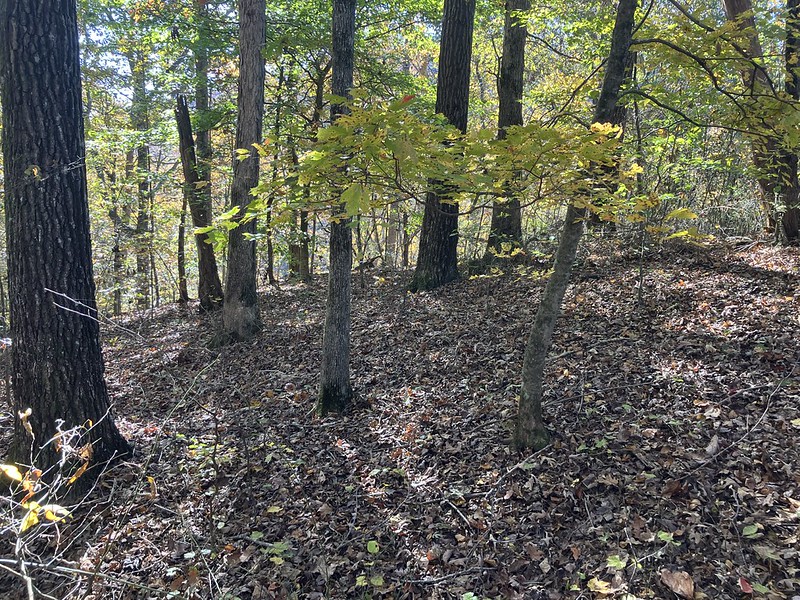
At Oak Hollow, the land itself is part of the philosophy. Not as scenery, not as backdrop, but as teacher. The 70 acres aren’t designed to entertain or impress. They’re designed to slow you down—and in doing so, to show you things modern life rarely does.
The Hollow Doesn’t Demand Attention
One of the first lessons the land teaches is subtle but profound:
Nothing here is trying to get your attention.
There are no alerts. No notifications. No signage telling you what to do next. No curated experiences asking to be consumed.
The woods don’t compete. The fields don’t persuade. The trails don’t hurry you.
At first, this can feel disorienting. Many of us are accustomed to being pulled forward by external cues. When those cues disappear, the question arises:
What do I do now?
The hollow answers quietly: You notice.
Slower Landscapes Restore Natural Rhythm
Modern environments are designed for efficiency. Roads move us quickly. Buildings compress space. Artificial light erases natural cycles. Time becomes something to manage instead of something to inhabit.
The hollow works differently.
Light changes gradually. Sounds travel farther. Movement slows naturally. Distances are walked, not rushed.
Without trying, the land reintroduces rhythm—morning and evening, effort and rest, movement and stillness. You don’t need to schedule this rhythm. You fall back into it simply by being there.
This is one of the reasons quiet places feel restorative. They remind the body of a pace it recognizes.
The Land Reveals What the Mind Skips Over
When life is busy, attention becomes narrow. We focus on what’s necessary and skim over everything else. The hollow widens attention again.
You begin to notice:
- how many kinds of silence exist
- how wind sounds different at different times of day
- how shadows shift across the same ground
- how your own pace changes without instruction
Nothing dramatic is happening.And yet something fundamental is returning.
The land teaches through repetition, not revelation. Through consistency, not spectacle.
It doesn’t tell you what to think. It shows you how to see.
Quiet Makes Space for Inner Movement
In noisy environments, inner movement is often drowned out. Thoughts are interrupted. Feelings are postponed. Questions are deferred.
Quiet removes that buffer.
In the hollow, thoughts finish themselves. Emotions surface without distraction. Questions linger long enough to be felt rather than answered.
This can be uncomfortable at first. But it’s also clarifying.
The land doesn’t solve anything for you. It simply gives your inner life enough space to reorganize itself.
That reorganization often looks like:
- clearer priorities
- softened urgency
- renewed creativity
- deeper rest
- honest self-assessment
These aren’t imposed. They emerge.
The Hollow Teaches Through Constraint
Seventy acres may sound expansive, but it’s also contained. You can walk it. Learn it. Become familiar with it. This balance—spacious but bounded—is important.
Unlimited choice overwhelms. Clear boundaries calm.
The hollow teaches that freedom doesn’t come from endless options. It comes from inhabiting a place deeply enough to stop scanning for alternatives.
When you’re not constantly deciding where else you could be, attention settles where you are.
This is one of the quiet gifts of the land.
Nothing Here Is Optimized
The hollow is not optimized for productivity, speed, or output.
Paths wander. Terrain varies. Weather matters. Time stretches.
This isn’t inefficiency It’s wisdom.
Life unfolds more fully when it isn’t forced into straight lines. When movement responds to conditions rather than ignoring them.
The land teaches adaptability without urgency—a skill modern life rarely cultivates.
Why Oak Hollow Was Built Around the Land
Oak Hollow wasn’t planned around buildings first. It was shaped around the land itself—its contours, its quiet, its natural flow.
The cabins, trails, and shared spaces exist within the hollow, not over it.
This matters.
When a place respects its land, the land teaches the people who spend time there. Not through instruction, but through experience.
You don’t leave with answers. You leave with perspective.
An Invitation to Listen
You don’t need seventy acres to learn these lessons.
Any quiet place can teach you—if you let it.
Stand somewhere without distraction. Notice what doesn’t ask for your attention. Let time pass without filling it.
The hollow simply makes this easier by removing the noise that usually prevents it.
Oak Hollow exists to protect that ease.
To preserve a kind of quiet that doesn’t disappear when you notice it. To offer a landscape that teaches without speaking. To remind you that clarity often arrives not through effort, but through listening.
This is what the hollow teaches—patiently, consistently, and without demand.
This is the Oak Hollow Way.
 Oak Hollow Cabins