
Kayla Series–Week 8–Cooking in a Small Kitchen — Beauty in Simplicity

The Kayla Series is a year-long, weekly narrative following the imagined first tenant of Oak Hollow Cabins’ Threshold Cabin. Each episode explores what happens when life is intentionally simplified and lived more slowly.
If this is your first visit, you may want to begin with the Introduction or Episode 1.

Kayla learned quickly that cooking here did not begin with hunger.

It began with fire.

That morning, she woke before the cabin had fully warmed, the cold still settled into the corners. She pulled on her sweater, crossed the floor quietly, and knelt by the wood stove. The embers from the night before were faint but present—just enough to coax back to life.

She added kindling, then a small split log, feeding the fire patiently. Cooking here required this first act of attention. There would be no turning a knob, no instant heat. Food waited on flame, and flame waited on care.

By the time the stove began to radiate warmth, she filled the kettle from the Reliance container and set it on one of the stove’s iron eyes. The water would take time. Everything did.

The counter stretched six feet along the wall—longer than she’d expected, but spare. A sink beneath the window. A cutting board. One knife. Nothing else competing for space.

She washed her hands, the cool gravity-fed water reminding her that even this small act had a beginning and an end. No endless flow. No mindless rinsing.

She chopped vegetables slowly—potatoes, an onion, a carrot—listening to the knife meet the board. Outside, the woods were still. Inside, the stove ticked and settled as it heated.

There were meals she simply couldn’t make here. She knew that. Baking. Anything complicated. Anything rushed.

And that, she was beginning to understand, was the point.

Some days, she walked to The Hub for a proper kitchen. A place where ovens waited ready, counters stretched wide, and meals could be shared. She liked that contrast—the ease there, the effort here. Neither felt superior. Each had its role.

But today was for the cabin.

She set a cast iron pan on the stove’s second eye and waited. The iron warmed gradually, responding not to impatience but to time. When she finally added oil, it shimmered slowly, deliberately.

Cooking required her whole body now—watching the flame, adjusting the pan, listening. There was no background noise to absorb her attention. No screen to distract her from timing.

She stirred. She waited. She tasted.

The meal was simple. Root vegetables softened by heat and care. Tea brewed once the kettle finally sang. Nothing impressive. Nothing photographed.

She ate standing at the counter, watching steam rise toward the window. When she finished, she washed the pan immediately, dried it, and returned it to its hook. No sink full of dishes. No lingering mess.

Cooking ended when eating ended.

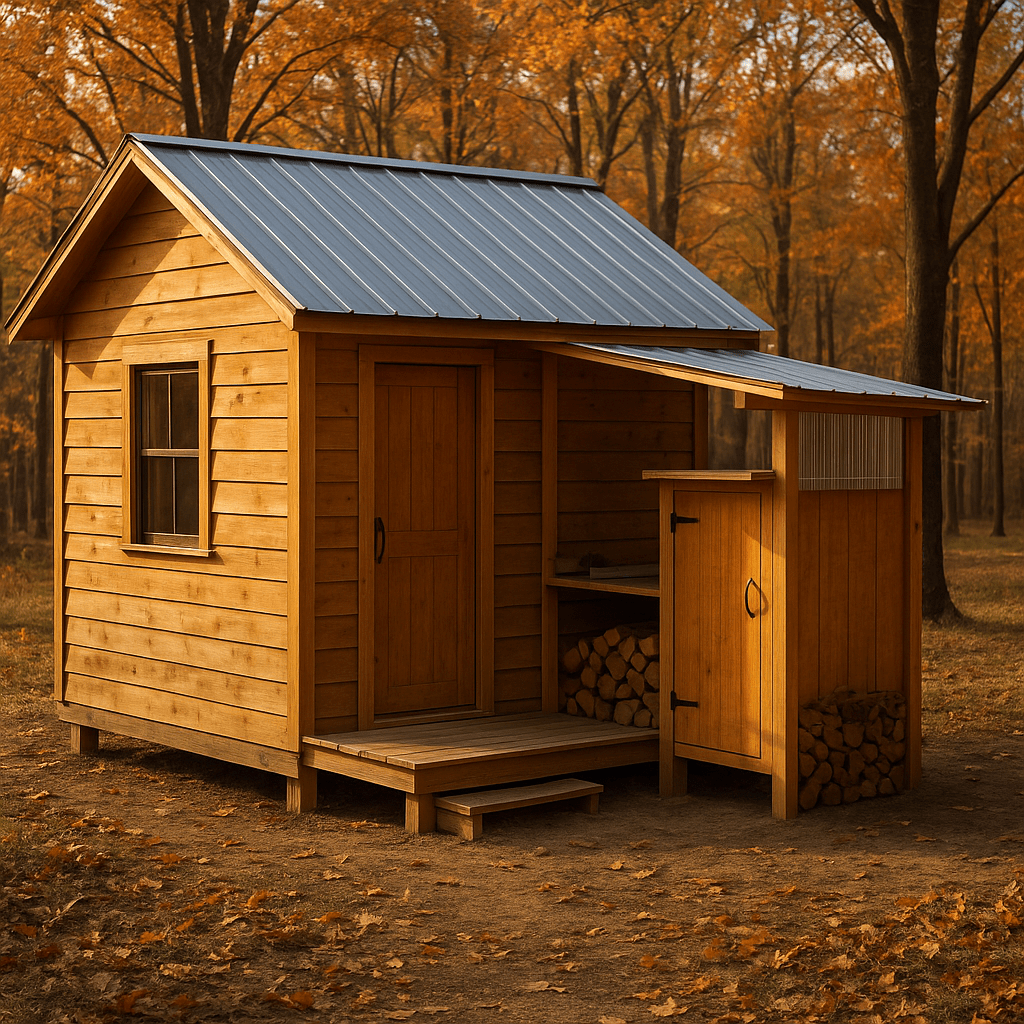
Later, she carried her mug outside and sat on the step, the warmth of the stove still clinging to her clothes. The Hearth stood nearby, quiet and solid. Firewood stacked beneath its overhang. Everything necessary. Nothing extra.

She thought about how often cooking had once felt like another performance—something to optimize, improve, or document. Here, it was neither hobby nor chore.

It was participation.

She wrote in her journal that afternoon:

When heat must be made, food becomes intentional.

That evening, she chose not to cook at all. She ate bread she’d brought back from The Hub, warmed near the stove, and felt no sense of compromise. Simplicity, she was learning, wasn’t about doing everything the hard way.

It was about doing the right things in the right place.

The cabin kitchen did not try to be complete.

It was enough.

And for the first time in a long while, that distinction felt beautiful.

Kayla Series — Episode 7–A Week Without Streaming — Distraction Loses Its Grip

The Kayla Series is a year-long, weekly narrative following the imagined first tenant of Oak Hollow Cabins’ Threshold Cabin. Each episode explores what happens when life is intentionally simplified and lived more slowly.
If this is your first visit, you may want to begin with the Introduction or Episode 1.

Kayla hadn’t planned to stop streaming anything.

It just… hadn’t happened.

The first night, it made sense. She was tired from the move, from the quiet, from learning how to keep a fire alive. The second night, she told herself she’d watch something after dinner, but the kettle boiled, the stove needed tending, and before she knew it, the lantern was dimmed and the room had gone still.

By the third night, she noticed.

Not in a dramatic way—no revelation, no declaration. Just a small, almost curious awareness: I haven’t turned anything on.

Back home, evenings had always ended the same way. A show to unwind. Another to fill the silence. Sometimes three episodes before she realized she was still holding her phone, thumb scrolling even as the screen played on without her attention.

It wasn’t indulgence so much as sedation.

Out here, the cabin offered no such automatic ending to the day. Darkness arrived without asking. Silence followed. The choice of what to do with herself remained unresolved.

The fourth night, restlessness crept in again—not the sharp kind from her first Saturday, but a subtler itch. She sat on the bed after dinner, boots kicked off, lantern glowing low. Her body waited for something familiar to begin.

Nothing did.

She stood and paced the small space once, then twice. She straightened a stack of firewood that didn’t need straightening. She picked up her journal, opened it, closed it again.

The urge surprised her—not for a specific show, but for the relief of being absorbed. Of having her attention gently hijacked so she wouldn’t have to decide what to think or feel.

She realized then how rarely she’d been alone with her evenings.

Not alone as in isolated—but unoccupied.

She lit the stove again even though the cabin wasn’t cold. Watched the flame catch, then settle. The fire didn’t perform. It didn’t escalate. It simply existed.

So did she.

The fifth night, she noticed her senses sharpening.

She heard the wind change direction. The soft tick of cooling metal on the stove. The faint hum of insects she hadn’t yet learned to name. Her thoughts still wandered, but they wandered without a soundtrack.

She thought about turning something on, just to see how it would feel.

She didn’t.

By the sixth night, something loosened.

She sat on the floor with her back against the bed, mug cooling beside her, journal open in her lap. She wasn’t writing steadily—just a sentence here, a line there. Long pauses between thoughts.

It struck her that streaming had never really been about entertainment.

It had been about avoiding the space between moments.

Without it, the evening stretched. Not empty, exactly—just unstructured. And in that stretch, memories surfaced without being summoned. Questions arose without being chased away.

She remembered how, years ago, she used to read until she fell asleep. How she once trusted her own interior life enough to sit with it. How noise had slowly replaced curiosity without her noticing.

She closed the journal and lay back on the floor, staring at the ceiling.

The lantern cast a warm, uneven light, shadows shifting gently as the flame breathed. It wasn’t dramatic. It wasn’t interesting in the way screens were interesting.

It was enough.

On the seventh night, she realized the urge had softened.

Not gone—just quieter.

She didn’t feel deprived. She felt… unhooked.

Distraction, she understood now, wasn’t a villain. It had served her once. It had helped her survive busy seasons, emotional strain, long stretches of effort.

But it had overstayed.

She brewed tea and carried it to the window, looking out toward the Hearth. The path was familiar now, her feet knowing it even in low light. She thought of all the ways her days had begun and ended here—deliberately, with friction, with intention.

Streaming would be easy to bring back. The option wasn’t gone.

But something in her hesitated—not from discipline, but from discernment.

What would I be turning away from? she wondered.

The quiet no longer felt like something to fill.

It felt like something to protect.

She wrote one last line before bed:

I didn’t quit distraction. I outgrew it.

She closed the journal, dimmed the lantern, and lay down.

The night held.

No cliffhangers.
No autoplay.
No artificial ending.

Just a steady dark, a warm stove, and the slow return of her own attention—finding its way back to her, one evening at a time.

Kayla Series — Episode 6–Unpacking the Last Box — Books and Journal Become Anchors

The Kayla Series is a year-long, weekly narrative following the imagined first tenant of Oak Hollow Cabins’ Threshold Cabin. Each episode explores what happens when life is intentionally simplified and lived more slowly.
If this is your first visit, you may want to begin with the Introduction or Episode 1.

Kayla left the last box unopened longer than she intended.

It sat against the wall near the bed, its black-marker label facing outward like a reminder she kept pretending not to see: BOOKS + JOURNAL. She’d walked around it for days, stepping over it without touching it, as if it belonged to a previous version of herself she wasn’t ready to invite fully into the room.

Everything else had found its place.

The kitchen shelf held only what she needed. Clothes hung neatly, fewer than she remembered owning. The lantern rested where her hand reached for it without thinking. Even the wood stove area had settled into a rhythm—kindling stacked, tools leaning patiently nearby.

But the box of books felt different. Heavier than its contents should have made it. Heavier because it carried language, and language had once been her refuge.

That morning, the air was crisp but calm. No storm. No wind. Just a clean quiet that felt earned rather than imposed. She made tea, sat on the edge of the bed, and finally pulled the box closer.

The tape peeled back with a familiar sound.

She lifted the flaps and paused.

The smell surprised her—paper, ink, faint dust. A scent that felt like years of late nights, coffee shops, sermons half-listened to, margins filled with questions she hadn’t yet known how to ask.

She reached in and pulled out the first book.

Then another.

Then another.

Some she recognized immediately—spines worn, corners softened from being carried too often. Others felt almost foreign, like artifacts from a life she’d grown out of but never fully shed.

She stacked them slowly on the floor, not organizing, not categorizing. Just letting them exist.

There were books she had read earnestly, believing they held answers. Books she had argued with in pencil. Books she’d kept long after they stopped speaking to her, afraid that letting go of them would mean admitting something had changed.

And there, at the bottom of the box, was the journal.

She lifted it last.

The cover was simple, the kind she always bought because it didn’t try to impress. It felt heavier than the books, though she knew it wasn’t. The weight came from what it held—not words so much as versions of herself she had trusted enough to write honestly.

She sat cross-legged on the bed and opened it.

The first few pages were old. Familiar handwriting, tight and careful. Lists. Reflections. Questions that circled without landing. She flipped forward slowly, recognizing shifts in tone, in pressure, in hope.

There were entries filled with certainty she no longer felt. Others thick with doubt she now understood better.

She closed the journal gently.

Out here, she hadn’t written much yet. A few sentences at a time. Observations more than conclusions. Words that didn’t rush to mean anything.

She realized then that she hadn’t been avoiding the box because she was afraid of the books.

She’d been avoiding it because she was afraid of anchoring herself again.

For so long, she’d drifted—from job to job, belief to belief, place to place—telling herself flexibility was freedom. But drifting had its own exhaustion. Out here, she was learning the difference between movement and direction.

She stood and carried the books to the small shelf she’d built against the wall. Not all of them fit. That felt right.

She chose carefully which ones to keep within reach. Not the ones with answers, but the ones that asked better questions. The ones that had stayed quiet long enough for her to catch up to them.

The rest she stacked neatly beneath the shelf, not discarded, just… resting.

Then she placed the journal beside the lantern.

The two objects felt right together—light and record, presence and memory.

She sat back and looked at them for a long moment.

These weren’t tools for productivity. They weren’t here to help her become anything.

They were anchors.

Not holding her in place, but giving her something solid to return to when the quiet grew too honest or the days felt unmoored.

She picked up the journal again, opened to a blank page, and wrote without thinking too much:

Some things don’t move with you until you stop moving.

She closed the book and set it back beside the lantern.

Outside, the afternoon light filtered through the trees, steady and unremarkable. Inside, the cabin felt a little more inhabited—not crowded, not finished, but claimed.

She hadn’t unpacked the last box to remember who she was.

She’d unpacked it to decide where to stay.

Kayla Series — Episode 5–The First Storm — Wind Shakes Something Loose Inside Her

The Kayla Series is a year-long, weekly narrative following the imagined first tenant of Oak Hollow Cabins’ Threshold Cabin. Each episode explores what happens when life is intentionally simplified and lived more slowly.
If this is your first visit, you may want to begin with the Introduction or Episode 1.

The storm announced itself long before it arrived.

Kayla noticed it first in the air—how it pressed heavier against her skin when she stepped outside midafternoon to gather kindling. The sky had taken on that peculiar stillness, clouds layered thick and low, as if the world were holding its breath. Even the trees seemed to pause, leaves turned inward, listening.

She stacked the wood more carefully than necessary, sensing without knowing why that she would need it later.

By dusk, the wind arrived.

It came in sudden gusts, rattling the branches, sending dry leaves skittering across the clearing. The Threshold cabin responded with quiet creaks—nothing alarming, just the sound of wood adjusting to weather, like bones shifting under strain.

Kayla stood at the window, lantern lit beside her, watching the Hearth across the concrete pad. The sky had darkened early, clouds swallowing what little daylight remained. She considered walking over now, before the rain came, but something told her to wait.

She had learned already that this place rewarded patience.

The first drops fell thick and deliberate, darkening the ground in scattered circles. Then the rain settled in, steady and insistent. Wind pushed it sideways, driving it against the cabin walls in rhythmic bursts. She could hear it on the metal roof—sharp at first, then softer, as the rain found its cadence.

She lit the wood stove and sat on the floor nearby, back against the wall, knees drawn up. The fire caught quickly tonight, flames licking upward with confidence. She watched them for a while, mesmerized by how something destructive could also be sustaining.

The wind picked up again, stronger this time. The cabin shuddered slightly—not enough to frighten her, but enough to command attention. She felt the vibration through the floorboards, up her spine.

She wrapped her arms around herself.

Back in town, storms had been background noise. Something you noticed only when the power flickered or traffic slowed. You stayed indoors, insulated, distracted. Out here, the storm was unavoidable. It demanded to be felt.

A sudden gust shook the trees hard enough that she gasped. Branches scraped against each other, a low, restless sound. The rain intensified, drumming against the roof with renewed force.

She felt something rise in her chest—not fear exactly, but recognition.

This is what it’s like to not be buffered, she thought.

No walls of convenience. No layers of abstraction. Just weather and wood and her own breathing.

The wind roared again, and with it came something unexpected: memory.

Not a specific one at first—just a familiar tightness behind her ribs. A sensation she had learned to ignore. The feeling of bracing herself for impact without knowing why.

She stood and paced the small cabin, lantern swinging gently in her hand. The shadows jumped along the walls, animated by the storm’s energy. She stopped at the door, palm resting against the wood.

The Hearth was out there. The walk would be miserable now—rain, wind, darkness. She didn’t need to go. She could wait.

But the thought of waiting unsettled her.

She pulled on her coat and boots, lit the lantern fully, and stepped outside.

The rain soaked her immediately, cold and relentless. Wind pressed against her body, testing her balance. She moved carefully across the pad, lantern held low and steady. The light cut a narrow path through the darkness, just enough.

When she reached the Hearth, she felt an odd relief. The small structure stood firm, pine siding gleaming wet in the lantern light. She stepped inside and closed the door behind her.

The storm sounded different in here—muffled, contained. Rain hammered the roof overhead, wind rushing past rather than through. The space felt protective without being sealed off.

She set the lantern on the shelf and sat down, breathing hard.

For a moment, she laughed softly—at herself, at the absurdity of walking into a storm just to sit in a tiny building with a composting toilet and a washbasin. Back home, this would have seemed ridiculous.

Here, it felt necessary.

The wind howled again, louder than before. The Hearth trembled slightly, then settled. Kayla felt something inside her shift with it, a loosening she hadn’t expected.

She had spent years keeping things tight.

Tight schedules. Tight explanations. Tight control over what she showed and what she swallowed. Tightness disguised as competence. As resilience. As maturity.

The storm didn’t care.

Another gust slammed into the structure, and something inside her finally gave way—not dramatically, not all at once, but enough.

Her eyes filled before she realized she was crying.

She didn’t sob. She didn’t collapse. Tears simply came, warm against the cold air, slipping down her cheeks without urgency. She let them.

The wind raged on, indifferent and honest.

She thought of all the times she had weathered storms quietly—job changes, relationships ending without ceremony, the slow erosion of belief she hadn’t named out loud. She had always stayed upright, always adapted, always moved on.

But she hadn’t always felt.

Here, with rain pounding overhead and wind shaking the walls, she felt everything at once—not overwhelm, but release.

The storm wasn’t breaking her. It was unfastening her.

When the tears slowed, she wiped her face with her sleeve and laughed again, this time steadier. She stood, washed her hands at the basin, the cold water grounding her. She watched it swirl and settle, just as the storm outside began to ease slightly.

The wind softened. The rain shifted from force to persistence.

She stepped back outside, lantern raised, and crossed to the cabin again. The walk felt different now—less like endurance, more like return.

Inside, the fire still burned steadily. She dried off, changed into dry clothes, and sat on the bed, listening as the storm moved on.

Not gone. Just passing.

She opened her journal and wrote one sentence:

Some things don’t fall apart until the wind is strong enough.

She closed the book and lay back, lantern light dimmed low.

The cabin creaked once more, then stilled.

For the first time since arriving, Kayla felt truly tired—not the exhausted tiredness of overwork, but the deep fatigue that follows release.

Outside, the storm carried on without her.

Inside, something had shifted.

And she slept.

Kayla Series–Episode 4 – The First Saturday Aone–Restlessness Reveals How Noisy Her Life Has Been

The Kayla Series is a year-long, weekly narrative following the imagined first tenant of Oak Hollow Cabins’ Threshold Cabin. Each episode explores what happens when life is intentionally simplified and lived more slowly.

If this is your first visit, you may want to begin with the Introduction or Episode 1.

The First Saturday Alone — Restlessness Reveals How Noisy Her Life Has Been

Kayla woke later than she meant to, the kind of late that feels like both a luxury and a mistake. Sunlight was already stretching across the wood floor, soft but insistent. She blinked into it, unsure for a moment where she was. Then she saw the wood stove, the lantern on the shelf, the pine walls—and remembered.

Saturday. Her first one here.

Back in town, Saturdays had a rhythm of their own—laundry humming in the background, grocery lists forming without her permission, text messages from coworkers pretending not to be work. Errands stacked themselves neatly into the hours, turning rest into another kind of productivity.

Here, nothing waited for her.

She lay still and listened. The silence was so complete it made her heart beat louder. No traffic. No upstairs neighbor. No pipes clicking awake. Even the generator—her own lifeline—was off.

The quiet wasn’t peaceful yet. It was disorienting, like stepping into an unfamiliar room in her own mind.

She finally pushed back the quilts, shivered as her feet met the cold, and headed to the stove. The embers were nearly dead, but not completely. She resurrected the fire the way she had yesterday—carefully, slowly, almost gratefully. When the flames breathed their way up the stack, she felt something inside her steady.

The kettle hissed softly on the propane burner, and she wrapped her hands around her mug as if the warmth might give her direction. But when she stepped outside to walk toward the Hearth, her steps felt aimless.

The morning was mild, but her chest was restless—an internal buzzing she hadn’t noticed in a long time. She thought she’d left it behind when she left town. Apparently not. Restlessness, it seemed, had a way of traveling light.

Inside the Hearth, the light through the polycarbonate panel spread across the pine walls like a warm hand. She hung her lantern anyway, though she didn’t need it. Habit, maybe. Or comfort.

She sat on the closed composting toilet lid, elbows on her knees, the washbasin untouched beside her.

Why am I restless? The question floated up without permission.

She had no errands. No demands. No one waiting on her reply. No responsibilities outside the ones she chose for herself.

And instead of relief, she felt… itchy.

She used the toilet, washed her hands with the cool water she’d poured from the pitcher, and watched the droplets gather and fall into the basin. No rush. No reason to rush. But her shoulders kept tightening anyway.

On her way back to the cabin, she paused beside the firewood rack Jon had built—six feet of rough-in storage that smelled fresh and honest. She ran her fingers along the split edges of the logs.

This was work she could do. Something tangible. Something familiar.

But the point of being here wasn’t to replace one kind of busyness with another.

Back inside, she swept the floor with unnecessary enthusiasm, then reorganized the two shelves she’d set up yesterday, then refolded her sweaters. None of it helped.

By late morning, she sat at the edge of the bed staring at the window, not bored exactly, but unsettled. The kind of unsettled that suggested maybe silence wasn’t empty at all—maybe it was just holding up a mirror she’d avoided for a long time.

She opened her journal.

A blank page waited. She waited back.

Her mind filled instantly with the noise she thought she had left behind:

Do more. Move faster. Fix something. Don’t waste time. Be useful. Be efficient. Be productive.

Be productive. There it was—the voice she’d learned without anyone teaching it, the one that hummed under every quiet moment of her adult life.

She closed the journal.

She stepped outside again, letting the warmth of the sun touch her face. The breeze was gentle, brushing her hair back. Somewhere in the trees, a woodpecker tapped, steady and sure. A single bird call echoed upward.

She stood still long enough for her breath to deepen. And there, in the settling of her shoulders, she felt it:

The restlessness wasn’t boredom. It was withdrawal.

Her body was detoxing from the noise she’d mistaken for normal.

She walked slowly toward the edge of the clearing—past the Hearth, past the stacked firewood, past the small path that would one day be worn by many feet. She stepped into the treeline and listened again.

The quiet wasn’t empty. It was layered.

Wind. Leaves brushing each other. A distant creek she hadn’t yet seen. Her own heartbeat.

She sat on a fallen log and closed her eyes—not in meditation, not in prayer, just in stillness.

Eventually, she whispered aloud, surprising herself:

“I didn’t know how loud my life was.”

The words didn’t echo. They simply settled around her, absorbed into the space like truth returning home.

After a few minutes, she rose and stepped back toward the clearing. The Threshold cabin looked small from here, almost delicate, but not fragile. A beginner’s place. A first chapter.

When she reached the steps, she paused again—not out of hesitation, but because the restlessness had shifted. It hadn’t vanished, but it had softened, like something that had been acknowledged rather than resisted.

Inside, she brewed another cup of tea. She opened the journal again, and this time the page didn’t feel intimidating. She wrote:

Silence isn’t empty. It’s honest. And honesty takes time to learn.

She sat back, watching the steam curl from her mug, and let the truth of the sentence settle in her chest.

Today wasn’t productive. It wasn’t efficient. It wasn’t structured.

But maybe days weren’t meant to be measured that way here.

Maybe this life—the one she had chosen, the one that was choosing her back—was teaching her something she had forgotten:

Restlessness isn’t a flaw. It’s a sign of healing beginning.

She closed the journal gently, placed the lantern beside it, and let the room return to its quiet.

For the first time all day, the quiet felt like a companion rather than a challenge.

Kayla Series–Episode 3 – Learning the Rhythms of Inconvenience

The Kayla Series is a year-long, weekly narrative following the imagined first tenant of Oak Hollow Cabins’ Threshold Cabin. Each episode explores what happens when life is intentionally simplified and lived more slowly.

If this is your first visit, you may want to begin with the Introduction or Episode 1.

Kayla woke before her alarm, but not because she was rested. The cold had a way of finding her, even under the quilts she had layered the night before. She lay still, eyes open in the darkness, listening to the faint groan of wind brushing against the Threshold cabin’s walls. It wasn’t loud, but it was present—alive in a way her old HVAC hum had never been.

She reached for her phone on the small table beside the bed. 5:17 a.m. Too early. Or maybe exactly right. She wasn’t sure yet what “right” looked like out here.

The generator was off—she could tell by the stillness. No electric heat, no soft refrigerator buzz, no ambient glow sneaking in around the blinds. Just dark. Deep, uncomplicated dark. For a moment she stayed under the covers, feeling both reluctant and oddly proud. Three days here, and she was beginning to learn that every morning was its own invitation.

She slid one foot out, then the other, wincing as they touched the cold floorboards. The lantern sat where she’d left it—on the small shelf by the northeast door—its metal chilled from the night air. She pressed the ignition. The light bloomed slowly, no flicker, just a steady, warm glow.

She held it up and surveyed the room. Nothing had changed, but it all looked different in lantern light—softer, more honest. Without electricity, the space felt closer to itself. Closer to her, too.

The first rhythm she was learning was this: There is no rushing the dark.

She shrugged on her coat, slipped her feet into the boots she’d left by the door, and stepped outside. The cold hit immediately, crisp and direct, but not unkind. Her breath clouded in front of her, drifting upward as if showing her the direction to go.

The Hearth stood quietly beyond the concrete pad, its knotty pine siding glowing faintly under the lantern’s beam. She lifted the lantern higher and started walking, each step crunching softly against the frost-dusted ground.

Halfway across, she paused.

Back in town, her bathroom had been ten steps away, indoors, warm, automatic. Everything designed for speed and efficiency. Out here, needs had distance. Needs had weather. Needs had weight. And strangely, that weight steadied her.

When she reached the Hearth, she touched the door handle and hesitated. Partly because her hand was cold, but also because she wanted to notice this—this moment her life was changing in increments small enough that only she would ever feel them.

Inside, the air was colder than she expected but not biting. She hung the lantern on its hook, filling the small space with amber light. The shadows leaned back politely. She lifted the lid of the composting toilet, relieved at its simplicity. Nothing complicated. Nothing humming or flushing or grinding. Just function, well-contained.

The second rhythm she was learning was this: Everything here asks for your presence. Even your inconveniences.

She used the toilet, then the washbasin—a ceramic bowl she’d filled last night from the Watering Place. She tilted it, letting the cold water run across her palms. The shock of it shot up her wrists, but in a wakeful, welcome way. She dried her hands on the cloth towel she’d hung by the mirror.

When she stepped back outside, the darkness had lifted only slightly. A faint blue rim hovered low over the trees. Dawn wasn’t here yet—it was thinking about it.

Her boots thudded softly across the pad as she returned to the cabin. She opened the door and felt the reprieve of indoor cold, which was still warmer than the outdoor air. She set the lantern down and crossed to the small wood stove in the corner, opening its iron door. A few embers from the night before glowed faintly, like they were waiting on her. She added kindling, a small split log, and coaxed the fire to life with slow, practiced breaths. When the flame finally caught and began its gentle climb, the cabin filled with the first hint of warmth—a warmth that had to be earned, not switched on.

She sat on the edge of the bed, wrapping the quilt around her shoulders. She did nothing for a long moment. Just breathed. Just existed in the uncomplicated space between “needing to” and “choosing to.”

The kindling crackled. The cabin warmed by degrees so subtle she felt them more than noticed them.

Her old life would have filled this hour already—with email previews, news headlines, coffee gurgling automatically, the shower heating without delay, the phone buzzing with reminders. In that world, the morning was something she had to get through to reach the productive part of the day.

In this world, the morning was the day beginning to shape her.

She made tea in the small kettle she’d brought with her, warming it on the two-burner propane stove. As the blue flame flickered quietly beneath the metal, steam curled into the air, soft and fragrant. She carried the mug to the northeast window and stood there for a long moment, watching the Hearth through the glass.

A week ago, she would have thought of the Hearth as an inconvenience. Uninsulated. Unheated. Detached from the cabin. A chore. But this morning—this cold, lantern-lit, inconvenient morning—she understood something new:

The Hearth was a teacher.

It was teaching her slowness. It was teaching her deliberateness. It was teaching her that meaning grows in places convenience cannot survive.

She cupped the warm mug in her hands, letting heat seep into her skin.

The third rhythm she was learning was this: Cold is not the enemy. Cold is a conversation.

It reminded her she had a body. It reminded her she had breath. It reminded her she was alive enough to feel discomfort, and wise enough to choose what that discomfort meant.

She exhaled and watched the steam drift away.

A thought rose unbidden—not dramatic, not holy, not profound. Just true.

You’re not escaping your life. You’re meeting it again.

The lantern on the shelf flickered gently, though she hadn’t touched it.

Kayla reached for her journal and opened to a blank page.

She wrote the date. Then one sentence:

Learning to live with inconvenience is another way of learning to live with myself.

She didn’t know if she believed it yet, but the moment felt honest enough to record.

Outside, the first thin stretch of sunlight touched the roof of the Hearth.

She watched it bloom. And for the first time since arriving, she didn’t brace herself for the day. She welcomed it.

Kayla Series — Episode 2 – First Night, First Silence

The Kayla Series is a year-long, weekly narrative following the imagined first tenant of Oak Hollow Cabins’ Threshold Cabin. Each episode explores what happens when life is intentionally simplified and lived more slowly.

If this is your first visit, you may want to begin with the Introduction or Episode 1.

Kayla hadn’t expected the space to feel so different after the sun went down. The cabin was the same one-room shelter it had been that afternoon, with the same cedar smell rising from the freshly cut boards, the same pale light slipping across the floor. But after dark, everything sharpened. The air cooled. The silence deepened. Even her own breath sounded louder than it should have.

She placed her last box on the built-in table and stepped outside onto the small porch, looking into the thickening blue of evening. The forest around her felt like a single breathing thing, inhaling and exhaling in slow, deep rhythms that didn’t include her yet. Far away, one dog barked again — maybe the same one she’d heard earlier. Then it went quiet. A kind of quiet she hadn’t known in years.

She stood there for a moment, hands tucked into the pockets of her jacket, listening for something familiar. A car somewhere. A TV from a neighbor’s apartment. Even the dull hum of the refrigerator back home. But here there was none of that, not after she switched off the generator. The owners had explained how it worked, how she’d have to run it when she needed power and let it rest otherwise. It wasn’t hard — just different.

The part she hadn’t expected was the silence that followed.

It wasn’t empty. It wasn’t hollow. It was… complete. Like the world had stopped insisting on anything at all.

She went back inside. The lantern she’d bought for this year-long experiment waited on the small shelf near the door — a simple metal one with a warm LED glow meant to imitate a flame. She lifted it, clicked it on, and the cabin filled with a soft, amber light that reached the corners but didn’t erase the shadows. It made the space feel intentional, not improvised.

She sat on the edge of her bed and pulled the blanket around her shoulders. The mattress was a cheap one she’d ordered online, still puffed from expanding earlier that afternoon. It wasn’t luxury, but it felt solid and clean, like a beginning.

Her phone buzzed on the table — a notification, probably from a group chat she hadn’t had the courage to leave. For a moment she reached toward it, then stopped. The whole point of coming here was to break the reflexes she had leaned on for too long. The constant checking, the scrolling, the way she filled every spare second with noise. She clicked the phone to silent and placed it face down. It felt like a small victory, though she wasn’t sure who she was winning against.

She lay back and stared at the ceiling, the lantern casting low patterns across the boards. Something about the silence made her more aware of herself. Not in a self-conscious way, but in a way that felt strangely honest… and vulnerable. Without sound to cover her thoughts, they came in clearer, cleaner, like water after a storm settles.

Was she running away? She had asked herself that question more than once during the drive here. Maybe she was. But she was also running toward something she couldn’t yet name, something she hoped lived somewhere beyond the noise, beyond the expectations, beyond the internal pressure she’d carried so long she’d forgotten it was pressure at all.

She turned onto her side. Through the window she could see the outline of the Hearth in the moonlight, just a faint shape against the darker tree line. She imagined making that walk early in the morning — lantern in hand, breath rising in small clouds, the world not awake yet. A ritual built not from convenience, but presence.

Her stomach tightened with a mix of nerves and anticipation. She liked that the Hearth wasn’t attached to the cabin. That it required movement, required intention. Back in town everything had been too easy, too close. Ten steps from bed to bathroom. Two taps from distraction to distraction. A life engineered to avoid friction, and somehow that had only made her more tired.

A moth bumped against the window screen, wings brushing with a tiny whisper. She sat up and opened her journal, the one she’d packed last because she still wasn’t sure she’d have the courage to use it. She wrote a single line at the top of the page:

I didn’t realize how loud my life was until it stopped.

She capped the pen and closed the book. The lantern glowed softly beside her. Outside, the wind moved through the tall grasses like a quiet river. She pulled the blanket tighter and lay back down, letting the stillness settle into her chest.

Eventually she clicked off the lantern.

The darkness was immediate. Total. Not the softedges darkness she knew from years of living near streetlights, but an older kind, the kind that existed long before electricity softened the world. She could not see her hand when she held it up. She could only feel her own breath — slow, warm, steady.

For the first time in a long time, she wasn’t afraid of the dark. She wasn’t even uncomfortable. She felt held by it, like it expected nothing and demanded nothing. The quiet wasn’t empty anymore. It was full — of what, she wasn’t sure, but it felt like something true.

She closed her eyes.

Morning would come, and with it the first walk to the Hearth, the first real cold on her skin, the first instance of choosing intention over habit. But for now, in the absolute stillness, she allowed herself to rest.

The silence wasn’t absence.

It was invitation.

And she was finally ready to listen.

Kayla Series — Episode 1 – The Arrival

Kayla missed the turn the first time. The gravel entrance appeared just after a bend in the county road, half-hidden behind a cedar tree and a crooked mailbox that didn’t seem eager to announce anything. She drove past, slowed, and stopped on the shoulder, watching dust drift in the mirror before easing into reverse and turning in.

The gravel sounded different under her tires than any street back in town—deeper and more hollow, as if it wasn’t just lying on the ground but resting on something alive. Golden-hour light flickered through the trees, catching the small wooden sign that came into view after a gentle rise: OAK HOLLOW CABINS. Beneath it, a smaller hand-painted plank read: Simplify on Purpose.

She paused longer than necessary before continuing along the winding drive. Her chest felt tight, but not from anxiety exactly—more like anticipation pressed up against uncertainty. The path split ahead, one way toward West Hollow, the other marked for long-term guests of East Hollow. She followed the arrow that didn’t try very hard to persuade her one way or another.

The Threshold cabin revealed itself slowly through the trees—first the metal roof, then the charcoal siding, and finally the small deck with its simple pine door and black strap hinges. Just beyond it stood the Hearth, freshly built, the pine siding still glowing with its first coat of oil. It looked both brand new and strangely seasoned, like something that had always belonged here.

Kayla parked beside a cleared patch of ground and turned off the engine. Silence pressed gently into the space where road noise had been. It wasn’t total silence—she could hear birds somewhere high above, the soft movement of wind in branches, and far off, a single dog bark—but compared to the constant hum of town life, this felt like the world had switched to a slower frequency.

She stayed in the driver’s seat for a moment with her hands still resting on the wheel. She’d told people different versions of the truth about why she came here, each tailored to the listener: “a year to reset,” “a chance to simplify,” “a private faith retreat,” “a break from noise.” All true, but none complete.

She finally opened her door and stepped out, the gravel shifting under her flats. At the back of the SUV were the three boxes she’d packed last, labeled in black permanent marker: KITCHEN, CLOTHES, BOOKS + JOURNAL. She chose the heaviest first. It felt appropriate.

The walk to the cabin door was short but uneven enough to require careful steps. She tried the key, and the latch turned smoothly, the hinges creaking softly—not old, just honest. She stepped inside and set the box down near the wall.

Light filtered in through the windows differently than the filtered, conditioned daylight of her rented duplex. The air smelled of wood, possibility, and something like honesty. Bare studs framed the interior, a reminder that this life would not be handed to her finished.

The box at her feet seemed to stare up at her. She touched the lid with one hand, then walked back out onto the small deck and looked toward the Hearth. The sunlight caught the grain of the north wall, warming it until it almost glowed. She imagined walking to it in early dawn with breath fogging the cold air, lantern in hand, because here even the most basic routines would require presence.

Back home, ten steps and a switch had separated her bed from running water. Here, each necessity would demand intention. Something about that felt like relief.

A pickup arrived minutes later, tires rumbling over the gravel. She turned to see one of the Oak Hollow owners climb out, the man whose name she recalled from an email, moving with the unhurried ease of someone not performing hospitality, just practicing it.

“Kayla?” he said.

“Yes,” she answered, suddenly aware of how long it had been since she’d felt new somewhere.

“You found it alright?”

“I missed the turn once.” She smiled a little. “Your sign is subtle.”

He glanced toward it and shrugged lightly. “We figured the right ones would find it.”

He helped her carry in her things, making easy conversation—generator basics, where the Watering Place was located, how the Hearth worked, what improvements were coming. Nothing oversold. Nothing sermonized. Just useful orientation offered with the tone of someone handing over a key rather than a pitch.

When everything was inside, he paused at the doorway. “Take your time settling in. Most people don’t figure out how to live here their first day.”

Kayla nodded, unsure of a response but grateful for one that didn’t expect anything. When the truck drove away, the quiet returned, but now it felt like something was listening rather than waiting.

She stood just inside the cabin doorway, arms crossed, breathing slower than she remembered breathing in weeks. Her eyes drifted again to the Hearth—the small building that would require her to walk across the concrete pad morning and night, no matter the weather, no matter her state of mind.

The thought of inconvenience did not bother her. It calmed her.

Maybe that was why she came—to shed the illusion that comfort and meaning were the same thing.

She stepped back outside and leaned against the doorway, letting the light fall across her face. The trees behind the Hearth swayed like they were saying something she wasn’t quite tuned to yet.

For the first time in months, she didn’t hurry to interpret the moment.

Maybe the point was not to understand it.

Maybe the point was to be in it.

She looked at the Hearth again and imagined the path she would take in the early mornings—the cool air, the lantern light, the quiet. A different kind of ritual, not made of convenience but attention.

She didn’t smile, but her shoulders loosened and her eyes softened as if something unclenched inside her, not completely, but enough to breathe without effort.

She wasn’t sure if this place would heal her or undo her, but for the first time in a long time, both options seemed honest.

And honesty felt like the right beginning.


If Kayla’s journey speaks to something stirring in you, I hope you’ll walk with her from week to week. You can follow each installment here on Simplify on Purpose — and if you’d like these stories delivered automatically, you’re invited to subscribe and come along for the full year.

Introduction to the Kayla Series

Why We’re Telling This Story

Every person who comes to Oak Hollow is looking for something. Sometimes they know what it is. Often, they don’t — not at first.

Life moves fast, decisions stack up, expectations accumulate, and somewhere along the way many of us realize we’ve built a life that works on paper… but feels slightly out of tune with the quiet voice inside.

At Oak Hollow, we invite people to pause, to simplify on purpose, and to discover what becomes visible when noise, convenience, and autopilot are no longer in charge.

The Kayla Series is a year-long narrative following an imagined first tenant of our Threshold Cabin — a woman who chooses to step away from convenience-driven living and into a smaller, slower, more intentional way of inhabiting the world. Though fictional, Kayla’s story is built from real motivations, real doubts, and real longings that many people quietly carry.

This is not a novel, not a self-help manual, and not a sermon. It’s a story for reflection — published weekly — with the hope that somewhere inside Kayla’s questions, you may hear echoes of your own.

What to Expect

  • A new installment every week for one year
  • Approximately 1,000 words per episode
  • Told from Kayla’s perspective as she learns to live differently
  • No drama for drama’s sake, no sensationalism
  • Honest emotion, ordinary details, simple moments
  • Growth that comes slowly, quietly, and truthfully

There are no villains in this story. No one is here to be shamed, rescued, or converted.

Kayla is not chasing a version of success — she is learning how to live a version of herself.

Why It Matters

Because stillness is not passive. Simplicity is not a downgrade. And sometimes, the most important transformations happen a step outside the life that was expected.

You are invited to walk with her.

Welcome to The Kayla Series — Week 1.


If Kayla’s journey speaks to something stirring in you, I hope you’ll walk with her from week to week. You can follow each installment here on Simplify on Purpose — and if you’d like these stories delivered automatically, you’re invited to subscribe and come along for the full year.