
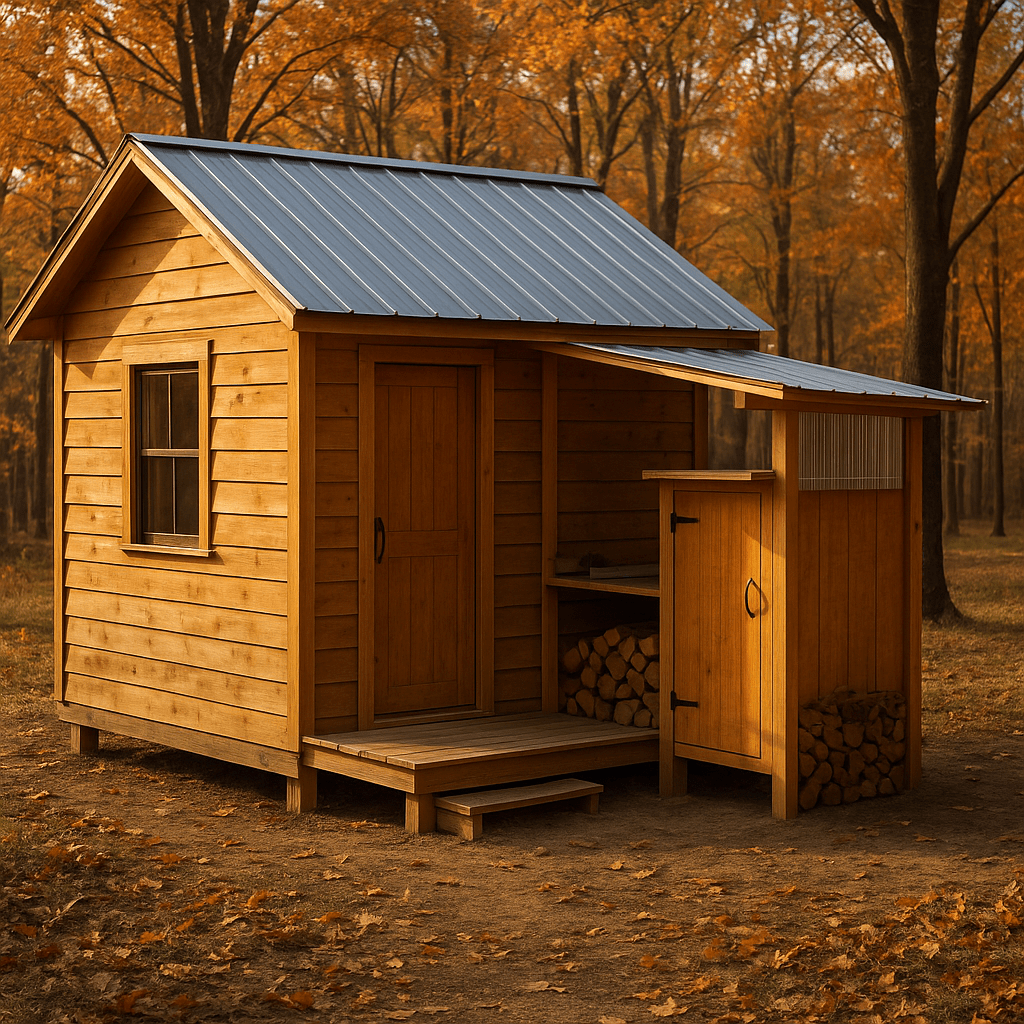
The Kayla Series is a year-long, weekly narrative following the imagined first tenant of Oak Hollow Cabins’ Threshold Cabin. Each episode explores what happens when life is intentionally simplified and lived more slowly.
If this is your first visit, you may want to begin with the Introduction or Episode 1.
The cry surprised her.
Not because she hadn’t felt sad before—she had—but because it arrived without warning, without narrative, without permission. It didn’t come with a thought or a memory attached. It came from somewhere older, deeper, like a fault line shifting beneath the surface.
She was standing at the sink when it happened.
The kettle had just come off the stove. Steam rose softly, fogging the lower edge of the window. She poured the water slowly, watching it darken the tea leaves, her movements steady and unremarkable. Nothing in the moment suggested collapse.
And then her chest tightened.
Not sharply—more like a hand closing gently but firmly around her ribs. Her breath caught halfway in, stalled there, unfamiliar. She leaned forward, palms flat against the counter, waiting for it to pass.
It didn’t.
The first tear fell without drama, landing on the wood with a quiet finality. Then another. Then her shoulders began to shake, subtle at first, as if she might still contain it.
She couldn’t.
The sound that escaped her was small but undeniable. A broken breath. A low, unguarded noise she didn’t recognize as her own until it was already out in the room.
She slid down until she was sitting on the floor, back against the cabinet, knees drawn up. The kettle sat forgotten on the counter. The stove ticked softly as it cooled. The cabin held.
Her crying wasn’t loud. It wasn’t violent. It was steady and deep, like something long submerged finally reaching air.
She pressed her face into her sleeve, surprised by the intensity of it—not panic, not despair, but release. The kind that comes when effort stops.
Images surfaced without order.
A version of herself at twenty-five, certain she knew where she was headed. Another at thirty, quietly disappointed but still trying to be grateful. The slow accumulation of years spent being capable, dependable, composed.
The ache beneath all of it—the one she’d carried without naming—rose fully now.
Not grief for one thing.
Grief for everything she hadn’t allowed herself to feel because there had always been something to manage.
She cried for the faith she’d outgrown without replacing. For relationships that had ended politely instead of honestly. For the woman she had been when she believed endurance was the same as strength.
The floor was cold beneath her, grounding. The air smelled faintly of wood smoke and tea. Nothing interrupted her.
No phone buzzed. No neighbor knocked. No schedule demanded she recover quickly.
She cried until the tears slowed on their own, until her breath deepened without effort. When she finally lifted her head, her face felt swollen, tender—as if something fragile had been touched for the first time in years.
She sat there for a long while afterward, not trying to understand what had happened.
Understanding could wait.
She stood eventually, rinsed her face with cool water, and dried it carefully. Her eyes in the small mirror looked different—not dramatic, just honest. Softer. Less defended.
She carried her tea to the bed and sat quietly, hands wrapped around the mug. Outside, the woods moved gently in the afternoon light. The Hearth stood where it always did. Everything familiar. Nothing changed.
Except her.
She realized then that she hadn’t cried because she was overwhelmed.
She had cried because she was finally safe enough to stop holding herself together.
The thought didn’t feel profound. It felt factual.
That night, she wrote only one line in her journal:
This is what happens when nothing is asking me to be okay.
She closed the book and lay down, exhausted in the way that comes after honesty.
Sleep took her quickly.
And for the first time since arriving, her dreams were quiet.

 Oak Hollow Cabins