
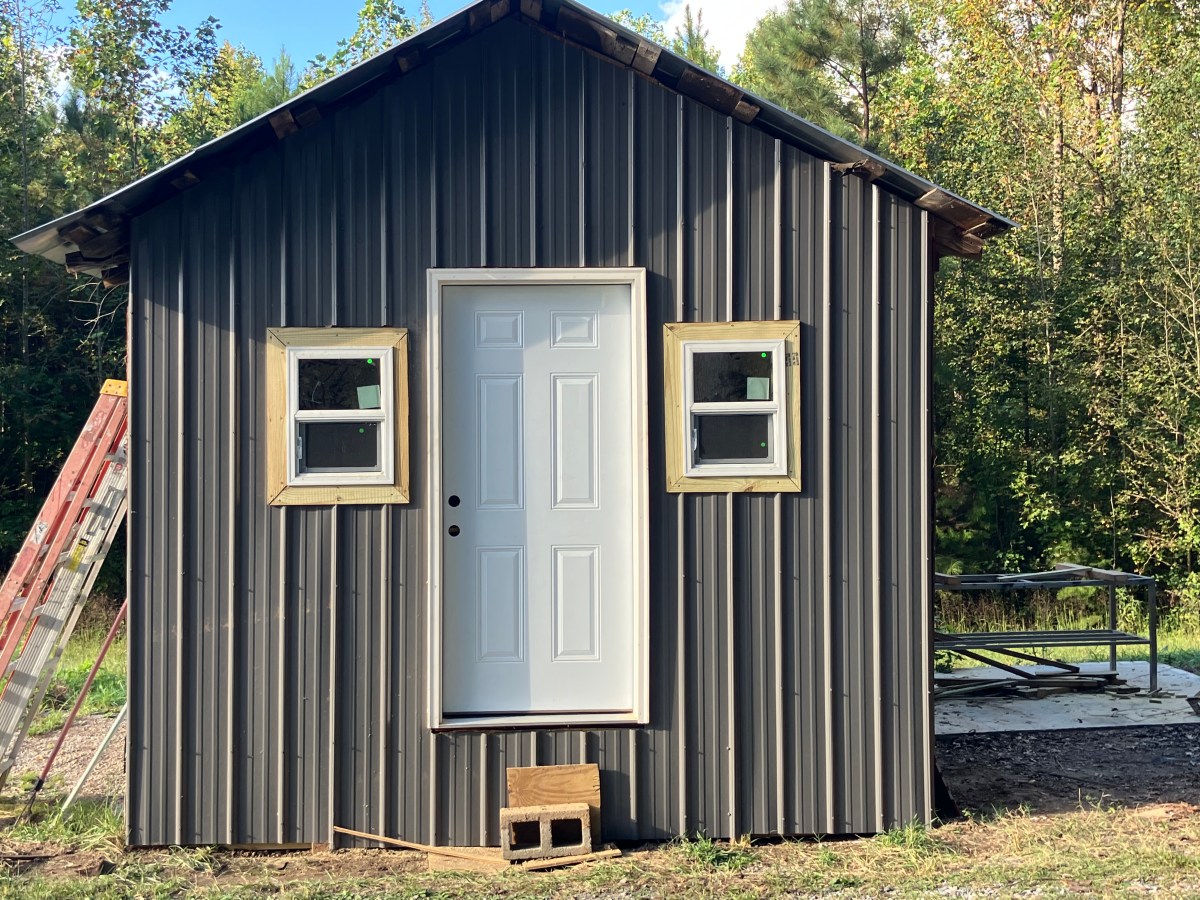
The Oak Hollow Way — Week 7
In a culture that equates more space with more success, building small can look like a compromise.
Bigger homes promise comfort. Extra rooms suggest freedom. Square footage is treated as progress—proof that you’ve arrived, expanded, improved.
So when people hear that Oak Hollow cabins are intentionally small, the assumption is often that something is missing.
But smallness here isn’t a limitation. It’s a design choice.
And it exists for a reason.
Small Spaces Ask Different Questions
Large spaces invite accumulation.Small spaces invite attention.
In a big house, it’s easy to spread out—physically and mentally. Rooms fill with objects. Schedules fill with obligations. Attention diffuses.
In a small cabin, that diffusion doesn’t happen.
You notice what’s there. You notice what isn’t. You notice what matters.
Small spaces gently ask questions that large ones often allow us to avoid:
- What do I actually need?
- What earns its place here?
- What can be let go?
- How much space does a meaningful life really require?
These aren’t questions we answer intellectually. We answer them by living inside the space.
Constraint Creates Clarity
Constraint gets a bad reputation. We associate it with restriction, loss, or sacrifice.
But constraint, when chosen intentionally, creates clarity.
In a small cabin:
- there’s less visual noise
- fewer decisions compete for attention
- movement becomes simpler
- routines settle naturally
- the mind has less to manage
Nothing is wasted. Nothing is excessive. Everything has a role.
This isn’t about minimalism as an aesthetic. It’s about mental spaciousness.
When your environment stops demanding constant management, your attention is freed to move inward and outward in healthier ways.
Small Spaces Bring You Back to the Body
Large spaces can keep us moving.Small spaces invite us to settle.
In a cabin where everything is within reach, life slows down. You sit more. You notice posture. You feel temperature changes. You hear subtle sounds. You become aware of your body again.
This is not accidental.
Small spaces bring the body back into the conversation. They anchor you physically, which steadies you mentally.
At Oak Hollow, the cabins are designed to support this grounding. Not to confine—but to orient.
Small Doesn’t Mean Sparse
There’s an assumption that small spaces must feel empty or austere. That comfort requires excess.
But comfort doesn’t come from quantity. It comes from coherence.
A small space that is thoughtfully designed—where light, materials, warmth, and layout work together—often feels more supportive than a large space filled without intention.
At Oak Hollow, cabins are built to feel complete, not cramped.
They offer what’s essential and nothing that distracts from it.
That balance matters.
Small Spaces Change How You Relate to Time
In large homes, it’s easy to stay busy—moving from room to room, managing things, maintaining spaces.
In a small cabin, time stretches.
With fewer tasks and fewer places to go, moments open up. Evenings feel longer. Mornings feel quieter. Days regain shape instead of blurring together.
This shift is subtle, but powerful.
When time slows, people stop living ahead of themselves. They arrive where they are.
That arrival is one of the quiet gifts of small living.
Small Encourages Going Outside
Small cabins naturally push life outward.
You step onto the porch. You walk the land. You cook simply, then move outside. You let the weather matter.
The cabin becomes a shelter, not a container for life.
This relationship—inside for warmth and rest, outside for movement and perspective—mirrors how humans have lived for most of history. It restores a rhythm that modern architecture often disrupts.
At Oak Hollow, the cabins are meant to belong to the land, not replace it.
Small Is Honest
Large spaces can hide things—clutter, avoidance, excess.
Small spaces are honest.
You see what you own. You feel how you live. You notice what works and what doesn’t.
This honesty isn’t harsh. It’s clarifying.
Many people discover that what they thought they needed was actually noise. And what they feared losing was rarely essential.
Small living gently reveals this—without lectures, without rules, without force.
Why Oak Hollow Builds Small
Oak Hollow cabins are small because:
- clarity thrives in simplicity
- attention deepens in contained spaces
- the body settles more easily
- the land remains the primary experience
- life becomes less about managing things and more about inhabiting moments
Small is not a statement here. It’s a support system.
The cabins exist to serve presence, not status.
An Invitation to Reconsider “Enough”
You don’t have to live small to learn from it.
But spending time in a small, intentional space often recalibrates what enough feels like.
Enough warmth.Enough light.Enough quiet.Enough space to breathe.
More rarely adds to that list.
At Oak Hollow, smallness is not about taking something away. It’s about giving something back.
This is why our cabins are small on purpose.
This is the Oak Hollow Way.

 Oak Hollow Cabins